+
Maersk announces $500 mn investment to boost Southeast Asia's SC infra
WAREHOUSING & LOGISTICS

Maersk announces $500 mn investment to boost Southeast Asia's SC infra

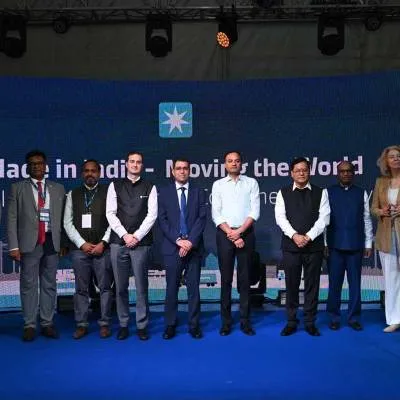
Maersk, also known as A P Moller-Maersk, has unveiled plans for a substantial investment exceeding $500 million to fortify its supply chain infrastructure, with a particular focus on facilitating Southeast Asia's ascent as a global production centre and a significant consumer market. Over the course of three years, Maersk's investment initiative will primarily target its Logistics & Services division, while concurrently directing a substantial portion toward bolstering its Ocean and Terminals infrastructure. This strategic investment is anticipated to generate employment opportunities for local talents, enhance automation efficiencies, and expand the company's existing network footprint in the region.

The announcement was made during a recent global executive board meeting held in Singapore. The objective of this investment initiative is to cultivate supply chain resilience, reduce trade costs, which can be 2x-3x higher in specific Asian markets, and deliver value-added outcomes to its clientele.

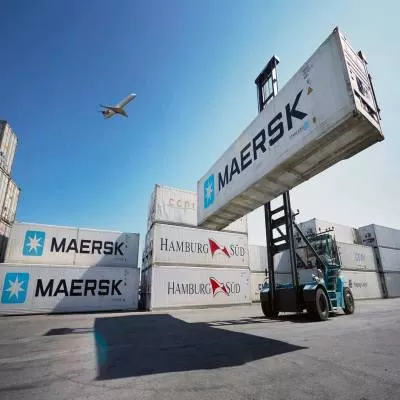
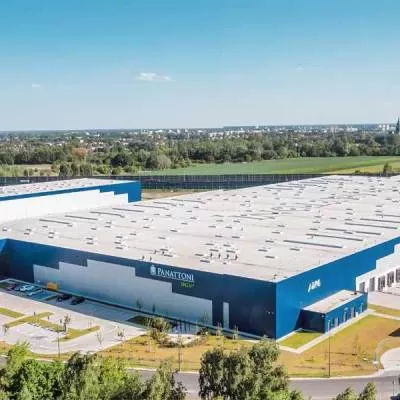
Maersk's investment will concentrate on scaling its warehousing and distribution capabilities by up to 50% across the region, augmenting its capabilities in ocean, air, and land transport to cater to both international and domestic markets. By 2026, Maersk envisions adding nearly 480,000 sqm of capacity spread across Malaysia, Indonesia, Singapore, and the Philippines. These strategic investments will enable Maersk to serve its customers more effectively through strategically located mega distribution centers that are sustainable and equipped with advanced automation to optimise operational efficiencies. Notable among these investments is the development at the Port of Tanjung Pelepas in Malaysia, poised to become a pivotal integrated logistics hub with multi-modal connectivity, simplifying domestic supply chains and global connections. Additionally, Maersk is committed to expanding landside warehouse capacity at Singapore's Changi Airport, reinforcing its position as a key regional air freight hub.

In terms of landside connectivity, Maersk plans to significantly increase its haulage truck capacity in Southeast Asia, offering eco-friendly solutions based on customer preferences. The company will pilot biodiesel-based haulage trucks and introduce electric vehicle trucks by 2024.

On the ocean and terminal front, Maersk will continue its investments to expand infrastructure across the region through APM Terminals. This expansion aims to support optimised ocean network design and introduce additional transhipment capabilities to the region. Furthermore, Maersk is collaborating with regional authorities to explore opportunities for building green fuel infrastructure, aligning with its commitment to support a future fleet of environmentally friendly vessels.

Maersk, also known as A P Moller-Maersk, has unveiled plans for a substantial investment exceeding $500 million to fortify its supply chain infrastructure, with a particular focus on facilitating Southeast Asia's ascent as a global production centre and a significant consumer market. Over the course of three years, Maersk's investment initiative will primarily target its Logistics & Services division, while concurrently directing a substantial portion toward bolstering its Ocean and Terminals infrastructure. This strategic investment is anticipated to generate employment opportunities for local talents, enhance automation efficiencies, and expand the company's existing network footprint in the region. The announcement was made during a recent global executive board meeting held in Singapore. The objective of this investment initiative is to cultivate supply chain resilience, reduce trade costs, which can be 2x-3x higher in specific Asian markets, and deliver value-added outcomes to its clientele. Maersk's investment will concentrate on scaling its warehousing and distribution capabilities by up to 50% across the region, augmenting its capabilities in ocean, air, and land transport to cater to both international and domestic markets. By 2026, Maersk envisions adding nearly 480,000 sqm of capacity spread across Malaysia, Indonesia, Singapore, and the Philippines. These strategic investments will enable Maersk to serve its customers more effectively through strategically located mega distribution centers that are sustainable and equipped with advanced automation to optimise operational efficiencies. Notable among these investments is the development at the Port of Tanjung Pelepas in Malaysia, poised to become a pivotal integrated logistics hub with multi-modal connectivity, simplifying domestic supply chains and global connections. Additionally, Maersk is committed to expanding landside warehouse capacity at Singapore's Changi Airport, reinforcing its position as a key regional air freight hub. In terms of landside connectivity, Maersk plans to significantly increase its haulage truck capacity in Southeast Asia, offering eco-friendly solutions based on customer preferences. The company will pilot biodiesel-based haulage trucks and introduce electric vehicle trucks by 2024. On the ocean and terminal front, Maersk will continue its investments to expand infrastructure across the region through APM Terminals. This expansion aims to support optimised ocean network design and introduce additional transhipment capabilities to the region. Furthermore, Maersk is collaborating with regional authorities to explore opportunities for building green fuel infrastructure, aligning with its commitment to support a future fleet of environmentally friendly vessels.

Next Story
Infrastructure Transport

Kavach 4.0 Commissioned on Delhi–Mumbai and Delhi–Howrah

"Kavach version four has been commissioned on 1,452 route km, covering the high density Delhi–Mumbai and Delhi–Howrah corridors. The rollout included laying 8,570 km of optical fibre, installation of 1,100 telecom towers, deployment of trackside equipment over 6,776 RKm and establishment of 767 station data centres. Trackside implementation has been taken up on 24,427 RKm covering Golden Quadrilateral, Golden Diagonal and High Density Network sections. The programme aims to strengthen signalling and train protection on key routes.Kavach is an indigenously developed automatic train protecti..

Next Story
Infrastructure Transport

Railways Advance Kalyan–Murbad Line And Mumbai Capacity Expansion

"Indian Railways is advancing multiple rail infrastructure projects in Maharashtra, including the sanctioned Kalyan–Murbad new line and sizable investments under the Mumbai Urban Transport Project and the Mumbai–Ahmedabad High Speed Rail project. The Kalyan–Murbad 28 km new line has been sanctioned at Rs 8.36 billion (bn) on a 50:50 cost-sharing basis with the Government of Maharashtra and has been declared a Special Railway Project for land acquisition; proposals covering 214 hectares are at various stages of acquisition. Budgetary outlay for projects falling fully or partly in Maharash..

Next Story
Infrastructure Urban

Parliamentary Panel Flags Funding Gaps in Heavy Industries

"The Department-Related Parliamentary Standing Committee on Industry (Rajya Sabha) presented its 332nd report on the Demands for Grants 2026-27 of the Ministry of Heavy Industries (MHI). Figures converted from crore and lakh are expressed in million (mn). The Budget Estimates 2026-27 for the Ministry stand at Rs 79,399 mn against a projected requirement of Rs 94,843.2 mn, a shortfall of about 16 per cent, with revenue at Rs 79,370.8 mn and capital compressed to Rs 28.2 mn from Rs 5,020 mn.The committee flagged recurring BE-to-RE compression and declining revised estimate utilisation, and calle..

Advertisement

Subscribe to Our Newsletter

Get daily newsletters around different themes from Construction world.

STAY CONNECTED

Advertisement

Advertisement

Advertisement