


Water Consumption by Data Centres in the Country
WATER & WASTE

Water Consumption by Data Centres in the Country

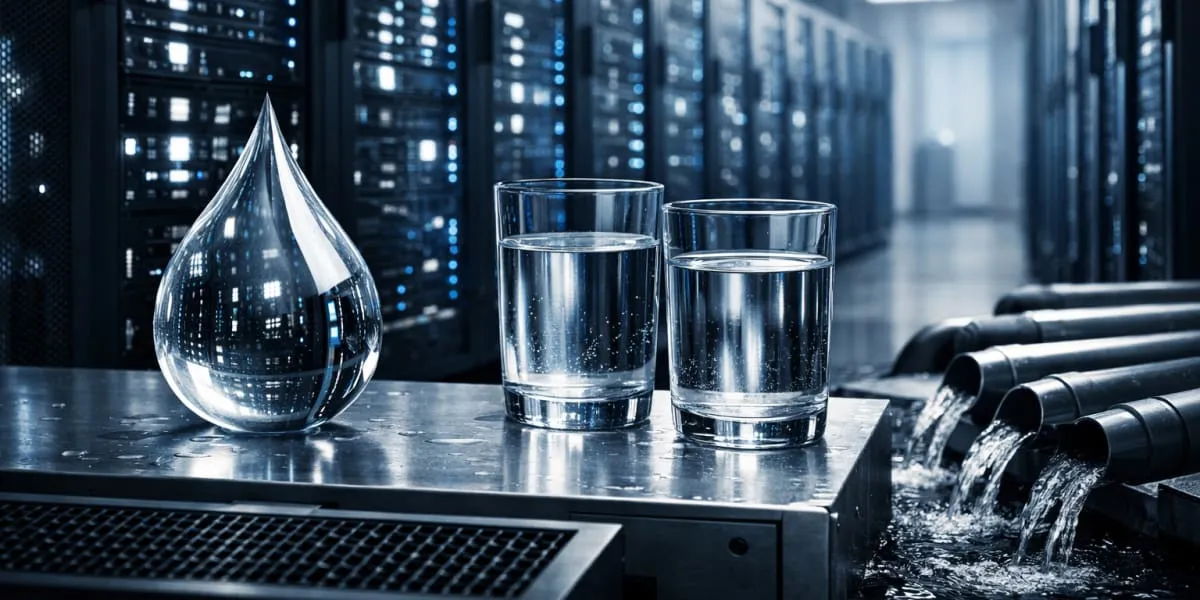
The Ministry of Electronics and Information Technology reported that it had not received any concerns regarding water consumption by data centres in the country. The government is promoting the establishment and use of digital technology to strengthen infrastructure and improve delivery of digital services across sectors. This policy emphasis is intended to democratise technological development and support expansion of computing capacity. The approach is intended to create equitable access to services and to support regional economic activity.\n\nAs reported, data centre capacity in the country has increased from 375 Megawatt (MW) in 2020 to more than 1500 MW by 2025, reflecting rapid growth in demand. Operators have been adopting new cooling approaches to improve water efficiency and reduce energy consumption. Technologies cited include direct-to-chip liquid cooling, adiabatic cooling and immersion cooling, all aimed at reducing water use. The combination of technologies and operational adjustments is said to reduce dependence on freshwater sources and to lower operating costs.\n\nIndustry participants have also deployed high density racks to support high-performance computing and artificial intelligence workloads while seeking further reductions in power and water consumption. These measures are reported to improve overall water use efficiency across operations. The Ministry of Jal Shakti has issued regulatory guidance to control groundwater extraction under notification number S.O. 3289(E) dated 24.09.2020 and an amendment dated 29.03.2023. Regulatory measures aim to ensure extraction is monitored and sustainable while allowing technological solutions to advance.\n\nThe information was provided by the Minister of State for Jal Shakti, Raj Bhushan Choudhary, in a written reply to a parliamentary question in the Rajya Sabha. The account indicates that data centres are spread across the country and that ongoing technological and regulatory measures together lower water requirements. Officials expect that continued adoption of efficient cooling and operational practices will help balance digital expansion with sustainable water management.

The Ministry of Electronics and Information Technology reported that it had not received any concerns regarding water consumption by data centres in the country. The government is promoting the establishment and use of digital technology to strengthen infrastructure and improve delivery of digital services across sectors. This policy emphasis is intended to democratise technological development and support expansion of computing capacity. The approach is intended to create equitable access to services and to support regional economic activity.\n\nAs reported, data centre capacity in the country has increased from 375 Megawatt (MW) in 2020 to more than 1500 MW by 2025, reflecting rapid growth in demand. Operators have been adopting new cooling approaches to improve water efficiency and reduce energy consumption. Technologies cited include direct-to-chip liquid cooling, adiabatic cooling and immersion cooling, all aimed at reducing water use. The combination of technologies and operational adjustments is said to reduce dependence on freshwater sources and to lower operating costs.\n\nIndustry participants have also deployed high density racks to support high-performance computing and artificial intelligence workloads while seeking further reductions in power and water consumption. These measures are reported to improve overall water use efficiency across operations. The Ministry of Jal Shakti has issued regulatory guidance to control groundwater extraction under notification number S.O. 3289(E) dated 24.09.2020 and an amendment dated 29.03.2023. Regulatory measures aim to ensure extraction is monitored and sustainable while allowing technological solutions to advance.\n\nThe information was provided by the Minister of State for Jal Shakti, Raj Bhushan Choudhary, in a written reply to a parliamentary question in the Rajya Sabha. The account indicates that data centres are spread across the country and that ongoing technological and regulatory measures together lower water requirements. Officials expect that continued adoption of efficient cooling and operational practices will help balance digital expansion with sustainable water management.

Next Story
Infrastructure Urban

Centre Disburses Over Rs 24,610 mn in XV Finance Commission Grants

The Union Government has released XV Finance Commission tied grants during the financial year 2025–26 to rural local bodies in Chhattisgarh, Gujarat, Madhya Pradesh, Punjab and Sikkim and has released withheld portions of tied and untied grants to Himachal Pradesh, Odisha and Tripura. The total disbursal exceeded Rs 24,610 mn, with figures expressed in million (mn) thereafter. The releases cover allocations pertaining to different financial years and aim to strengthen rural local governance. State-wise disbursements included Rs 3,324.6 mn for Punjab, Rs 9,432.7 mn for Madhya Pradesh, Rs 3,47..

Next Story
Infrastructure Urban

Centre Releases Over Rs 15 bn as XV FC Grants to Rural Bodies

The Union Government has released over Rs 15 bn in grants recommended by the Fifteenth Finance Commission (XV FC) to strengthen Panchayati Raj Institutions (PRIs) and Rural Local Bodies (RLBs) in six states. The funds comprise tied and untied grants disbursed in FY 2025–26. Telangana received Rs 2.48 bn as the first instalment of untied grants for FY 2025–26, benefitting 12600 Gram Panchayats (GPs). Uttarakhand received Rs 913.1 mn as the second instalment and an additional Rs 18.4 mn of a withheld first instalment was released to a further 216 GPs. Mizoram is included among beneficiary st..

Next Story
Infrastructure Energy

Government Assures Fuel Supplies And Seafarer Safety Amid West Asia Developments

The Government of India has stepped up coordinated measures to maintain stability in critical sectors as developments in West Asia continue to unfold. It has prioritised uninterrupted energy supplies, safeguarded maritime operations and extended consular assistance to nationals. Central authorities are working with State and Union territory administrations to ensure timely information dissemination and operational continuity. Refineries are reported to be operating at high capacity with adequate inventories of petrol and diesel, and domestic LPG production has been increased to support consump..

Advertisement

Subscribe to Our Newsletter

Get daily newsletters around different themes from Construction world.

STAY CONNECTED

Advertisement

Advertisement

Advertisement