

Mid-sized construction cos growing faster
PORTS & SHIPPING

Mid-sized construction cos growing faster

Construction players are in for better times with significant opportunities ahead, supported by the Government’s push towards infrastructure development projects, according to ICRA.

The past three to four years have witnessed a quantum increase in infrastructure capital outlay, particularly in the roads, railways and urban infrastructure segments, and this is likely to continue over the medium term. This has boosted the order book of construction companies significantly. With the expected strong focus on infrastructure development by both the Centre and state governments, construction companies should continue to see a healthy influx of new orders.

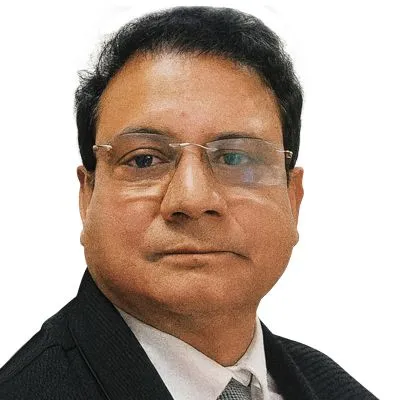
According to Shubham Jain, Vice-President and Group - Head, Corporate Ratings, ICRA, “Several mid-size construction companies (with operating income between Rs 1 billion and Rs 5 billion) have grown at a faster rate than large construction companies supported by increased opportunities, relatively lower leveraged balance sheet and lesser legacy issues. With the improvement in operating performance of construction companies, including healthy growth in operating income and increase in operating profitability, the credit metrics of a majority of companies have witnessed a gradual improvement. This is also reflected in the higher credit ratio (ratio of number of rating upgrades to number of rating downgrades) for the sector, which has been close to 1.2x in the past three years.”

In comparison with the credit profile of large construction companies, many mid-sized companies exhibit better coverage ratios because of lower debts in their books. Nevertheless, scale, regional concentration and financial flexibility remain a challenge compared to large construction companies, which have better access to funds as well as credit terms. Apart from this, for mid-sized construction companies, availability of non-fund-based limits (primarily bank guarantees or BG) also remains a constraint. According to ICRA, mid-size construction companies are graduating from subcontractors to main contractors. Their focus on the core construction business and adoption of projects in geographies in proximity to their base are supporting execution.

“On the flip side, these companies remain exposed to challenges,” adds Jain. “With growth in operations, many companies plan to enter or have recently entered the asset-owning space, which, being capital-intensive, can impact their balance sheet and liquidity positions over the short to medium term.”

Construction players are in for better times with significant opportunities ahead, supported by the Government’s push towards infrastructure development projects, according to ICRA. The past three to four years have witnessed a quantum increase in infrastructure capital outlay, particularly in the roads, railways and urban infrastructure segments, and this is likely to continue over the medium term. This has boosted the order book of construction companies significantly. With the expected strong focus on infrastructure development by both the Centre and state governments, construction companies should continue to see a healthy influx of new orders. According to Shubham Jain, Vice-President and Group - Head, Corporate Ratings, ICRA, “Several mid-size construction companies (with operating income between Rs 1 billion and Rs 5 billion) have grown at a faster rate than large construction companies supported by increased opportunities, relatively lower leveraged balance sheet and lesser legacy issues. With the improvement in operating performance of construction companies, including healthy growth in operating income and increase in operating profitability, the credit metrics of a majority of companies have witnessed a gradual improvement. This is also reflected in the higher credit ratio (ratio of number of rating upgrades to number of rating downgrades) for the sector, which has been close to 1.2x in the past three years.” In comparison with the credit profile of large construction companies, many mid-sized companies exhibit better coverage ratios because of lower debts in their books. Nevertheless, scale, regional concentration and financial flexibility remain a challenge compared to large construction companies, which have better access to funds as well as credit terms. Apart from this, for mid-sized construction companies, availability of non-fund-based limits (primarily bank guarantees or BG) also remains a constraint. According to ICRA, mid-size construction companies are graduating from subcontractors to main contractors. Their focus on the core construction business and adoption of projects in geographies in proximity to their base are supporting execution. “On the flip side, these companies remain exposed to challenges,” adds Jain. “With growth in operations, many companies plan to enter or have recently entered the asset-owning space, which, being capital-intensive, can impact their balance sheet and liquidity positions over the short to medium term.”

Next Story
Equipment

Schwing Stetter India Unveils New Innovations at Excon 2025

Schwing Stetter India unveiled more than 20 new machines at Excon 2025, marking one of its most significant showcases and introducing several India-first technologies to the construction equipment sector. The company launched the country’s first 56-metre boom pump designed and manufactured in India, the first fully electric truck mixer, the first CNG mixer variant and the first hybrid boom pump. Executives said the launch portfolio was engineered to support India’s move toward faster, greener and more vertically oriented infrastructure through advanced engineering, clean-energy solutions a..

Next Story
Infrastructure Energy

SEPC Resolves Hindustan Copper Dispute, Wins Rs 725 Mn Order

Engineering, procurement and construction firm SEPC Ltd has recently settled a dispute with Hindustan Copper Ltd (HCL) and secured a mining infrastructure order valued at Rs 725 million from the state-owned company. SEPC informed the stock exchanges that it has executed a settlement deed with HCL, bringing closure to all inter-se claims and counterclaims arising from arbitration proceedings. As part of the settlement, SEPC will receive Rs 304.5 million as full and final payment, marking the resolution of all pending disputes between the two entities. The company also stated that Hindustan Co..

Next Story
Infrastructure Energy

20% Ethanol Blending Cuts India’s CO2 Emissions by 73.6 Mn Tonnes

Union Road Transport and Highways Minister Nitin Gadkari recently said that India has reduced carbon dioxide emissions by 73.6 million metric tonnes due to the adoption of 20 per cent ethanol blending in petrol. He made the statement while replying to supplementary questions during the Question Hour in the Lok Sabha. Describing ethanol as a green fuel, the minister said it plays a key role in reducing pollution while also supporting higher incomes for farmers. He underlined that ethanol blending contributes both to environmental sustainability and rural economic growth. Nitin Gadkari also po..

Advertisement

Subscribe to Our Newsletter

Get daily newsletters around different themes from Construction world.

STAY CONNECTED

Advertisement

Advertisement

Advertisement

Advertisement

Open In App