


Cement Sector Posts Strong Q1 on Price Hikes, Demand
Cement

Cement Sector Posts Strong Q1 on Price Hikes, Demand

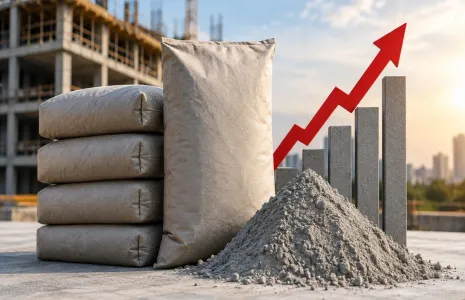
Cement companies ended the June quarter on a strong note, supported by higher realisations from price hikes and robust volume growth. Most players reported double-digit gains in volumes, aided by last year’s low base during the election period, rising commercial activity, and faster execution of government projects. Lower operating costs also lifted EBITDA per tonne sharply.
Volume growth was led by Ambuja (up 16.5 per cent), UltraTech Cement (15.3 per cent), JK Cement (14.3 per cent), and Sagar Cements (11.5 per cent), reflecting a rebound in demand. Shree Cement’s volumes fell 7.2 per cent due to geopolitical tensions in the northern region, while Dalmia Bharat declined 5.4 per cent following the end of tolling volumes from Jaypee. Ramco Cements dropped 6.8 per cent, impacted by early monsoon onset, according to Systematix Institutional Equities.
Companies under the brokerage’s coverage saw realisations rise 6 per cent year-on-year and 5 per cent sequentially, largely driven by price increases in southern markets. This pushed EBITDA per tonne up 35 per cent year-on-year and 17.8 per cent sequentially.
A near 20 per cent drop in coal prices and softer Brent crude rates helped reduce energy costs, while other operating expenses also eased. Freight costs rose slightly by 2.6 per cent, as logistics efficiencies were offset by expansion into new geographies.
On the bottom line, Ramco Cements’ net profit surged 142.3 per cent year-on-year, while Shree Cement, JK Cement, and Dalmia Bharat rose 94.8 per cent, 65.6 per cent, and 46.9 per cent, respectively.
In August 2025, cement prices remained flat month-on-month but were stronger year-on-year. The monsoon slowed construction, especially in rural and infrastructure projects, leading to softer offtake and restricting price hikes. Prices in the East held at Rs 353 per bag, the North at Rs 365 per bag, while the South saw a Rs 10 rise to Rs 370 per bag, though a Rs 5–10 correction is expected next quarter. Central India saw a Rs 5 drop to Rs 355 per bag. Nationally, prices were up 1.2 per cent month-on-month to Rs 360 per bag.
Despite the seasonal slowdown, the brokerage remains positive on the sector, forecasting a second-half recovery driven by infrastructure demand, urban housing growth, favourable input costs, and greater adoption of green power. It projects 7–8 per cent volume growth in H2 FY26, with UltraTech and Ambuja as top picks, assigning price targets of Rs 14,481 and Rs 722, respectively.

Cement companies ended the June quarter on a strong note, supported by higher realisations from price hikes and robust volume growth. Most players reported double-digit gains in volumes, aided by last year’s low base during the election period, rising commercial activity, and faster execution of government projects. Lower operating costs also lifted EBITDA per tonne sharply.Volume growth was led by Ambuja (up 16.5 per cent), UltraTech Cement (15.3 per cent), JK Cement (14.3 per cent), and Sagar Cements (11.5 per cent), reflecting a rebound in demand. Shree Cement’s volumes fell 7.2 per cent due to geopolitical tensions in the northern region, while Dalmia Bharat declined 5.4 per cent following the end of tolling volumes from Jaypee. Ramco Cements dropped 6.8 per cent, impacted by early monsoon onset, according to Systematix Institutional Equities.Companies under the brokerage’s coverage saw realisations rise 6 per cent year-on-year and 5 per cent sequentially, largely driven by price increases in southern markets. This pushed EBITDA per tonne up 35 per cent year-on-year and 17.8 per cent sequentially.A near 20 per cent drop in coal prices and softer Brent crude rates helped reduce energy costs, while other operating expenses also eased. Freight costs rose slightly by 2.6 per cent, as logistics efficiencies were offset by expansion into new geographies.On the bottom line, Ramco Cements’ net profit surged 142.3 per cent year-on-year, while Shree Cement, JK Cement, and Dalmia Bharat rose 94.8 per cent, 65.6 per cent, and 46.9 per cent, respectively.In August 2025, cement prices remained flat month-on-month but were stronger year-on-year. The monsoon slowed construction, especially in rural and infrastructure projects, leading to softer offtake and restricting price hikes. Prices in the East held at Rs 353 per bag, the North at Rs 365 per bag, while the South saw a Rs 10 rise to Rs 370 per bag, though a Rs 5–10 correction is expected next quarter. Central India saw a Rs 5 drop to Rs 355 per bag. Nationally, prices were up 1.2 per cent month-on-month to Rs 360 per bag.Despite the seasonal slowdown, the brokerage remains positive on the sector, forecasting a second-half recovery driven by infrastructure demand, urban housing growth, favourable input costs, and greater adoption of green power. It projects 7–8 per cent volume growth in H2 FY26, with UltraTech and Ambuja as top picks, assigning price targets of Rs 14,481 and Rs 722, respectively.

Next Story
Infrastructure Transport

India Becomes First to Produce Bio-Bitumen for Roads

India has become the first country in the world to commercially produce bio-bitumen for use in road construction, according to Road, Transport and Highways Minister Nitin Gadkari. Bitumen, a black and viscous hydrocarbon derived from crude oil, is a key binding material in road building, and the bio-based alternative is expected to significantly improve the sector’s environmental footprint.Addressing the CSIR Technology Transfer Ceremony in New Delhi, Mr Gadkari congratulated Council of Scientific and Industrial Research on achieving the milestone, noting that the initiative would help curb ..

Next Story
Infrastructure Urban

HILT Policy Seen Boosting Telangana Revenue Sharply

The Hyderabad Industrial Land Transformation (HILT) Policy is expected to generate around Rs 1.08 billion in revenue for the Telangana state exchequer, according to Deputy Chief Minister Bhatti Vikramarka Mallu. Speaking in the Telangana Legislative Assembly, he said the policy would be implemented within a six-month timeframe in a transparent manner, with uniform rules applicable to all stakeholders. Mr Vikramarka noted that without the HILT Policy, the state would have earned only about Rs 1.2 million per acre. Under the new framework, however, revenue is projected to rise sharply to Rs 70 ..

Next Story
Infrastructure Urban

India Post, MoRD Tie Up to Boost Rural Inclusion

The Department of Posts and the Ministry of Rural Development have signed a Memorandum of Understanding to accelerate rural transformation and expand financial, digital and logistics services for Self-Help Groups (SHGs) and rural households across India. The agreement was signed in the presence of Union Minister of Communications and Development of North Eastern Region Jyotiraditya M. Scindia and Union Minister of Rural Development and Agriculture and Farmers’ Welfare Shivraj Singh Chouhan. The collaboration aligns with the government’s “Dak Sewa, Jan Sewa” vision and seeks to repositi..

Advertisement

Subscribe to Our Newsletter

Get daily newsletters around different themes from Construction world.

STAY CONNECTED

Advertisement

Advertisement

Advertisement

Advertisement

Open In App