
Cement Industry Backs Co-Processing to Tackle Global Waste
Cement

Cement Industry Backs Co-Processing to Tackle Global Waste

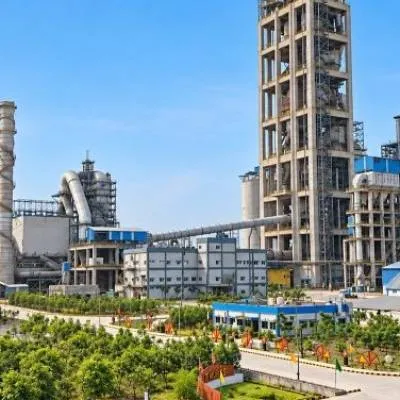
Leading industry bodies, including the Global Cement and Concrete Association (GCCA), European Composites Industry Association, International Solid Waste Association – Africa, Mission Possible Partnership and the Global Waste-to-Energy Research and Technology Council, have issued a joint statement highlighting the cement industry’s potential role in addressing the growing global challenge of non-recyclable and non-reusable waste. The organisations have called for stronger policy support to unlock the full potential of cement industry co-processing as a safe, effective and sustainable waste management solution.
Co-processing enables both energy recovery and material recycling by using suitable waste to replace fossil fuels in cement kilns, while simultaneously recycling residual ash into the cement itself. This integrated approach delivers a zero-waste solution, reduces landfill dependence and complements conventional recycling by addressing waste streams that cannot be recycled or are contaminated.
Already recognised across regions including Europe, India, Latin America and North America, co-processing operates under strict regulatory and technical frameworks to ensure high standards of safety, emissions control and transparency.
Commenting on the initiative, Thomas Guillot, Chief Executive of the GCCA, said co-processing offers a circular, community-friendly waste solution but requires effective regulatory frameworks and supportive public policy to scale further. He noted that while some cement kilns already substitute over 90 per cent of their fuel with waste, many regions still lack established practices.
The joint statement urges governments and institutions to formally recognise co-processing within waste policy frameworks, support waste collection and pre-treatment, streamline permitting, count recycled material towards national recycling targets, and provide fiscal incentives that reflect environmental benefits. It also calls for stronger public–private partnerships and international knowledge sharing.
With global waste generation estimated at over 11 billion tonnes annually and uncontrolled municipal waste projected to rise sharply by 2050, the signatories believe co-processing represents a practical and scalable response. With appropriate policy backing, it can help divert waste from landfills, reduce fossil fuel use in cement manufacturing and transform waste into a valuable societal resource.    

Leading industry bodies, including the Global Cement and Concrete Association (GCCA), European Composites Industry Association, International Solid Waste Association – Africa, Mission Possible Partnership and the Global Waste-to-Energy Research and Technology Council, have issued a joint statement highlighting the cement industry’s potential role in addressing the growing global challenge of non-recyclable and non-reusable waste. The organisations have called for stronger policy support to unlock the full potential of cement industry co-processing as a safe, effective and sustainable waste management solution.Co-processing enables both energy recovery and material recycling by using suitable waste to replace fossil fuels in cement kilns, while simultaneously recycling residual ash into the cement itself. This integrated approach delivers a zero-waste solution, reduces landfill dependence and complements conventional recycling by addressing waste streams that cannot be recycled or are contaminated.Already recognised across regions including Europe, India, Latin America and North America, co-processing operates under strict regulatory and technical frameworks to ensure high standards of safety, emissions control and transparency.Commenting on the initiative, Thomas Guillot, Chief Executive of the GCCA, said co-processing offers a circular, community-friendly waste solution but requires effective regulatory frameworks and supportive public policy to scale further. He noted that while some cement kilns already substitute over 90 per cent of their fuel with waste, many regions still lack established practices.The joint statement urges governments and institutions to formally recognise co-processing within waste policy frameworks, support waste collection and pre-treatment, streamline permitting, count recycled material towards national recycling targets, and provide fiscal incentives that reflect environmental benefits. It also calls for stronger public–private partnerships and international knowledge sharing.With global waste generation estimated at over 11 billion tonnes annually and uncontrolled municipal waste projected to rise sharply by 2050, the signatories believe co-processing represents a practical and scalable response. With appropriate policy backing, it can help divert waste from landfills, reduce fossil fuel use in cement manufacturing and transform waste into a valuable societal resource.    

Next Story
Infrastructure Urban

German Chancellor Visits Bosch India Campus in Bengaluru

Strengthening the long-standing partnership between India and Germany, Friedrich Merz, Federal Chancellor of the Federal Republic of Germany, recently visited the Bosch campus at Adugodi, Bengaluru, during his India trip. The delegation was hosted by Guruprasad Mudlapur, President of the Bosch Group in India and Managing Director, Bosch Limited, who showcased key innovations developed in the region.During the visit, the delegation experienced Bosch’s H2ICE demonstrator truck featuring a fully integrated powertrain and telematics system. Bosch India, in collaboration with Bosch Germany, is ad..

Next Story
Infrastructure Urban

ICC, Maharashtra Sign MoU to Boost Industry Engagement

The Indian Chamber of Commerce (ICC) and the Government of Maharashtra recently signed a Memorandum of Understanding (MoU) to enhance cooperation and deepen engagement between Indian businesses and the State, with a focus on investment facilitation, ease of doing business and sustained industry–government dialogue.The MoU was signed by Dr P Anbalagan, IAS, Principal Secretary (Industry, Investment and Services), Government of Maharashtra, and Dr Rajeev Singh, Director General, ICC, in the presence of leading business representatives.Speaking on the occasion, Dr Anbalagan said the partnership..

Next Story
Real Estate

Regal Rexnord Opens Unified Singapore Regional Office

Regal Rexnord recently opened a new office in Singapore, consolidating employees and capabilities from its former sites into a single, modern, region-focused location. The move brings together two existing offices and strengthens collaboration across its portfolio of brands, including CENTA, Jaure, Kollmorgen, Nicotra and Falk.By housing teams under one roof, Regal Rexnord aims to deliver a more seamless experience for customers seeking mechanical power transmission, motion control and automation solutions across Southeast Asia. The consolidated setup is designed to enhance coordination across..

Advertisement

Subscribe to Our Newsletter

Get daily newsletters around different themes from Construction world.

STAY CONNECTED

Advertisement

Advertisement

Advertisement

Advertisement

Open In App