
Cement Margins to Erode as Energy Costs Rise: CRISIL
Cement

Cement Margins to Erode as Energy Costs Rise: CRISIL

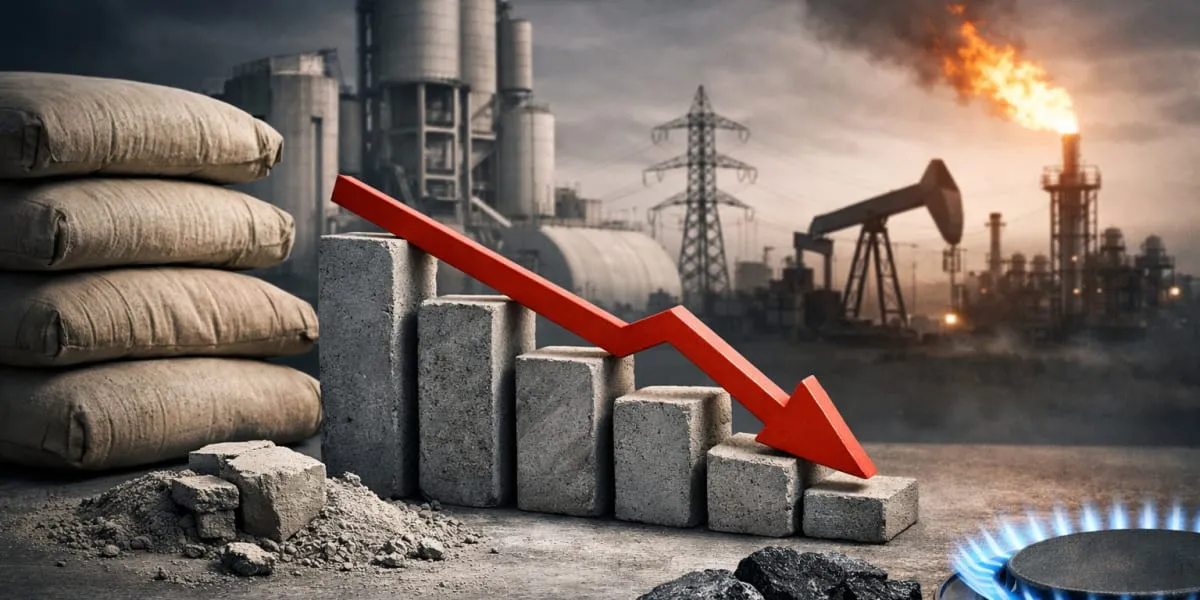
Crisil Intelligence (CRISIL) released a report on April 13, 2026, indicating Indian cement manufacturers face margin erosion of 150–200 basis points this fiscal, reducing operating margins to between 16 per cent and 18 per cent. The firm noted that this represents a reversal from the prior year when margins expanded by 260–280 basis points. The analysis attributed the shift to rising input costs despite steady demand.

The report said that power and fuel, which typically account for about 26–28 per cent of production cost, are expected to increase by 10–12 per cent year on year, driven by higher prices for crude oil, petroleum coke and thermal coal. Brent crude was assessed as likely to trade between $82 and $87 per barrel, and industrial diesel prices rose by 25 per cent in March, raising logistics and procurement expenses. Such increases have therefore heightened cost pressures across the value chain.

Producers plan to raise selling prices by one–three per cent, which would put the average retail price of a cement bag at around Rs355–Rs360, according to the report. CRISIL's director Sehul Bhatt was cited as saying that these hikes will at best offset a four–six per cent rise in production costs, leaving little room for higher profitability. The report added that intense competition and continual capacity additions constrain the extent to which firms can pass on costs.

Demand conditions remain supportive, with CRISIL projecting volume growth of six point five–seven point five per cent this fiscal on the back of accelerated infrastructure projects and steady industrial and commercial consumption. Nonetheless, the pace of recovery is sensitive to developments in West Asia, the speed of government infrastructure execution and monsoon performance. The agency noted that any further escalation in energy prices or delays in project execution would widen margin pressures.

Overall, the sector will continue to grow but with compressed margins as energy cost inflation outpaces the limited ability to raise prices. Investors and policymakers will therefore monitor both input cost trajectories and policy measures aimed at alleviating supply chain constraints.

Crisil Intelligence (CRISIL) released a report on April 13, 2026, indicating Indian cement manufacturers face margin erosion of 150–200 basis points this fiscal, reducing operating margins to between 16 per cent and 18 per cent. The firm noted that this represents a reversal from the prior year when margins expanded by 260–280 basis points. The analysis attributed the shift to rising input costs despite steady demand. The report said that power and fuel, which typically account for about 26–28 per cent of production cost, are expected to increase by 10–12 per cent year on year, driven by higher prices for crude oil, petroleum coke and thermal coal. Brent crude was assessed as likely to trade between $82 and $87 per barrel, and industrial diesel prices rose by 25 per cent in March, raising logistics and procurement expenses. Such increases have therefore heightened cost pressures across the value chain. Producers plan to raise selling prices by one–three per cent, which would put the average retail price of a cement bag at around Rs355–Rs360, according to the report. CRISIL's director Sehul Bhatt was cited as saying that these hikes will at best offset a four–six per cent rise in production costs, leaving little room for higher profitability. The report added that intense competition and continual capacity additions constrain the extent to which firms can pass on costs. Demand conditions remain supportive, with CRISIL projecting volume growth of six point five–seven point five per cent this fiscal on the back of accelerated infrastructure projects and steady industrial and commercial consumption. Nonetheless, the pace of recovery is sensitive to developments in West Asia, the speed of government infrastructure execution and monsoon performance. The agency noted that any further escalation in energy prices or delays in project execution would widen margin pressures. Overall, the sector will continue to grow but with compressed margins as energy cost inflation outpaces the limited ability to raise prices. Investors and policymakers will therefore monitor both input cost trajectories and policy measures aimed at alleviating supply chain constraints.

Next Story
Infrastructure Urban

Vedanta Reports Record Profit in FY26

Vedanta reported its best-ever financial performance in FY26, with profit after tax of Rs 250.96 billion and revenue of Rs 1.74 trillion, supported by operational excellence across businesses. The company delivered nearly 50 per cent total shareholder return and declared a dividend of Rs 34 per share.Vedanta said its net debt-to-EBITDA improved to 0.95x, strengthening financial flexibility. Its demerger, effective 1 May 2026, is aimed at unlocking value by creating focused businesses across aluminium, oil and gas, power, iron and steel, zinc, copper, nickel and ferro alloys.Vedanta Aluminium p..

Next Story
Infrastructure Energy

KEC Wins Orders Worth Rs 10.02 Billion

KEC International, an RPG Group company and global infrastructure EPC major, has secured new orders worth Rs 10.02 billion across its key businesses.In Transmission and Distribution, the company has won orders for projects in India and the Americas. These include ±500 kV HVDC transmission lines from a private developer in Western India, 132 kV cabling works from a steel producer in Eastern India, and the supply of towers, hardware and poles in the Americas.The renewables business has secured an order for a 100+ MW wind project in Southern India from a private developer. In transportation, KEC..

Next Story
Infrastructure Urban

Hindustan Zinc Opens Cath Lab in Udaipur

Hindustan Zinc recently inaugurated a state-of-the-art Cardiac Catheterisation Laboratory at Rabindranath Tagore Hospital, Udaipur. The facility was inaugurated by Gulab Chand Kataria, Governor of Punjab and Administrator of Chandigarh, in the presence of local MLAs, RNT Hospital leadership and senior Hindustan Zinc officials.The Cath Lab follows an MoU signed earlier between Hindustan Zinc and RNT Hospital for the redevelopment and upgradation of the hospital into a future-ready, multi-speciality healthcare facility. Equipped with advanced cardiac technology, it will support minimally invasiv..

Advertisement

Subscribe to Our Newsletter

Get daily newsletters around different themes from Construction world.

STAY CONNECTED

Advertisement

Advertisement

Advertisement