CII Calls for Greater Alternative Fuel Use in Cement Industry
Cement

CII Calls for Greater Alternative Fuel Use in Cement Industry

The Confederation of Indian Industry (CII), through its Green Business Centre and Energy Efficiency Council, inaugurated the 16th Conference on Alternative Fuel and Raw Material Usage (AFR) in Goa on 27 October 2026. The two-day conference brought together more than 350 industry leaders, policymakers, waste management experts and technology providers to explore strategies for accelerating alternative fuel adoption in India's cement industry.

Held under the theme 'Preparation for Net-Zero: Alternative Fuels & Raw Material in Cement Manufacturing', the conference focused on reducing dependence on conventional fuels, improving waste utilisation and strengthening circular economy practices across cement manufacturing operations.

E R Raj Narayanan, Chairman, AFR Conference 2026, and Business Head and Chief Manufacturing Officer, UltraTech Cement, highlighted the industry's progress in alternative fuel adoption. He emphasised the need to scale implementation, strengthen supply chains and extend circularity beyond fuel substitution to alternative raw materials through technological innovation and industry collaboration.

Harish Adconkar, Managing Director, Goa Waste Management Corporation, highlighted Goa's progress in scientific waste management and refuse-derived fuel (RDF) production. He stated that approximately 765,000 tonnes of RDF had been supplied to cement plants, contributing to an estimated displacement of 320,000–560,000 tonnes of coal. He emphasised the importance of consistent RDF offtake and stronger coordination between urban local bodies, waste management agencies and cement manufacturers.

Dr L P Singh, Director General, National Council for Cement and Building Materials, identified AFR as an important opportunity for decarbonisation and resource efficiency. Drawing parallels with the industry's successful utilisation of fly ash, he stressed the need to address quality, technological and economic challenges to expand alternative fuel adoption.

Dr Sharad P Kale, Special Advisor to the Chief Minister of Goa and former Head of Technology Transfer and Collaboration at BARC, emphasised treating waste as a resource. He highlighted decentralised biodegradable waste processing, reduced food waste and improved resource recovery as essential measures for minimising landfill dependence.

Kiran Ananth, Executive Director, Energy Efficiency, Renewable Energy and Green Entrepreneurship, CII-Green Business Centre, noted that India's cement production reached approximately 491 million tonnes in FY2025-26, while the industry's thermal substitution rate (TSR) stood at 7.5 per cent, with around 7 million tonnes of alternative fuels utilised annually.

He added that the industry had invested over Rs 12 billion in co-processing infrastructure during the past six years. Improving RDF supply reliability and quality assurance would be crucial to maximising the utilisation of existing infrastructure and accelerating industrial decarbonisation.

The conference also featured discussions on advanced AFR co-processing technologies, waste pre-processing solutions and industrial best practices for improving fuel substitution and resource recovery.

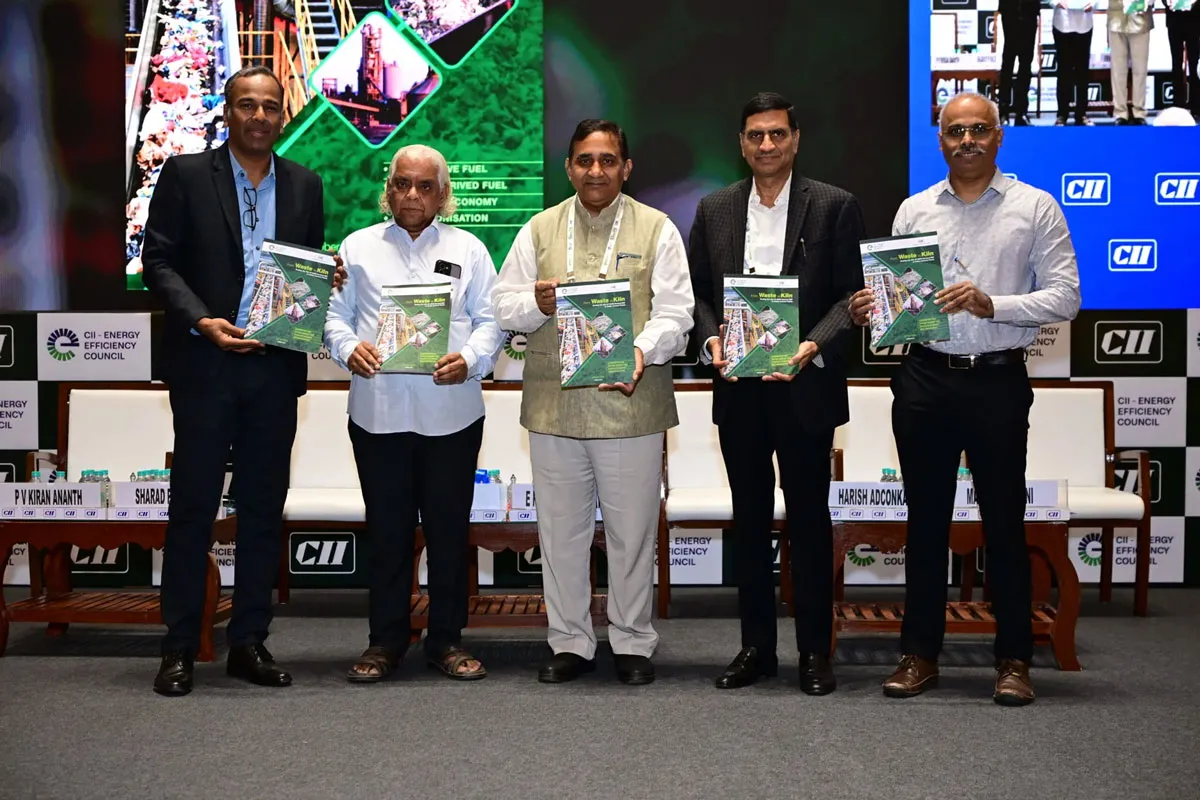
A publication titled 'From Waste to Kiln: Scaling the Use of MSW-Derived RDF in Indian Cement Plants' was launched during the inaugural session. The report identified inconsistent RDF supply and quality as major barriers to achieving higher thermal substitution rates.

According to the publication, many cement kilns already possess the technical capability to achieve higher alternative fuel substitution. However, variations in RDF availability, moisture content, particle size and calorific value continue to limit utilisation. The report emphasised the need to strengthen waste segregation, pre-processing and aggregation systems to establish reliable RDF supply chains.

The conference's second-day agenda includes discussions on innovative domestic and industrial waste management solutions, alternative raw materials for low-carbon cement and strategies to increase alternative fuel utilisation across India's cement manufacturing sector.

The Confederation of Indian Industry (CII), through its Green Business Centre and Energy Efficiency Council, inaugurated the 16th Conference on Alternative Fuel and Raw Material Usage (AFR) in Goa on 27 October 2026. The two-day conference brought together more than 350 industry leaders, policymakers, waste management experts and technology providers to explore strategies for accelerating alternative fuel adoption in India's cement industry.Held under the theme 'Preparation for Net-Zero: Alternative Fuels & Raw Material in Cement Manufacturing', the conference focused on reducing dependence on conventional fuels, improving waste utilisation and strengthening circular economy practices across cement manufacturing operations.E R Raj Narayanan, Chairman, AFR Conference 2026, and Business Head and Chief Manufacturing Officer, UltraTech Cement, highlighted the industry's progress in alternative fuel adoption. He emphasised the need to scale implementation, strengthen supply chains and extend circularity beyond fuel substitution to alternative raw materials through technological innovation and industry collaboration.Harish Adconkar, Managing Director, Goa Waste Management Corporation, highlighted Goa's progress in scientific waste management and refuse-derived fuel (RDF) production. He stated that approximately 765,000 tonnes of RDF had been supplied to cement plants, contributing to an estimated displacement of 320,000–560,000 tonnes of coal. He emphasised the importance of consistent RDF offtake and stronger coordination between urban local bodies, waste management agencies and cement manufacturers.Dr L P Singh, Director General, National Council for Cement and Building Materials, identified AFR as an important opportunity for decarbonisation and resource efficiency. Drawing parallels with the industry's successful utilisation of fly ash, he stressed the need to address quality, technological and economic challenges to expand alternative fuel adoption.Dr Sharad P Kale, Special Advisor to the Chief Minister of Goa and former Head of Technology Transfer and Collaboration at BARC, emphasised treating waste as a resource. He highlighted decentralised biodegradable waste processing, reduced food waste and improved resource recovery as essential measures for minimising landfill dependence.Kiran Ananth, Executive Director, Energy Efficiency, Renewable Energy and Green Entrepreneurship, CII-Green Business Centre, noted that India's cement production reached approximately 491 million tonnes in FY2025-26, while the industry's thermal substitution rate (TSR) stood at 7.5 per cent, with around 7 million tonnes of alternative fuels utilised annually.He added that the industry had invested over Rs 12 billion in co-processing infrastructure during the past six years. Improving RDF supply reliability and quality assurance would be crucial to maximising the utilisation of existing infrastructure and accelerating industrial decarbonisation.The conference also featured discussions on advanced AFR co-processing technologies, waste pre-processing solutions and industrial best practices for improving fuel substitution and resource recovery.A publication titled 'From Waste to Kiln: Scaling the Use of MSW-Derived RDF in Indian Cement Plants' was launched during the inaugural session. The report identified inconsistent RDF supply and quality as major barriers to achieving higher thermal substitution rates.According to the publication, many cement kilns already possess the technical capability to achieve higher alternative fuel substitution. However, variations in RDF availability, moisture content, particle size and calorific value continue to limit utilisation. The report emphasised the need to strengthen waste segregation, pre-processing and aggregation systems to establish reliable RDF supply chains.The conference's second-day agenda includes discussions on innovative domestic and industrial waste management solutions, alternative raw materials for low-carbon cement and strategies to increase alternative fuel utilisation across India's cement manufacturing sector.

Related Stories

Gold Stories
Next Story
Infrastructure Transport

Supreme Infrastructure posts first post-scheme quarterly profit

Supreme Infrastructure India reported its first profitable quarter following the completion of its Composite Scheme, with a sharp increase in revenue and a significant reduction in finance costs driving its financial turnaround in Q2 FY27.Revenue from operations rose 114.8 per cent year-on-year to Rs 290.04 million in Q2 FY27, compared with Rs 135.02 million in the corresponding quarter last year. Total income increased 130.3 per cent to Rs 335.63 million from Rs 135.56 million.The company reported a profit after tax (PAT) of Rs 36.78 million in Q2 FY27, against a loss of Rs 591.43 million in ..
Next Story
Infrastructure Transport

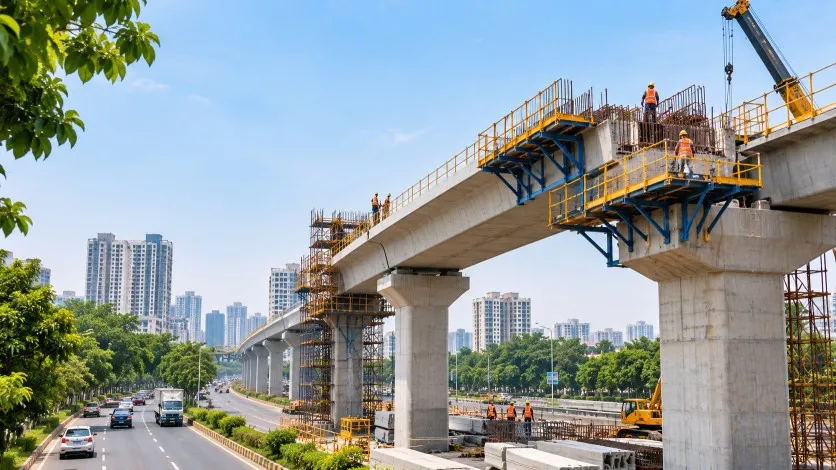
J. Kumar Infraprojects Q2 profit rises 25 per cent to Rs 1.13 billion

J. Kumar Infraprojects reported a 25 per cent year-on-year increase in net profit to Rs 1.13 billion in Q2 FY27, while revenue from operations grew 15 per cent to Rs 15.39 billion.Profitability improved faster than revenue, with EBITDA rising 18 per cent to Rs 2.29 billion. The EBITDA margin expanded to 14.9 per cent, supported by cost control and steady project execution. Net profit margin increased to 7.4 per cent from 6.7 per cent in the corresponding quarter last year.The company's order book stood at Rs 227.11 billion, equivalent to nearly four times its annual revenue. It secured fresh o..
Next Story
Equipment

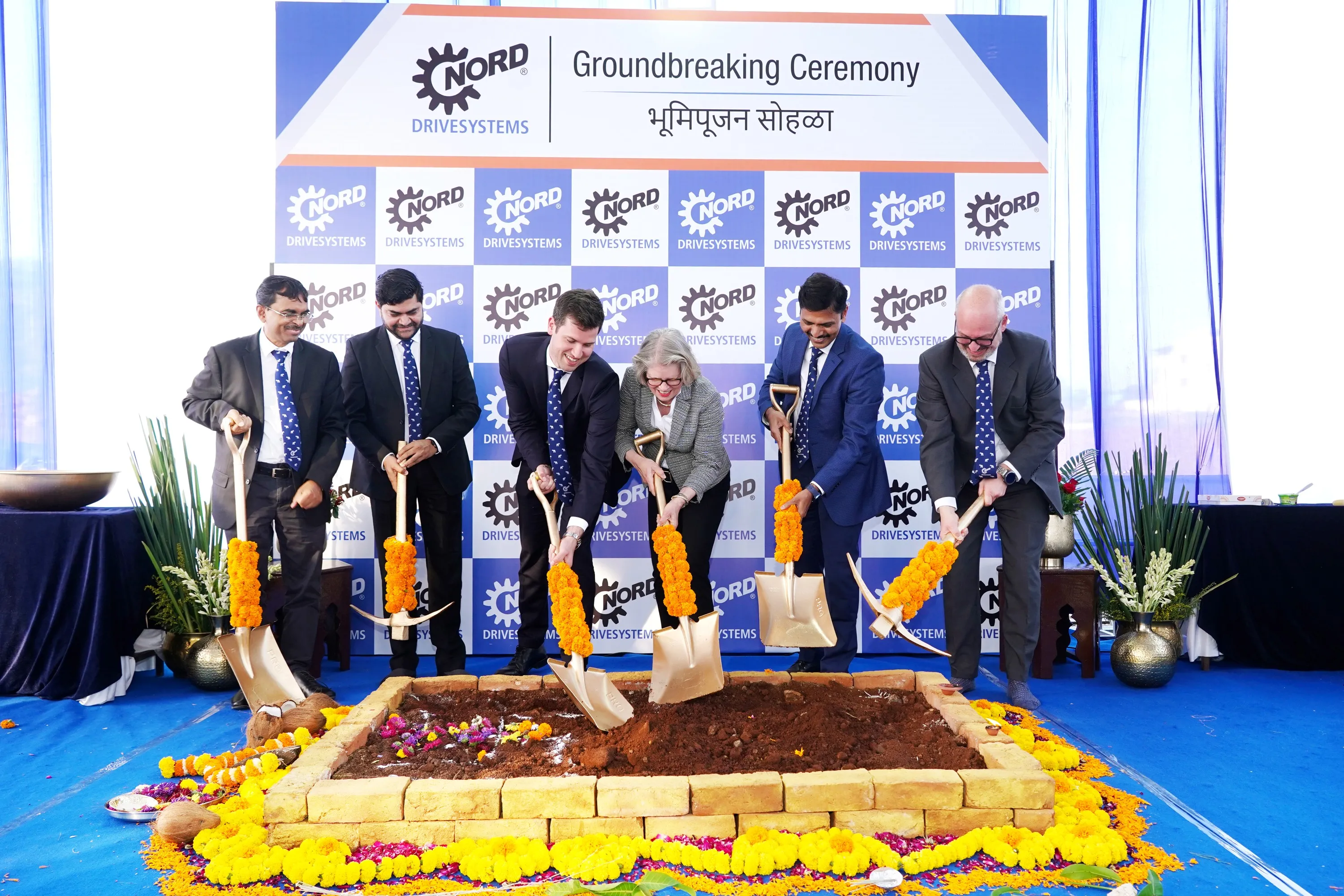
NORD India to invest Rs 4 billion in new Pune manufacturing facility

NORD Drivesystems India (NDPL) has commenced construction of a new manufacturing facility at RMK Industrial Park 3, near MIDC Talegaon Phase V, Pune, with a planned investment of Rs 4 billion. The expansion will double the company's gearbox and geared motor production capacity and introduce gear-component manufacturing.The facility will cater to domestic demand and exports to other NORD subsidiaries, including its headquarters in Germany. The company also plans to manufacture gears and related components at the new plant, supporting both the Indian market and global operations.Dhanraj Kalbhor,..

Advertisement

Subscribe to Our Newsletter

Get daily newsletters around different themes from Construction world.

STAY CONNECTED

Advertisement

SPECIAL OFFER
QR Code