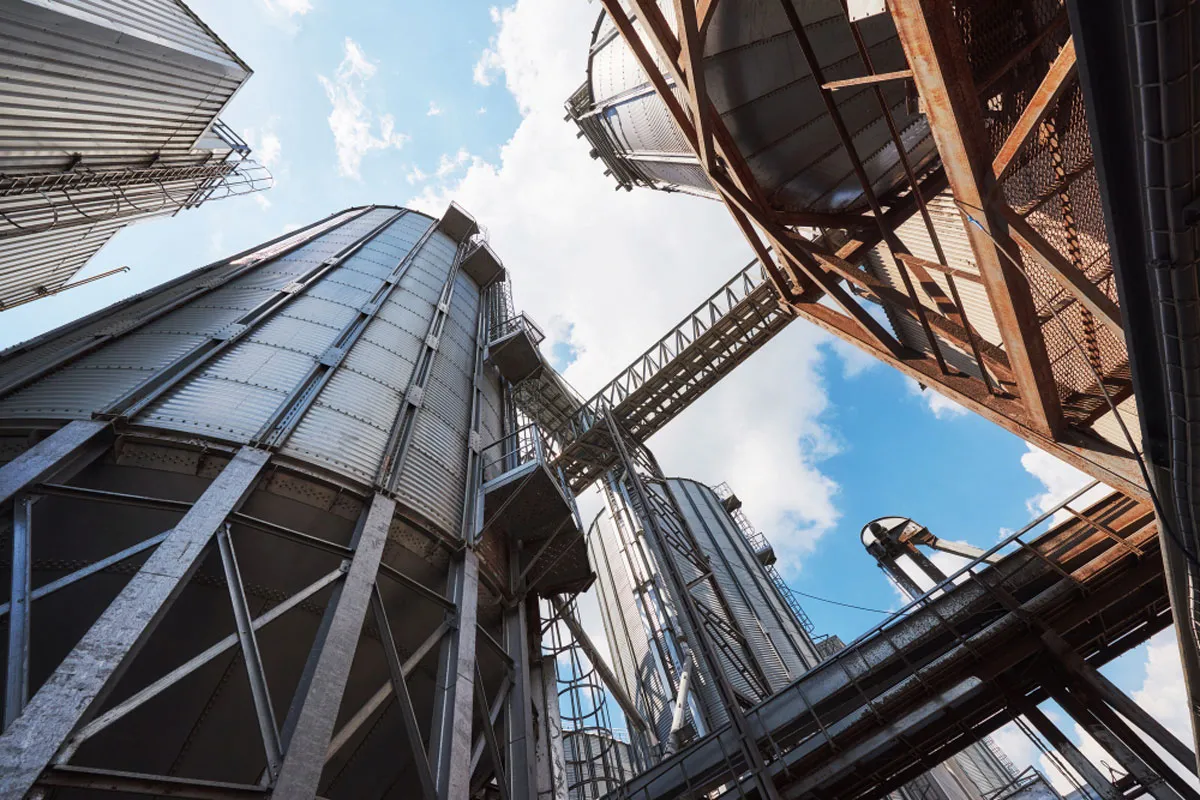
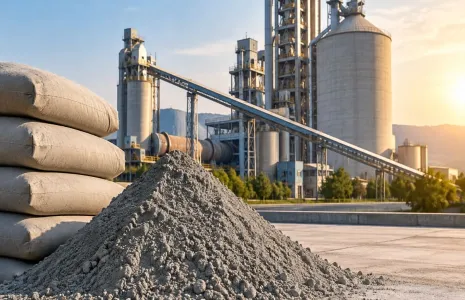
Operational excellence in cement is no longer about producing more – it is about producing smarter, cleaner and more reliably, where cost per tonne meets carbon per tonne.Operational excellence in cement has moved far beyond the old pursuit of ‘more tonne’. The new benchmark is smarter, cleaner, more reliable production, delivered with discipline across process, people and data. In an industry where energy can account for nearly 30 per cent of manufacturing cost, even marginal gains translate into meaningful value. As Dr SB Hegde, Professor, Jain College of Engineering & Technology, Hubli, and Visiting Professor, Pennsylvania State University, USA, puts it, “Operational excellence is no longer about producing more. It is about producing smarter, cleaner, more reliably, and more sustainably.” The shift is structural: carbon per tonne will increasingly matter as much as cost per tonne and competitiveness will be defined by the ability to stabilise operations while steadily lowering emissions.From control rooms to command centresThe modern cement plant is no longer a handful of loops watched by a few operators. Control rooms have evolved from a few hundred signals to thousands – today, up to 25,000 signals can compete for attention. Dr Rizwan Sabjan, Head - Global Sales and Proposals, Process Control and Optimization, Fuller Technologies, frames the core problem plainly: plants have added WHRS circuits, alternative fuels, higher line capacities and tighter quality expectations, but human attention remains finite. “It is impossible for an operator to operate the plant with so many things being added,” he says. “We need somebody who can operate 24×7 without any tiredness, without any distraction. The software can do that for us better.”This is where advanced process control shifts from ‘automation spend’ to a financial lever. Dr Hegde underlines the logic: “Automation is not a technology expense. It is a financial strategy.” In large kilns, a 1 per cent improvement is not incremental; it is compounding.Stability is the new productivityAt the heart of operational excellence lies stability. Not because stability is comfortable but because it is profitable and, increasingly, low carbon. When setpoints drift and operators chase variability, costs hide in refractory damage, thermal shocks, stop-start losses and quality swings. Dr Sabjan argues that algorithmic control can absorb process disturbances faster than any operator, acting as a ‘co-pilot’ or an ‘autopilot’, making changes as quick as possible rather than waiting for manual intervention. The result is not just fuel-saving; it is a steadier operation that extends refractory life and reduces avoidable downtime.The payoff can be seen through the lens of variability: manual operation often amplifies swings while closed-loop optimisation tightens control. As Dr Sabjan notes, “It’s not only about savings. There are many indirect benefits, like increasing the refractory life, because we are avoiding the thermal shocks.”Quality controlIf stability is the base, quality is the multiplier. A high-capacity plant can dispatch enormous volumes daily, and quality cannot be a periodic check; it must be continuous. Yet, as Dr Sabjan points out, the biggest error is not in analysis equipment but upstream: “Eighty per cent of the error is happening at the sampling level.” If sampling is inconsistent, even the best XRD (x-ray diffraction) and XRF (x-ray fluorescence) become expensive spectators.Automation closes the loop by standardising sample collection, transport, preparation, analysis and corrective action. “We do invest a lot of money on analytical equipment like XRD and XRF, but if it is not put on the closed loop, there’s no use of it,” he says, because results become person-dependent and slow.Raju Ramachandran, Chief Manufacturing Officer (East), Nuvoco Vistas Corp, reinforces the operational impact from the plant floor: “There’s a stark difference in what a RoboLab does in ensuring consistent quality. It starts right from the sample collection.” For him, automation is not about removing people; it is about making outcomes repeatable.Human-centric automationOne of the biggest barriers to performance is not hardware – it is fear. Dr Sabjan describes a persistent concern that digital tools exist to replace operators. “That’s not the way,” he says. “The technology is here to help operators; not to replace them but complement them.” The plants that realise this early tend to sustain performance because adoption becomes collaborative rather than forced.Dr Hegde adds an important caveat: tools can mislead without competence. “If you don’t have the knowledge about the data, it will mislead you. It is like using ChatGPT. It may give you flawed output.” His point is not anti-technology; it is pro-capability. Operational excellence now requires multidisciplinary teams – process, chemistry, physics, automation and reliability – working as one.GS Daga, Managing Director, SecMec Consultants, takes the argument further, warning that the technology curve can outpace human readiness: “Our technology AI will move fast and our people will be lagging behind.” For him, the industry’s most urgent intervention is systematic skilling, paired with the environment to apply those skills. Without that, even high-end systems remain underutilised.Digital energy managementDigital optimisation is no longer confined to pilots; its impact is increasingly quantifiable. Raghu Vokuda, Chief Digital Officer, JSW Cement, describes the outcomes in practical terms: reductions in specific power consumption close to “3-7 per cent”, improvements in process stability “10-20 per cent”, and thermal energy reductions “2-5 per cent”. He also highlights value beyond the process line – demand optimisation through forecasting models can reduce peak charges and optimisation of WHRS can deliver “1-3 per cent” efficiency gains.What matters is the operating approach. Rather than patchwork point solutions, he advocates blueprinting a model digital plant across pillars – maintenance, quality, energy, process, people, safety and sustainability – and then scaling. The difference is governance: defined ownership of data, harmonised OT-IT integration and dashboards designed for each decision layer – from shopfloor to plant head to network leadership.Predictive maintenanceReliability has become a boardroom priority because the cost of failure is blunt and immediate. Dr Hegde captures it crisply: “One day of kiln stoppage can cost several crores.” Predictive maintenance and condition monitoring change reliability from reaction to anticipation, provided plants invest in the right sensors and a holistic architecture.Dr Sabjan stresses the need for extra investment where existing instrumentation is insufficient – kiln shell monitoring, refractory monitoring and other critical measurements. The goal is early warning: “How to have those pre-warnings… where the failures are going to come and then ensure that the plant availability is high and downtime low.”Ramachandran adds that IoT sensors are increasingly enabling early intervention – temperature rise in bearings, vibration patterns, motor and gearbox signals – moving from prediction to prescription. The operational advantage is not only fewer failures but planned shutdowns: “Once the shutdown is planned in advance, you have lesser, unpredictable downtimes and, overall, you gain on productivity.”Alternative fuels and raw materials (AFR)As decarbonisation tightens, AFR becomes central. But scaling it is not simply a procurement decision. Vimal Kumar Jain, Technical Director, Heidelberg Cement, frames AFR as a structured programme built on three foundations: strong pre-processing infrastructure, consistent AFR quality, and a stable pyro process. “Only with the fundamentals in place can AFR be scaled safely, without compromising clinker quality or production stability.”He also flags a ground reality: India’s AFR streams are often seasonal and variable. “In one season to another season, there is major change, high variation in quality,” he says, making preprocessing capacity and quality discipline mandatory.Ramachandran argues the sector also needs ecosystem support: a framework for AFR preprocessing “hand in hand” between government and private players, so fuels arrive in forms that can be used efficiently and consistently.Design and execution disciplineOperational excellence is increasingly determined upstream, by the choices made in concept, layout, technology selection, operability and maintainability. Jain puts it unambiguously: “Long-term performance is largely decided before the plant is commissioned.” A disciplined design avoids bottlenecks that are expensive to fix later; disciplined execution ensures safe, smooth startup with fewer issues.He highlights an often-missed factor: continuity between project and operations teams. “When knowledge transfer is strong and ownership carries beyond commissioning, the plant stabilises much faster and lifecycle costs reduce significantly.”What will define the next decadeAcross the value chain, the future benchmark is clear: carbon intensity. “Carbon per tonne will matter as much as cost per tonne,” says Dr Hegde. Vokuda echoes this; he believes the industry will shift from optimising cost per tonne to carbon per tonne.The pathway, however, is practical rather than idealistic: low-clinker and blended cements, higher thermal substitution, renewable power integration, WHRS scaling and tighter energy-efficiency. Jain argues for policy realism: if blended cement can meet quality, why should it not be allowed more widely, particularly in government projects, and why can supplementary materials not be used more ambitiously where performance is proven?At the same time, the sector must prepare for Carbon Capture, Utilisation and Storage (CCUS) without waiting for it. Jain calls for CCUS readiness – designing plants so capture can be added later without disruptive retrofits – while acknowledging that large-scale rollout may take time as costs remain high.Ultimately, operational excellence will belong to plants that integrate – not isolate – the levers: process stability, quality automation, structured AFR, predictive reliability, disciplined execution, secure digitalisation and continuous learning. As Dr Sabjan notes, success will not come from one department owning the change: “Everybody has to own it; then, the results could be wonderful.”And as Daga reminds the industry, the future will reward those who keep their feet on the ground while adopting the new: “I don’t buy technology for the sake of technology. It has to make commercial sense.” In the next decade, that commercial sense will be written in two numbers – cost per tonne and carbon per tonne – delivered through stable, skilled and digitally disciplined operations.- KARTHIK M(This article is based on the virtual panel discussion on ‘Driving Operational Excellence in Cement’, organised by Indian Cement Review, in association with Fuller Technologies, on February 26, 2026.)