

State Defends Cement Land Deal in High Court
Cement

State Defends Cement Land Deal in High Court

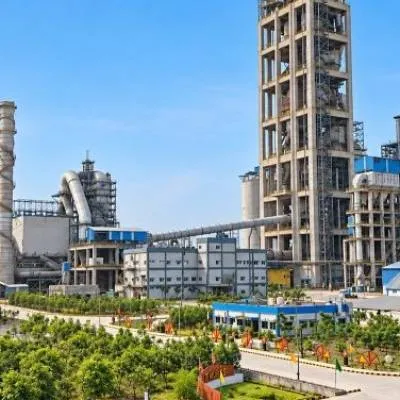
The Assam government informed the Gauhati High Court that it had adhered to the due process of law while leasing 3,000 bighas of land to Mahabal Cement for the establishment of an integrated cement plant in Dima Hasao district.
Appearing before the court, State Advocate General Devajit Saikia clarified that construction activities would only begin after obtaining clearances from the Union Ministry of Environment and Forests as well as the Pollution Control Board. He presented a report from a government-appointed three-member committee which assessed the allotment’s legality, land suitability, and environmental implications.
According to Saikia, Mahabal Cement, a unit under the Trivikram Consortium, had requested 6,000 bighas of land but was allotted 3,000 bighas in two phases by the autonomous district council. The land has been leased for 30 years at an annual rate of Rs 250 per bigha, along with a one-time land premium of Rs 2 million per bigha.
Of the total land granted, approximately 1,782 bighas are usable for the cement plant and supporting infrastructure such as roads, railway sidings, environmental facilities, a solar plant, parking, residential quarters, and 554 bighas of vacant open space. Saikia emphasised that 34 per cent of the total land must be retained as green cover in compliance with environmental regulations.
He further stated that the autonomous council is empowered to allot land in this Sixth Schedule area and that the state’s Ceiling Act does not apply. He assured the court that final approval for the project rests with central regulatory agencies, and no machinery will be mobilised until all necessary permissions are secured.
The High Court has directed the petitioners to respond to the government’s affidavit in the matter. 

The Assam government informed the Gauhati High Court that it had adhered to the due process of law while leasing 3,000 bighas of land to Mahabal Cement for the establishment of an integrated cement plant in Dima Hasao district.Appearing before the court, State Advocate General Devajit Saikia clarified that construction activities would only begin after obtaining clearances from the Union Ministry of Environment and Forests as well as the Pollution Control Board. He presented a report from a government-appointed three-member committee which assessed the allotment’s legality, land suitability, and environmental implications.According to Saikia, Mahabal Cement, a unit under the Trivikram Consortium, had requested 6,000 bighas of land but was allotted 3,000 bighas in two phases by the autonomous district council. The land has been leased for 30 years at an annual rate of Rs 250 per bigha, along with a one-time land premium of Rs 2 million per bigha.Of the total land granted, approximately 1,782 bighas are usable for the cement plant and supporting infrastructure such as roads, railway sidings, environmental facilities, a solar plant, parking, residential quarters, and 554 bighas of vacant open space. Saikia emphasised that 34 per cent of the total land must be retained as green cover in compliance with environmental regulations.He further stated that the autonomous council is empowered to allot land in this Sixth Schedule area and that the state’s Ceiling Act does not apply. He assured the court that final approval for the project rests with central regulatory agencies, and no machinery will be mobilised until all necessary permissions are secured.The High Court has directed the petitioners to respond to the government’s affidavit in the matter. 

Next Story
Infrastructure Transport

India Becomes First to Produce Bio-Bitumen for Roads

India has become the first country in the world to commercially produce bio-bitumen for use in road construction, according to Road, Transport and Highways Minister Nitin Gadkari. Bitumen, a black and viscous hydrocarbon derived from crude oil, is a key binding material in road building, and the bio-based alternative is expected to significantly improve the sector’s environmental footprint.Addressing the CSIR Technology Transfer Ceremony in New Delhi, Mr Gadkari congratulated Council of Scientific and Industrial Research on achieving the milestone, noting that the initiative would help curb ..

Next Story
Infrastructure Urban

HILT Policy Seen Boosting Telangana Revenue Sharply

The Hyderabad Industrial Land Transformation (HILT) Policy is expected to generate around Rs 1.08 billion in revenue for the Telangana state exchequer, according to Deputy Chief Minister Bhatti Vikramarka Mallu. Speaking in the Telangana Legislative Assembly, he said the policy would be implemented within a six-month timeframe in a transparent manner, with uniform rules applicable to all stakeholders. Mr Vikramarka noted that without the HILT Policy, the state would have earned only about Rs 1.2 million per acre. Under the new framework, however, revenue is projected to rise sharply to Rs 70 ..

Next Story
Infrastructure Urban

India Post, MoRD Tie Up to Boost Rural Inclusion

The Department of Posts and the Ministry of Rural Development have signed a Memorandum of Understanding to accelerate rural transformation and expand financial, digital and logistics services for Self-Help Groups (SHGs) and rural households across India. The agreement was signed in the presence of Union Minister of Communications and Development of North Eastern Region Jyotiraditya M. Scindia and Union Minister of Rural Development and Agriculture and Farmers’ Welfare Shivraj Singh Chouhan. The collaboration aligns with the government’s “Dak Sewa, Jan Sewa” vision and seeks to repositi..

Advertisement

Subscribe to Our Newsletter

Get daily newsletters around different themes from Construction world.

STAY CONNECTED

Advertisement

Advertisement

Advertisement

Advertisement

Open In App