ADB Launches Fund For Critical Minerals Manufacturing Ecosystem
COAL & MINING

ADB Launches Fund For Critical Minerals Manufacturing Ecosystem

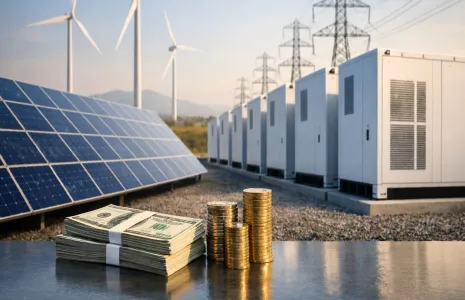
The Asian Development Bank (ADB) has launched a financing facility to strengthen critical minerals supply chains across Asia and the Pacific as demand rises for inputs used in clean energy, batteries, electric vehicles and digital technologies. The initiative seeks to help countries move beyond raw material extraction and build capacity in processing, manufacturing and recycling.

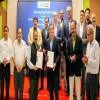
At the bank's 59th Annual Meeting ADB President Masato Kanda said that critical minerals would shape the next industrial era and that the region should aim to capture the jobs, technology and value these materials provide rather than serve only as a source of raw materials. He described the facility as addressing urgency and fairness by building responsible supply chains so developing member countries can compete in advanced manufacturing and create opportunities at home.

The Critical Minerals to Manufacturing Financing Partnership Facility will support project preparation, policy reforms and investment across the value chain and will include both a grant window and a catalytic finance window. The grant component will fund early stage activities such as feasibility studies, environmental and social assessments, technical assistance and knowledge sharing. Japan has committed 20 mn dollars to the grant window while the United Kingdom has pledged one point six mn dollars.

The catalytic finance window is designed to mobilise cofinancing and to share risks with other partners, and Korea Eximbank and the Korean Trade Insurance Corporation, also known as K-SURE, have each signed 500 mn dollars memorandums as the facility's first partners. The programme builds on ADB's 2025 strategy to support responsible and sustainable minerals value chains and the bank is already involved in projects including battery manufacturing and recycling in India, geological data mapping in Mongolia and AI driven metals production in Uzbekistan. All projects under the facility will be subject to ADB's environmental and social safeguards, due diligence and impact assessments and the initiative aims to support job creation, strengthen industrial capacity and meet growing demand for clean energy and digital technologies across the region.

The Asian Development Bank (ADB) has launched a financing facility to strengthen critical minerals supply chains across Asia and the Pacific as demand rises for inputs used in clean energy, batteries, electric vehicles and digital technologies. The initiative seeks to help countries move beyond raw material extraction and build capacity in processing, manufacturing and recycling. At the bank's 59th Annual Meeting ADB President Masato Kanda said that critical minerals would shape the next industrial era and that the region should aim to capture the jobs, technology and value these materials provide rather than serve only as a source of raw materials. He described the facility as addressing urgency and fairness by building responsible supply chains so developing member countries can compete in advanced manufacturing and create opportunities at home. The Critical Minerals to Manufacturing Financing Partnership Facility will support project preparation, policy reforms and investment across the value chain and will include both a grant window and a catalytic finance window. The grant component will fund early stage activities such as feasibility studies, environmental and social assessments, technical assistance and knowledge sharing. Japan has committed 20 mn dollars to the grant window while the United Kingdom has pledged one point six mn dollars. The catalytic finance window is designed to mobilise cofinancing and to share risks with other partners, and Korea Eximbank and the Korean Trade Insurance Corporation, also known as K-SURE, have each signed 500 mn dollars memorandums as the facility's first partners. The programme builds on ADB's 2025 strategy to support responsible and sustainable minerals value chains and the bank is already involved in projects including battery manufacturing and recycling in India, geological data mapping in Mongolia and AI driven metals production in Uzbekistan. All projects under the facility will be subject to ADB's environmental and social safeguards, due diligence and impact assessments and the initiative aims to support job creation, strengthen industrial capacity and meet growing demand for clean energy and digital technologies across the region.

Next Story
Infrastructure Urban

Cabinet Approves Mission For Cotton Productivity

The Union Cabinet has approved Rs 56.59 billion (bn) for the Mission for Cotton Productivity covering the period 2026–27 to 2030–31, with the objective of addressing bottlenecks, reversing declining growth and improving quality in India’s cotton sector. The initiative aligns with the Government of India’s five F vision from farm to foreign and is intended to raise the competitiveness of the textile sector in global markets through coordinated action across ministries and research bodies. The mission will support the development of high-yielding variety (HYV) seeds that are climate resi..

Next Story
Infrastructure Transport

Cabinet Approves Three Rail Multitracking Projects

The Cabinet Committee on Economic Affairs, chaired by the Prime Minister, approved three multitracking projects for the Ministry of Railways at a total cost of Rs 234.37 billion (bn). The projects are Nagda–Mathura third and fourth line, Guntakal–Wadi third and fourth line, and Burhwal–Sitapur third and fourth line. The investment is intended to increase line capacity and improve operational efficiency and service reliability for Indian Railways. The schemes cover 19 districts across Madhya Pradesh, Rajasthan, Uttar Pradesh, Karnataka, Andhra Pradesh and Telangana and will increase the e..

Next Story
Infrastructure Transport

Cabinet Approves Ship Repair Facility At Vadinar

The Cabinet Committee on Economic Affairs has approved the development of a state of the art ship repair facility at Vadinar in Gujarat, to be jointly implemented by Deendayal Port Authority (DPA) and Cochin Shipyard Limited (CSL). The project carries a combined investment of Rs 15.7 billion (Rs 15.7 bn). It is planned as a brownfield facility with a 650 metres jetty, two large floating dry docks, workshops and associated marine infrastructure. Vadinar has a natural deep draft and direct connectivity to major shipping routes and its proximity to ports such as Mundra and Kandla makes it favoura..

Advertisement

Subscribe to Our Newsletter

Get daily newsletters around different themes from Construction world.

STAY CONNECTED

Advertisement

Advertisement

Advertisement