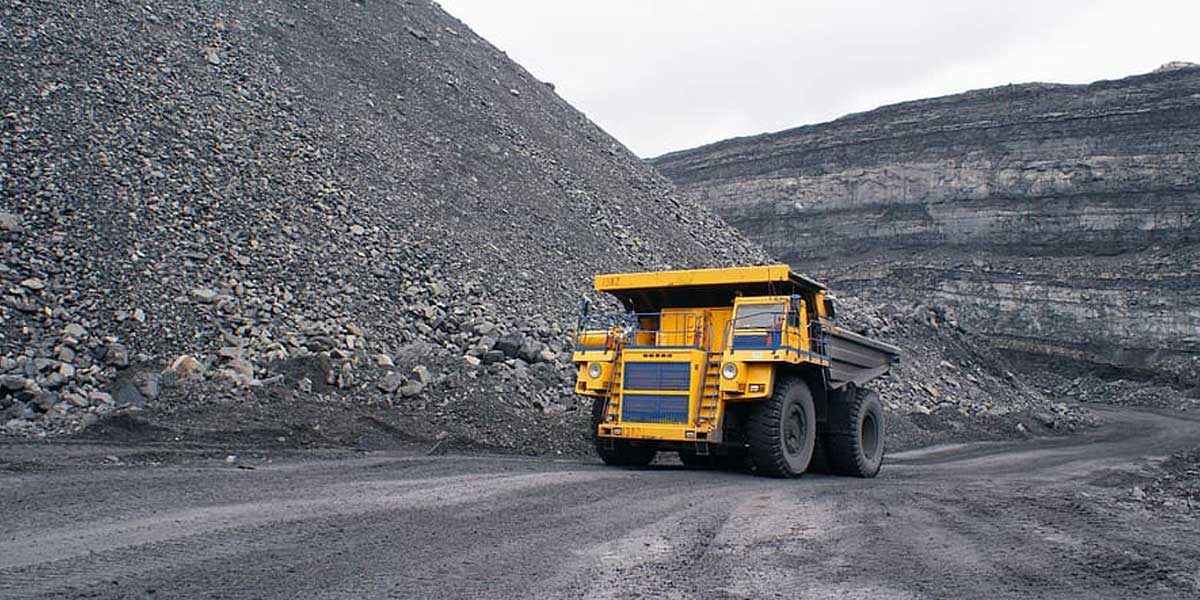
Coal and Mines Ministry reviews National Mineral Exploration Trust
COAL & MINING

Coal and Mines Ministry reviews National Mineral Exploration Trust

The Consultative Committee for the Ministry of Coal and Mines had convened at the Parliament House Annexe on September 19th to assess the performance of the National Mineral Exploration Trust (NMET). During the session, it was reported in a Ministry of Coal press release that Union Minister of Coal, Mines, and Parliamentary Affairs, Pralhad Joshi, had stressed the government's commitment to enhancing mineral exploration with the aim of achieving self-reliance in mineral production.

He mentioned that Joshi had highlighted the significance of India's recently published list of 30 Critical Minerals, emphasizing the ongoing efforts to expedite the auction process for these critical minerals within the country. The primary focus of the meeting was the "Performance of NMET concerning its role and responsibility in promoting exploration in the country." The Ministry of Mines, led by VL Kantha Rao, Secretary, provided the committee members with an overview of NMET's performance. It was pointed out that 25 percent of the project cost had been allocated as an incentive for deep-seated and Critical Mineral exploration. For the purpose of promoting mineral exploration, NMET had granted approval to 309 projects with a total value of Rs 21 billion for regional and detailed exploration across the country.

These projects were being carried out by various Notified Exploration Agencies and Notified Private Exploration Agencies (NEAs & NPEAs). Out of the 309 projects that had received approval, 151 had already been successfully completed, while the rest were still in progress. Additionally, eleven blocks had been auctioned by the respective State Governments, resulting in an approximate revenue of Rs 1.69 trillion for the country throughout the lifespan of the mines.

The Consultative Committee for the Ministry of Coal and Mines had convened at the Parliament House Annexe on September 19th to assess the performance of the National Mineral Exploration Trust (NMET). During the session, it was reported in a Ministry of Coal press release that Union Minister of Coal, Mines, and Parliamentary Affairs, Pralhad Joshi, had stressed the government's commitment to enhancing mineral exploration with the aim of achieving self-reliance in mineral production. He mentioned that Joshi had highlighted the significance of India's recently published list of 30 Critical Minerals, emphasizing the ongoing efforts to expedite the auction process for these critical minerals within the country. The primary focus of the meeting was the Performance of NMET concerning its role and responsibility in promoting exploration in the country. The Ministry of Mines, led by VL Kantha Rao, Secretary, provided the committee members with an overview of NMET's performance. It was pointed out that 25 percent of the project cost had been allocated as an incentive for deep-seated and Critical Mineral exploration. For the purpose of promoting mineral exploration, NMET had granted approval to 309 projects with a total value of Rs 21 billion for regional and detailed exploration across the country. These projects were being carried out by various Notified Exploration Agencies and Notified Private Exploration Agencies (NEAs & NPEAs). Out of the 309 projects that had received approval, 151 had already been successfully completed, while the rest were still in progress. Additionally, eleven blocks had been auctioned by the respective State Governments, resulting in an approximate revenue of Rs 1.69 trillion for the country throughout the lifespan of the mines.

Next Story
Infrastructure Urban

Implementation Status of Jal Jeevan Mission

Since August 2019 the Government has implemented Jal Jeevan Mission to provide assured potable water through household tap connections in rural India. At the start of the mission only 32.3 million (mn) rural households, representing 16.7 per cent, were reported to have tap water connections. States and union territories have reported that 125.8 mn additional rural households have since been provided with tap connections. As a result, of about 193.6 mn rural households roughly 158.2 mn, or 81.71 per cent, are reported to have tap water supply at home.\n\nThe State, district and village level st..

Next Story
Infrastructure Urban

Jal Jeevan Mission Reaches Eighty One Per Cent Rural Coverage

The Government reported substantial progress under the Jal Jeevan Mission, launched in August 2019 to provide tap water to every rural household. At launch only 32.3 million (mn) rural households had tap connections and states and Union territories reported provision of 125.8 mn additional households by March 2026. Consequently, out of about 193.6 mn rural households around 158.2 mn, or 81.71 per cent, are reported to have tap water at home. The Finance Minister announced extension of the mission until 2028 in the 2025-26 budget speech. The Swachh Bharat Mission Grameen, launched in October 20..

Next Story
Infrastructure Urban

Empowering Local Governance for Sustainable Rural Water Supply

The Ministry of Jal Shakti has aligned the Jal Jeevan Mission (JJM) with the 73rd Amendment to strengthen village level planning and community ownership of water supply. Gram Panchayats, village water and sanitation committees and Pani Samitis are to plan, implement, manage and maintain piped water systems, with gram sabha processes formalising handover and oversight. Implementation support agencies including non government organisations, community based organisations and self help groups have been empanelled to train local committees and promote women participation. Under JJM, the department ..

Advertisement

Subscribe to Our Newsletter

Get daily newsletters around different themes from Construction world.

STAY CONNECTED

Advertisement

Advertisement

Advertisement