SAIL and RITES Sign MoU for Diesel Locomotive Leasing and Maintenance
ECONOMY & POLICY

SAIL and RITES Sign MoU for Diesel Locomotive Leasing and Maintenance

Steel Authority of India Limited (SAIL) has entered a memorandum of understanding with Rail India Technical and Economic Service (RITES) to strengthen locomotive leasing and maintenance across plant and mine networks. SAIL is a Maharatna central public sector enterprise and RITES is a Navratna central public sector enterprise. The agreement seeks to reinforce logistics and operational efficiency by combining SAIL's internal rail operations with RITES's technical expertise and access to Indian Railways facilities and spares.

SAIL operates a dedicated mini rail network within plant and mine premises to manage inbound raw materials, in process transfers and outbound finished products. Effective maintenance of the diesel locomotive fleet, supported by wet leased locomotives, is essential to sustain operations and to enable planned capacity expansion. The collaboration aims to improve reliability across the network and to reduce downtime through scheduled maintenance, spare part supply and deployment of skilled manpower.

While Indian Railways continues to accelerate its transition to electric locomotives, RITES retains specialist capability in diesel locomotive operations and maintenance that remains critical for industrial rail users. RITES will leverage its technical knowledge, access to workshops and inventories and a pool of trained personnel to support SAIL's fleet requirements. The arrangement is expected to optimise maintenance timetables, lower lifecycle costs and enhance operational predictability for material movements within industrial sites.

The partners expect the collaboration to allow each organisation to focus on core competencies while sharing infrastructure and technical services to optimise operating expenditure and asset utilisation. The initiative is presented as contributing to wider sustainability goals by enabling more efficient diesel use during transition and by reducing emissions associated with inefficient operations. The memorandum was executed by the executive director responsible for operations at SAIL and the executive director for technical services at RITES in the presence of senior officials from both organisations.

Steel Authority of India Limited (SAIL) has entered a memorandum of understanding with Rail India Technical and Economic Service (RITES) to strengthen locomotive leasing and maintenance across plant and mine networks. SAIL is a Maharatna central public sector enterprise and RITES is a Navratna central public sector enterprise. The agreement seeks to reinforce logistics and operational efficiency by combining SAIL's internal rail operations with RITES's technical expertise and access to Indian Railways facilities and spares. SAIL operates a dedicated mini rail network within plant and mine premises to manage inbound raw materials, in process transfers and outbound finished products. Effective maintenance of the diesel locomotive fleet, supported by wet leased locomotives, is essential to sustain operations and to enable planned capacity expansion. The collaboration aims to improve reliability across the network and to reduce downtime through scheduled maintenance, spare part supply and deployment of skilled manpower. While Indian Railways continues to accelerate its transition to electric locomotives, RITES retains specialist capability in diesel locomotive operations and maintenance that remains critical for industrial rail users. RITES will leverage its technical knowledge, access to workshops and inventories and a pool of trained personnel to support SAIL's fleet requirements. The arrangement is expected to optimise maintenance timetables, lower lifecycle costs and enhance operational predictability for material movements within industrial sites. The partners expect the collaboration to allow each organisation to focus on core competencies while sharing infrastructure and technical services to optimise operating expenditure and asset utilisation. The initiative is presented as contributing to wider sustainability goals by enabling more efficient diesel use during transition and by reducing emissions associated with inefficient operations. The memorandum was executed by the executive director responsible for operations at SAIL and the executive director for technical services at RITES in the presence of senior officials from both organisations.

Related Stories

Gold Stories

Next Story
Infrastructure Urban

KONE Opens India's First Digital Experience Centre in Pune

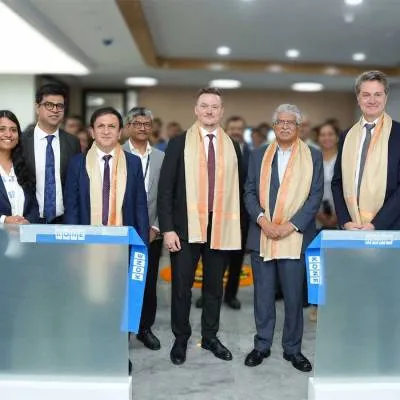
KONE, a global elevator and escalator manufacturer, has inaugurated its first Digital Experience Centre (DEC) in India, located in Pune. The facility aims to showcase how artificial intelligence (AI), connectivity and data-driven technologies can enhance customer experiences and improve building operations.The centre was inaugurated by Jussi Herlin, Executive Vice Chair, KONE Corporation; Philippe Delorme, President and CEO, KONE; and Nandan Nilekani, Co-founder and Chairman of the Board, Infosys.Designed as an interactive customer environment, the facility demonstrates digital solutions cover..

Next Story
Infrastructure Urban

CII GreenCo Launches Circularity Guidelines for Indian Industry

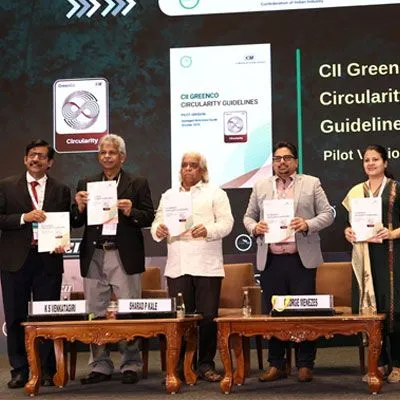
The Confederation of Indian Industry (CII) GreenCo Council has launched the CII GreenCo Circularity Guidelines – Pilot Version at the 17th CII GreenCo Waste & Resource Management Summit 2026 in Chennai. The initiative aims to strengthen resource efficiency, waste reduction and circular economy practices across Indian manufacturing and process industries.The guidelines introduce a structured framework with circularity indices covering raw materials, consumables, packaging and other resource inputs. These indicators will help industries assess existing practices, identify opportunities to ..

Next Story
Infrastructure Energy

Global Electronics Association Launches IPC-1783-CO2E Standard

The Global Electronics Association has introduced IPC-1783-CO2E, a new international standard aimed at improving consistency, transparency and comparability in product carbon footprint reporting across the electronics manufacturing industry.The standard, titled International Standard for Data Collection and Reporting of CO2 Equivalent (CO2e) Emissions for the Electronics Manufacturing Supply Chain, provides industry-specific guidance for collecting, estimating and reporting carbon emissions data.With increasing regulatory requirements and customer expectations, electronics manufacturers face c..

Advertisement

Subscribe to Our Newsletter

Get daily newsletters around different themes from Construction world.

STAY CONNECTED

Advertisement

SPECIAL OFFER
QR Code