Coal Sector Boosts Output while Tightening Green and Safety Standards
COAL & MINING

Coal Sector Boosts Output while Tightening Green and Safety Standards

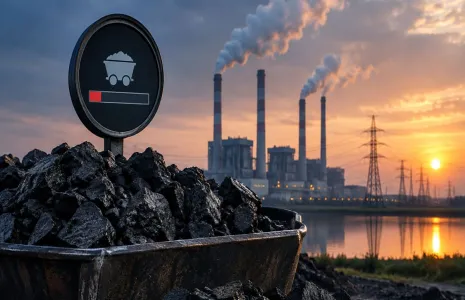
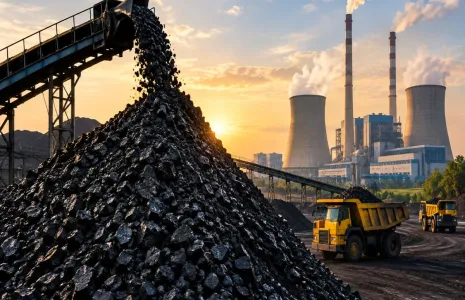
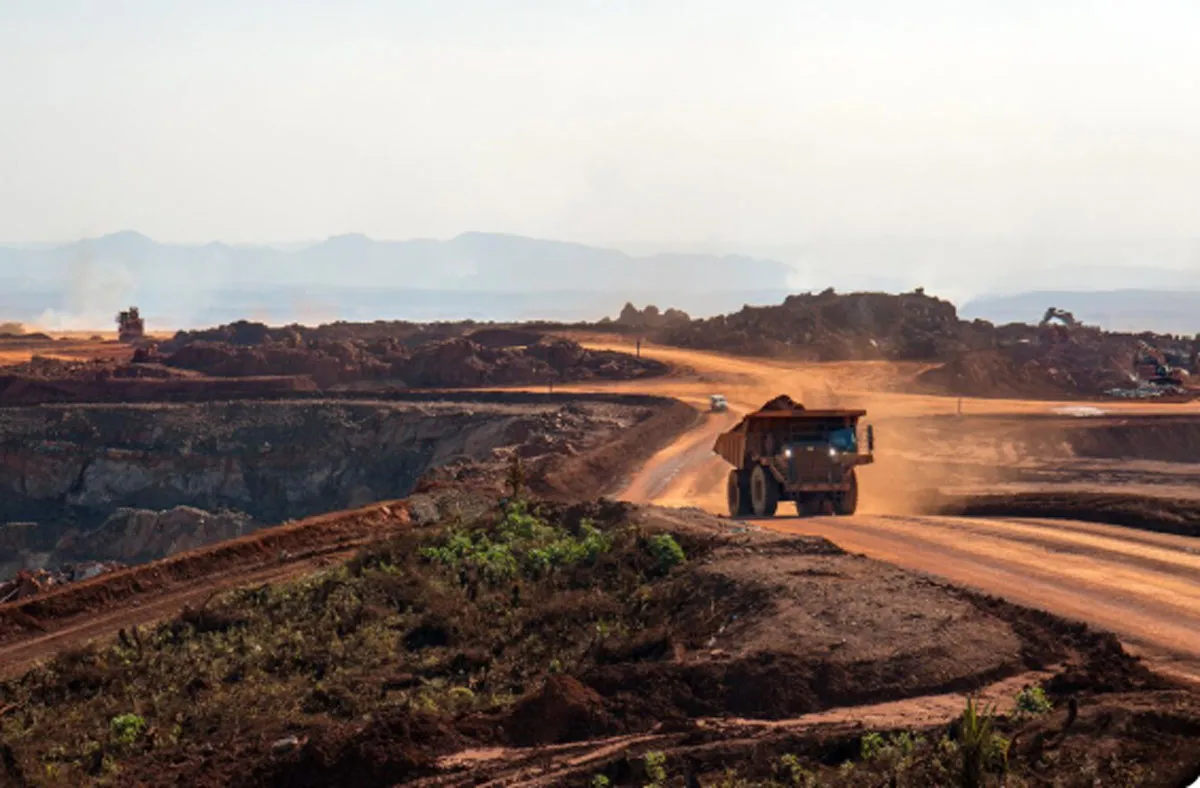
India’s coal sector is set for a significant expansion, with a national raw coal production target of 1,157 million tonnes for 2025–26. Of this, Coal India is expected to produce 875 million tonnes, Singareni Collieries Company 72 million tonnes, and captive and commercial miners 210 million tonnes. The Ministry of Coal has also outlined a longer-term goal of raising domestic output to 1.5 billion tonnes by 2029–30 to meet rising energy demand and reduce reliance on imports.

Coal producing PSUs continue to operate under strict environmental standards. Every new or expanding project undergoes mandatory Environment Clearances supported by Environmental Impact Assessments and Environmental Management Plans. Land reclamation is carried out according to approved mining plans, and Coal PSUs implement a wide range of measures to mitigate environmental impact. These include stringent enforcement of major environmental laws, promotion of green mining technologies, enhanced air quality monitoring, water reuse, land restoration and mine closure protocols, extensive plantation efforts, use of the PARIVESH portal for compliance, and close coordination with CPCB, state pollution control boards, and the Ministry of Environment, Forest and Climate Change.

Efforts to reduce the environmental footprint also extend to coal beneficiation. Newly commissioned and upcoming washeries incorporate advanced systems such as heavy media cyclones, teeter bed separators, spiral concentrators and froth flotation units, all designed for zero-effluent discharge. Upgrades to older washeries are underway to improve efficiency and sustainability.

The government’s coal gasification scheme, approved in January 2024 with an Rs 85 billion outlay, has selected seven projects expected to use around 11.76 million tonnes of coal annually once operational.

In parallel, 133 coal mines have been auctioned across 12 rounds in five years, with a peak rated capacity of 276.04 million tonnes per annum. Once fully operational, they are projected to generate Rs 387.10 billion in revenue, attract Rs 414.07 billion in investment and create over 3.7 lakh jobs.

Coal India is also reviving discontinued underground mines through a revenue-sharing model. So far, 32 mines have been identified and Letters of Acceptance issued for 28 with a combined capacity of 39.28 MTPA. Production has already commenced at two mines—BCCL’s PB Project and ECL’s Gopinathpur Project—in FY 2025–26.

News source: PIB


India’s coal sector is set for a significant expansion, with a national raw coal production target of 1,157 million tonnes for 2025–26. Of this, Coal India is expected to produce 875 million tonnes, Singareni Collieries Company 72 million tonnes, and captive and commercial miners 210 million tonnes. The Ministry of Coal has also outlined a longer-term goal of raising domestic output to 1.5 billion tonnes by 2029–30 to meet rising energy demand and reduce reliance on imports.Coal producing PSUs continue to operate under strict environmental standards. Every new or expanding project undergoes mandatory Environment Clearances supported by Environmental Impact Assessments and Environmental Management Plans. Land reclamation is carried out according to approved mining plans, and Coal PSUs implement a wide range of measures to mitigate environmental impact. These include stringent enforcement of major environmental laws, promotion of green mining technologies, enhanced air quality monitoring, water reuse, land restoration and mine closure protocols, extensive plantation efforts, use of the PARIVESH portal for compliance, and close coordination with CPCB, state pollution control boards, and the Ministry of Environment, Forest and Climate Change.Efforts to reduce the environmental footprint also extend to coal beneficiation. Newly commissioned and upcoming washeries incorporate advanced systems such as heavy media cyclones, teeter bed separators, spiral concentrators and froth flotation units, all designed for zero-effluent discharge. Upgrades to older washeries are underway to improve efficiency and sustainability.The government’s coal gasification scheme, approved in January 2024 with an Rs 85 billion outlay, has selected seven projects expected to use around 11.76 million tonnes of coal annually once operational.In parallel, 133 coal mines have been auctioned across 12 rounds in five years, with a peak rated capacity of 276.04 million tonnes per annum. Once fully operational, they are projected to generate Rs 387.10 billion in revenue, attract Rs 414.07 billion in investment and create over 3.7 lakh jobs.Coal India is also reviving discontinued underground mines through a revenue-sharing model. So far, 32 mines have been identified and Letters of Acceptance issued for 28 with a combined capacity of 39.28 MTPA. Production has already commenced at two mines—BCCL’s PB Project and ECL’s Gopinathpur Project—in FY 2025–26.News source: PIB

Next Story
Infrastructure Urban

ISRO’s IMAT Success Boosts Readiness for Maiden Gaganyaan Mission

Union Minister of State for Science and Technology Dr Jitendra Singh informed Parliament that ISRO has achieved a key milestone in its preparations for India’s first human space mission with the successful completion of the Integrated Main Parachute Airdrop Test (IMAT). He said in the Lok Sabha that the test forms a central part of the qualification campaign for the Crew Module’s parachute-based deceleration system, one of the most vital elements in human-rating the mission.According to Dr. Jitendra Singh, the IMAT recreated one of the most demanding descent conditions by intentionally del..

Next Story
Infrastructure Urban

Gyanesh Kumar Takes Charge as Chair of International IDEA Council

Chief Election Commissioner of India Gyanesh Kumar has assumed the Chairship of the Council of Member States of the International Institute for Democracy and Electoral Assistance for 2026. The ceremony in Stockholm was also attended by India’s Ambassador to Sweden, Anurag Bhushan. India, a founding member of International IDEA, has long contributed to the organisation’s governance and global democratic dialogue, and the new Chairship signals broad recognition of the Election Commission of India as a trusted and innovative election management institution.During his visit, Kumar held discuss..

Next Story
Infrastructure Energy

Coal Mines Boost Local Growth and Support India’s Energy Self-reliance

The Magadh and Amrapali coal mines in Jharkhand are playing a pivotal role in strengthening India’s energy security, contributing nearly half of Central Coalfields Limited’s total coal production in 2024–25. Both mines support the broader goal of ensuring steady coal availability for the power sector under the vision of Aatmanirbhar Bharat. Magadh has estimated mineable reserves of 854.91 million tonnes, while Amrapali holds 456.34 million tonne. For FY 2025–26, the two are expected to generate net sales revenues of Rs 28.12 billion and Rs 23.67 billion respectively. Local development ..

Advertisement

Subscribe to Our Newsletter

Get daily newsletters around different themes from Construction world.

STAY CONNECTED

Advertisement

Advertisement

Advertisement

Advertisement

Get CW App