


J&K Mandates GPS, RFID For Mineral Transport
COAL & MINING

J&K Mandates GPS, RFID For Mineral Transport

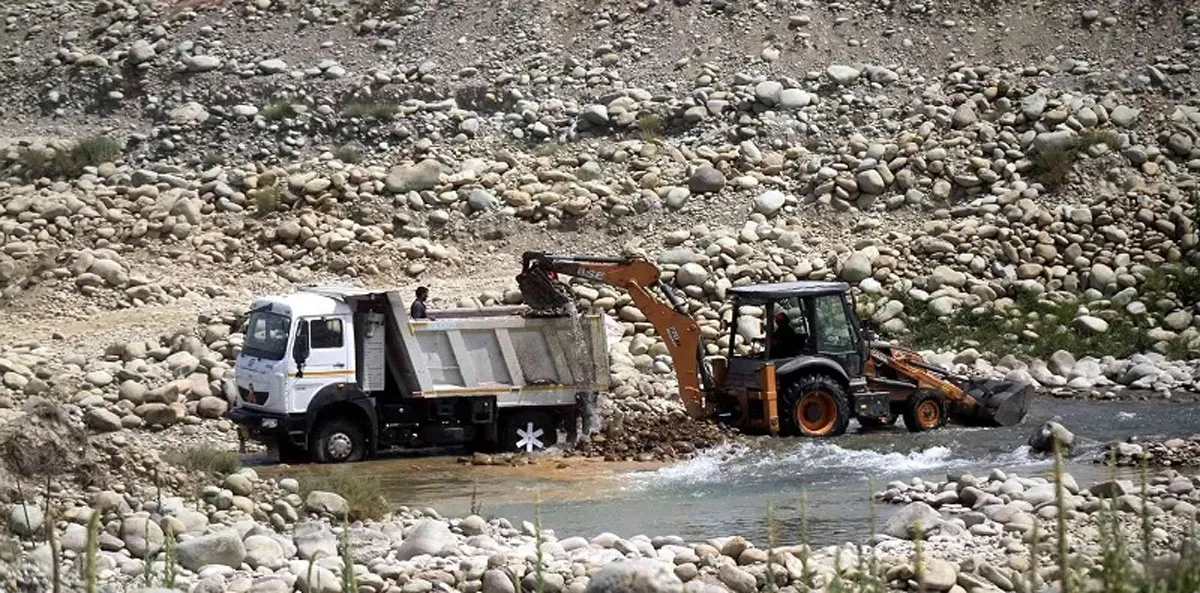
The Government of Jammu and Kashmir has amended rules governing the concession, storage and transportation of minor minerals, making GPS-enabled vehicles, RFID registration and a valid e-Challan mandatory for mineral movement across the Union Territory. The measures aim to curb large-scale illegal mining and strengthen compliance, officials said.

The Mining Department has set January 26, 2026, as the deadline for full compliance with GPS, RFID and e-Challan requirements. The changes were notified by Additional Chief Secretary Anil Kumar Singh under amendments to the Jammu and Kashmir Minor Mineral Concession, Storage, Transportation of Minerals and Prevention of Illegal Mining Rules, 2016, in exercise of powers under the Mines and Minerals (Development and Regulation) Act.

Under the revised Rule 71, no mineral concessionaire—including mining lessees, licensees, permit holders, crusher units and brick kiln operators—may transport minerals such as riverbed material, nallah muck, stone, boulders, sand, clay, crushed bajri and bricks without GPS-enabled vehicles registered with the department and carrying a unique RFID number. Transport will also require a valid e-Challan in Form ‘A’, bearing a QR code or watermark generated via the department’s designated portal.

All vehicles and machinery used for extraction and transportation must be registered with the department and fitted with operational GPS tracking systems. In addition, a GST-compliant invoice must be issued by the consignor to the buyer for the movement of raw or processed minor minerals.

Officials said a pilot of GPS-enabled mineral ?????? in Samba district was successful, and the compliance framework will be rolled out across the Union Territory by the January 26, 2026 deadline following awareness and enforcement drives. The department is also setting up district-level Quick Response Teams equipped with modern tools, while Point-of-Sale machines are being provided to enforcement agencies for on-the-spot digital challaning and compounding.

An Integrated Mining Surveillance System has been deployed in collaboration with BISAG-N. The platform integrates GPS tracking, RFID, e-Challan, weighbridge data and public grievance redressal on a real-time dashboard to improve transparency and accountability. Officials said 114 system-generated alerts were verified on the ground, confirming 14 cases of illegal mining and penalties totalling Rs 9 million.

For FY2025–26, the department has set a revenue target of Rs 3 billion, including Rs 2 billion from minor minerals and Rs 1 billion from related activities. Revenues from major minerals are expected from FY2026–27 after completion of the limestone auction process.

The Government of Jammu and Kashmir has amended rules governing the concession, storage and transportation of minor minerals, making GPS-enabled vehicles, RFID registration and a valid e-Challan mandatory for mineral movement across the Union Territory. The measures aim to curb large-scale illegal mining and strengthen compliance, officials said. The Mining Department has set January 26, 2026, as the deadline for full compliance with GPS, RFID and e-Challan requirements. The changes were notified by Additional Chief Secretary Anil Kumar Singh under amendments to the Jammu and Kashmir Minor Mineral Concession, Storage, Transportation of Minerals and Prevention of Illegal Mining Rules, 2016, in exercise of powers under the Mines and Minerals (Development and Regulation) Act. Under the revised Rule 71, no mineral concessionaire—including mining lessees, licensees, permit holders, crusher units and brick kiln operators—may transport minerals such as riverbed material, nallah muck, stone, boulders, sand, clay, crushed bajri and bricks without GPS-enabled vehicles registered with the department and carrying a unique RFID number. Transport will also require a valid e-Challan in Form ‘A’, bearing a QR code or watermark generated via the department’s designated portal. All vehicles and machinery used for extraction and transportation must be registered with the department and fitted with operational GPS tracking systems. In addition, a GST-compliant invoice must be issued by the consignor to the buyer for the movement of raw or processed minor minerals. Officials said a pilot of GPS-enabled mineral ?????? in Samba district was successful, and the compliance framework will be rolled out across the Union Territory by the January 26, 2026 deadline following awareness and enforcement drives. The department is also setting up district-level Quick Response Teams equipped with modern tools, while Point-of-Sale machines are being provided to enforcement agencies for on-the-spot digital challaning and compounding. An Integrated Mining Surveillance System has been deployed in collaboration with BISAG-N. The platform integrates GPS tracking, RFID, e-Challan, weighbridge data and public grievance redressal on a real-time dashboard to improve transparency and accountability. Officials said 114 system-generated alerts were verified on the ground, confirming 14 cases of illegal mining and penalties totalling Rs 9 million. For FY2025–26, the department has set a revenue target of Rs 3 billion, including Rs 2 billion from minor minerals and Rs 1 billion from related activities. Revenues from major minerals are expected from FY2026–27 after completion of the limestone auction process.

Next Story
Infrastructure Urban

Rosatom Delivers Nuclear Fuel for Kudankulam Unit 3

Rosatom has recently supplied nuclear fuel for the initial loading of the VVER-1000 reactor core at Unit 3 of the Kudankulam Nuclear Power Plant, marking a key milestone in the second stage of the Russian-designed nuclear power project in southern India.The fuel was supplied by Rosatom’s Nuclear Fuel Division, managed by TVEL, and manufactured at the Novosibirsk Chemical Concentrates Plant. The delivery includes the initial reactor load along with reserve fuel assemblies and is part of a long-term contract covering the entire operational life of Units 3 and 4.Building on operational experien..

Next Story
Infrastructure Transport

CBL International Enables First LNG Bunkering at Xiaomo Port

CBL International recently completed the first-ever LNG bunkering operation at Xiaomo Port, supplying liquefied natural gas to vessels operated by BYD in support of its maritime decarbonisation strategy. The operation was facilitated through a physical supplier in collaboration with China National Offshore Oil Corporation (CNOOC), which supported the port’s inaugural LNG bunkering activity. The milestone represents a strategic expansion of CBL International's sustainable fuel offerings beyond biofuels, while also diversifying revenue streams. As global shipping intensifies efforts to cut em..

Next Story
Infrastructure Urban

Aimtron, Aurassure Partner for IoT Weather Systems

Aimtron Electronics has recently entered into an OEM manufacturing engagement with Aurassure to produce new-age, IoT-enabled weather and environmental monitoring systems in India. The collaboration supports the growing demand for real-time environmental intelligence across urban, industrial and infrastructure applications. The engagement comes as global focus on climate-risk management and data-driven planning accelerates. The global weather monitoring systems market, valued at around USD 2.1 billion in 2024, is projected to reach nearly USD 4.8 billion by 2034, driven by the rapid adoption o..

Advertisement

Subscribe to Our Newsletter

Get daily newsletters around different themes from Construction world.

STAY CONNECTED

Advertisement

Advertisement

Advertisement

Advertisement

Open In App