
J&K Mining Can Add Rs 200 Billion Revenue: LG Sinha
COAL & MINING

J&K Mining Can Add Rs 200 Billion Revenue: LG Sinha

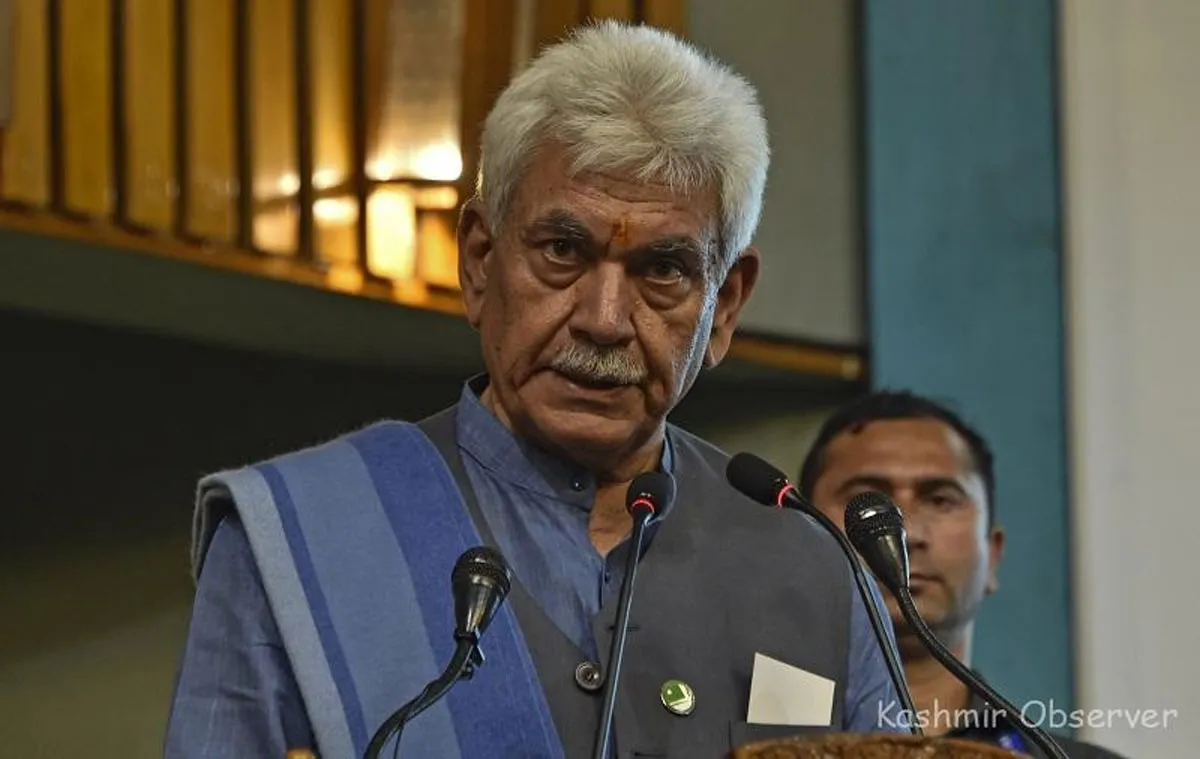
Lieutenant Governor Manoj Sinha said Jammu and Kashmir has the potential to generate up to Rs 200 billion in additional annual revenue by tapping its underutilised mining resources through strategic planning and focused policy interventions.

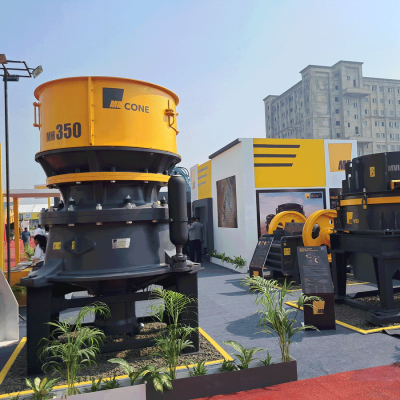
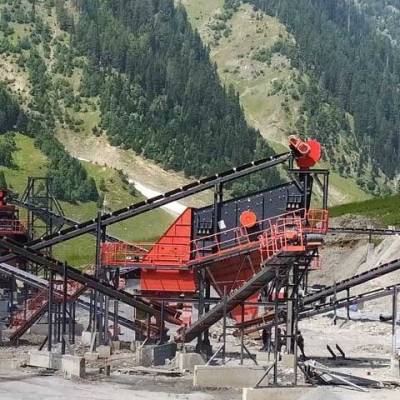
Addressing the Strategic Management Forum Conference organised by IIM Jammu in collaboration with the Strategic Management Forum and NITI Aayog, Sinha said the Union Territory is rich in minerals such as limestone, sapphire and lithium. With targeted reforms, the mining sector could contribute between Rs 150 billion and Rs 200 billion annually over the next five to seven years, he said.

Sinha said India’s rapid economic expansion under Prime Minister Narendra Modi has been anchored in inclusive and equitable development, with policies focused on job creation, support for small businesses, higher public investment and financial empowerment. He added that macroeconomic stability, increased spending on education and healthcare, digital adoption, transparency and faster project execution are critical to achieving all-round development.

The Lieutenant Governor also called for maximising Jammu and Kashmir’s hydropower potential and suggested updating the Holistic Agriculture Development Programme to align it with evolving economic needs. On the sidelines of the event, he inaugurated the Basohli Painting Exhibition and felicitated artists, praising the efforts of IIM Jammu and the Indira Gandhi National Centre for the Arts in preserving the traditional art form.

On security, Sinha said terrorism has been significantly curtailed across large parts of the country and that local recruitment in Jammu and Kashmir has sharply declined. He said terrorists hiding in rugged terrain and forests would be eliminated, asserting that there is no place for terrorism in the Union Territory’s development journey. While accusing Pakistan of continuing infiltration attempts, he emphasised that society and administrative institutions, alongside security forces, must work together to ensure lasting peace and stability.

Lieutenant Governor Manoj Sinha said Jammu and Kashmir has the potential to generate up to Rs 200 billion in additional annual revenue by tapping its underutilised mining resources through strategic planning and focused policy interventions. Addressing the Strategic Management Forum Conference organised by IIM Jammu in collaboration with the Strategic Management Forum and NITI Aayog, Sinha said the Union Territory is rich in minerals such as limestone, sapphire and lithium. With targeted reforms, the mining sector could contribute between Rs 150 billion and Rs 200 billion annually over the next five to seven years, he said. Sinha said India’s rapid economic expansion under Prime Minister Narendra Modi has been anchored in inclusive and equitable development, with policies focused on job creation, support for small businesses, higher public investment and financial empowerment. He added that macroeconomic stability, increased spending on education and healthcare, digital adoption, transparency and faster project execution are critical to achieving all-round development. The Lieutenant Governor also called for maximising Jammu and Kashmir’s hydropower potential and suggested updating the Holistic Agriculture Development Programme to align it with evolving economic needs. On the sidelines of the event, he inaugurated the Basohli Painting Exhibition and felicitated artists, praising the efforts of IIM Jammu and the Indira Gandhi National Centre for the Arts in preserving the traditional art form. On security, Sinha said terrorism has been significantly curtailed across large parts of the country and that local recruitment in Jammu and Kashmir has sharply declined. He said terrorists hiding in rugged terrain and forests would be eliminated, asserting that there is no place for terrorism in the Union Territory’s development journey. While accusing Pakistan of continuing infiltration attempts, he emphasised that society and administrative institutions, alongside security forces, must work together to ensure lasting peace and stability.

Next Story
Infrastructure Urban

Rosatom Delivers Nuclear Fuel for Kudankulam Unit 3

Rosatom has recently supplied nuclear fuel for the initial loading of the VVER-1000 reactor core at Unit 3 of the Kudankulam Nuclear Power Plant, marking a key milestone in the second stage of the Russian-designed nuclear power project in southern India.The fuel was supplied by Rosatom’s Nuclear Fuel Division, managed by TVEL, and manufactured at the Novosibirsk Chemical Concentrates Plant. The delivery includes the initial reactor load along with reserve fuel assemblies and is part of a long-term contract covering the entire operational life of Units 3 and 4.Building on operational experien..

Next Story
Infrastructure Transport

CBL International Enables First LNG Bunkering at Xiaomo Port

CBL International recently completed the first-ever LNG bunkering operation at Xiaomo Port, supplying liquefied natural gas to vessels operated by BYD in support of its maritime decarbonisation strategy. The operation was facilitated through a physical supplier in collaboration with China National Offshore Oil Corporation (CNOOC), which supported the port’s inaugural LNG bunkering activity. The milestone represents a strategic expansion of CBL International's sustainable fuel offerings beyond biofuels, while also diversifying revenue streams. As global shipping intensifies efforts to cut em..

Next Story
Infrastructure Urban

Aimtron, Aurassure Partner for IoT Weather Systems

Aimtron Electronics has recently entered into an OEM manufacturing engagement with Aurassure to produce new-age, IoT-enabled weather and environmental monitoring systems in India. The collaboration supports the growing demand for real-time environmental intelligence across urban, industrial and infrastructure applications. The engagement comes as global focus on climate-risk management and data-driven planning accelerates. The global weather monitoring systems market, valued at around USD 2.1 billion in 2024, is projected to reach nearly USD 4.8 billion by 2034, driven by the rapid adoption o..

Advertisement

Subscribe to Our Newsletter

Get daily newsletters around different themes from Construction world.

STAY CONNECTED

Advertisement

Advertisement

Advertisement

Advertisement

Open In App