Scheme For Processing Of Critical Minerals At Advanced Stage
COAL & MINING

Scheme For Processing Of Critical Minerals At Advanced Stage

Mines Secretary Piyush Goyal said a key government scheme for processing critical minerals is at an advanced stage of finalisation as India seeks to secure supply chains amid global competition for lithium and other resources. He said India is unable to import lithium that is available abroad because a domestic processing value chain is not yet in place. The announcement reflects efforts to reduce dependence on foreign processing and to support strategic industries.

The scheme is expected to significantly enhance the resilience of electric vehicle batteries in the country once implemented. Details will be released after formal approval of the plan, and the ministry indicated that operational frameworks and incentives are being finalised. Officials are positioning the initiative as part of a broader industrial strategy.

Goyal said India is eyeing critical mineral blocks in Canada and is exploring opportunities to invest in lithium projects in Brazil, Argentina and Australia. He noted that production from five lithium blocks in Argentina is likely to begin in 2029, which would form part of diversified overseas sourcing. The approach combines domestic capacity building with strategic international partnerships.

State firms Coal India, NTPC Mining and Hindustan Copper are reported to be in talks with Codelco for the acquisition of four copper blocks in Chile as part of efforts to secure supply for downstream processing. The secretary expressed confidence that India would become a net exporter of copper from next year, reflecting anticipated gains in domestic production and processing capacity.

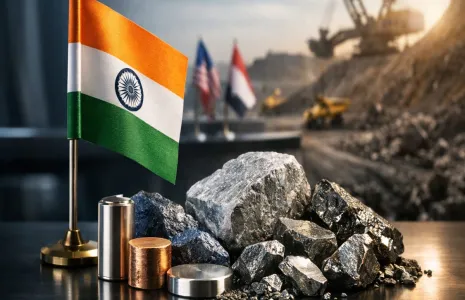
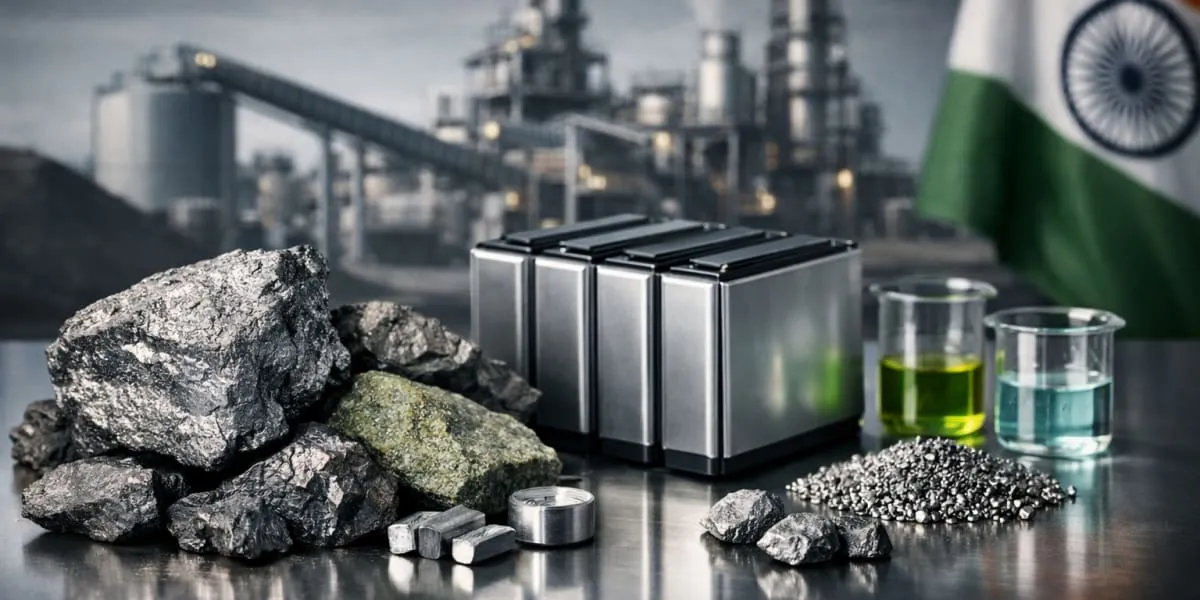
Critical minerals include lithium, cobalt, rare earth elements, nickel and graphite and are essential for clean energy technologies, electric vehicles, advanced electronics and defence systems. The government had last year approved a Rs 163 billion (bn) National Critical Mineral Mission, envisaging a total outlay of Rs 343 billion (bn) spread over seven years to foster self-reliance and accelerate the green energy transition. India remains heavily dependent on imports of key minerals such as lithium and cobalt, and the mission is intended to reduce that vulnerability.

Mines Secretary Piyush Goyal said a key government scheme for processing critical minerals is at an advanced stage of finalisation as India seeks to secure supply chains amid global competition for lithium and other resources. He said India is unable to import lithium that is available abroad because a domestic processing value chain is not yet in place. The announcement reflects efforts to reduce dependence on foreign processing and to support strategic industries. The scheme is expected to significantly enhance the resilience of electric vehicle batteries in the country once implemented. Details will be released after formal approval of the plan, and the ministry indicated that operational frameworks and incentives are being finalised. Officials are positioning the initiative as part of a broader industrial strategy. Goyal said India is eyeing critical mineral blocks in Canada and is exploring opportunities to invest in lithium projects in Brazil, Argentina and Australia. He noted that production from five lithium blocks in Argentina is likely to begin in 2029, which would form part of diversified overseas sourcing. The approach combines domestic capacity building with strategic international partnerships. State firms Coal India, NTPC Mining and Hindustan Copper are reported to be in talks with Codelco for the acquisition of four copper blocks in Chile as part of efforts to secure supply for downstream processing. The secretary expressed confidence that India would become a net exporter of copper from next year, reflecting anticipated gains in domestic production and processing capacity. Critical minerals include lithium, cobalt, rare earth elements, nickel and graphite and are essential for clean energy technologies, electric vehicles, advanced electronics and defence systems. The government had last year approved a Rs 163 billion (bn) National Critical Mineral Mission, envisaging a total outlay of Rs 343 billion (bn) spread over seven years to foster self-reliance and accelerate the green energy transition. India remains heavily dependent on imports of key minerals such as lithium and cobalt, and the mission is intended to reduce that vulnerability.

Next Story
Infrastructure Urban

Vedanta Reports Record Profit in FY26

Vedanta reported its best-ever financial performance in FY26, with profit after tax of Rs 250.96 billion and revenue of Rs 1.74 trillion, supported by operational excellence across businesses. The company delivered nearly 50 per cent total shareholder return and declared a dividend of Rs 34 per share.Vedanta said its net debt-to-EBITDA improved to 0.95x, strengthening financial flexibility. Its demerger, effective 1 May 2026, is aimed at unlocking value by creating focused businesses across aluminium, oil and gas, power, iron and steel, zinc, copper, nickel and ferro alloys.Vedanta Aluminium p..

Next Story
Infrastructure Energy

KEC Wins Orders Worth Rs 10.02 Billion

KEC International, an RPG Group company and global infrastructure EPC major, has secured new orders worth Rs 10.02 billion across its key businesses.In Transmission and Distribution, the company has won orders for projects in India and the Americas. These include ±500 kV HVDC transmission lines from a private developer in Western India, 132 kV cabling works from a steel producer in Eastern India, and the supply of towers, hardware and poles in the Americas.The renewables business has secured an order for a 100+ MW wind project in Southern India from a private developer. In transportation, KEC..

Next Story
Infrastructure Urban

Hindustan Zinc Opens Cath Lab in Udaipur

Hindustan Zinc recently inaugurated a state-of-the-art Cardiac Catheterisation Laboratory at Rabindranath Tagore Hospital, Udaipur. The facility was inaugurated by Gulab Chand Kataria, Governor of Punjab and Administrator of Chandigarh, in the presence of local MLAs, RNT Hospital leadership and senior Hindustan Zinc officials.The Cath Lab follows an MoU signed earlier between Hindustan Zinc and RNT Hospital for the redevelopment and upgradation of the hospital into a future-ready, multi-speciality healthcare facility. Equipped with advanced cardiac technology, it will support minimally invasiv..

Advertisement

Subscribe to Our Newsletter

Get daily newsletters around different themes from Construction world.

STAY CONNECTED

Advertisement

Advertisement

Advertisement