

PNG Expansion Accelerated Under Structured Policy Push
OIL & GAS

PNG Expansion Accelerated Under Structured Policy Push

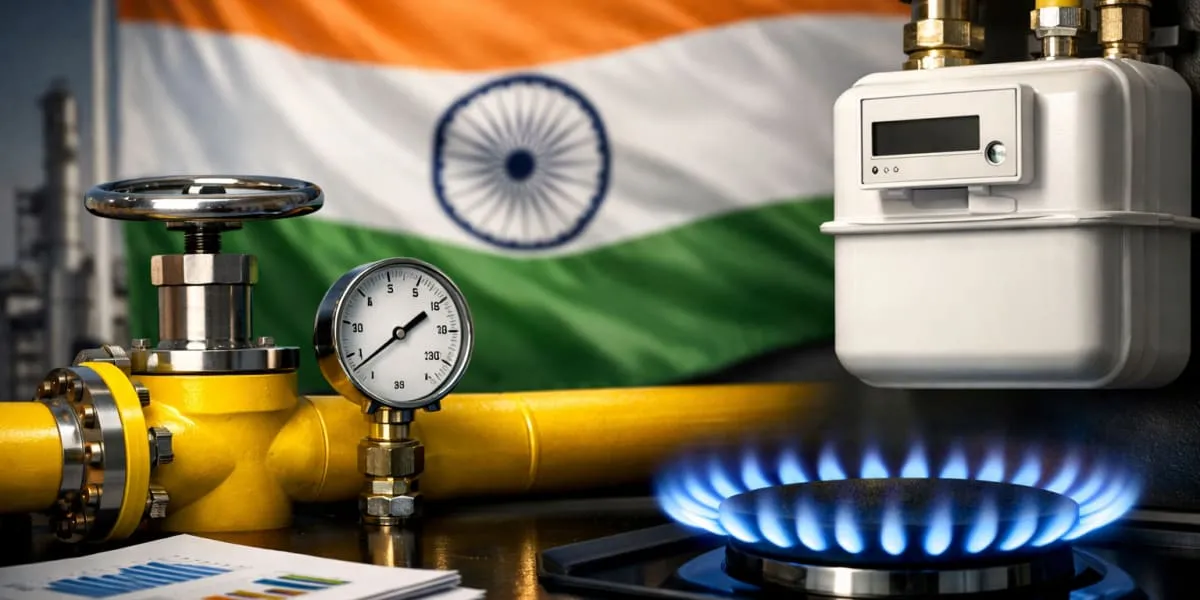
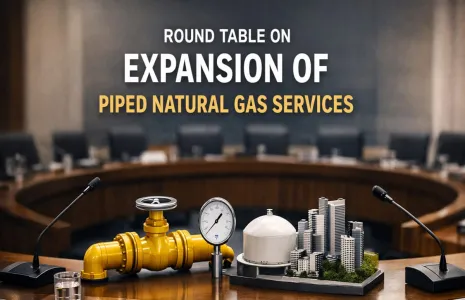
The Government of India has accelerated the expansion of piped natural gas under a structured policy framework, the Ministry of Petroleum and Natural Gas outlined. The acceleration has led to zero point four four million (0.44 mn) PNG connections gasified since March 2026, and zero point four eight eight million (0.488 mn) additional consumers have registered for new connections, indicating substantial adoption driven by policy measures. The strategy was described as focusing on clean energy access and reduced reliance on conventional fuels.

The scale up is anchored in targeted regulatory and implementation measures set out under the Government's PNG acceleration strategy, including the notification of the Natural Gas and Petroleum Products Distribution Order, 2026, which enables time bound development of City Gas Distribution (CGD) infrastructure and streamlines execution across authorised geographical areas. The order was presented as providing clarity on roles and timelines to expedite network rollout and connection delivery. Regulatory levers have been aligned with execution mechanisms to improve coordination between stakeholders.

To fast track household penetration, National PNG Drive two point zero has been extended until thirty June 2026 with emphasis on rapid connection releases, demand aggregation and coordinated execution between central agencies, CGD entities and State administrations. States and Union territories have been urged to facilitate faster approvals, local coordination and enabling infrastructure readiness to support last mile connectivity. The approach seeks to resolve bottlenecks on the ground and accelerate consumer access.

In parallel, States and Union territories have been advised to monitor supply of petrol, diesel and liquefied petroleum gas to ensure an integrated and balanced energy access framework during the transition. The measures are intended to expand clean fuel access, improve urban energy distribution and support India's long term transition towards a gas based economy. The policy push was characterised as structured and coordinated to deliver sustained scale up of PNG infrastructure.

The Government of India has accelerated the expansion of piped natural gas under a structured policy framework, the Ministry of Petroleum and Natural Gas outlined. The acceleration has led to zero point four four million (0.44 mn) PNG connections gasified since March 2026, and zero point four eight eight million (0.488 mn) additional consumers have registered for new connections, indicating substantial adoption driven by policy measures. The strategy was described as focusing on clean energy access and reduced reliance on conventional fuels. The scale up is anchored in targeted regulatory and implementation measures set out under the Government's PNG acceleration strategy, including the notification of the Natural Gas and Petroleum Products Distribution Order, 2026, which enables time bound development of City Gas Distribution (CGD) infrastructure and streamlines execution across authorised geographical areas. The order was presented as providing clarity on roles and timelines to expedite network rollout and connection delivery. Regulatory levers have been aligned with execution mechanisms to improve coordination between stakeholders. To fast track household penetration, National PNG Drive two point zero has been extended until thirty June 2026 with emphasis on rapid connection releases, demand aggregation and coordinated execution between central agencies, CGD entities and State administrations. States and Union territories have been urged to facilitate faster approvals, local coordination and enabling infrastructure readiness to support last mile connectivity. The approach seeks to resolve bottlenecks on the ground and accelerate consumer access. In parallel, States and Union territories have been advised to monitor supply of petrol, diesel and liquefied petroleum gas to ensure an integrated and balanced energy access framework during the transition. The measures are intended to expand clean fuel access, improve urban energy distribution and support India's long term transition towards a gas based economy. The policy push was characterised as structured and coordinated to deliver sustained scale up of PNG infrastructure.

Next Story
Equipment

India CE Industry Ends FY26 on a Steady Recovery Path

India’s construction equipment industry closed FY26 on a stable note, reflecting measured resilience and gradually improving momentum. Total sales in Q4 FY26 rose 4 per cent year on year to 42,906 units, extending the recovery seen over the past two years.Domestic demand for the full year remained under pressure, declining 7 per cent, but exports provided strong support. Overall exports grew 31 per cent, while non-OEM exports increased 13 per cent, highlighting sustained demand from overseas markets.March 2026 further underlined the recovery, with sales rising 6 per cent year on year and 13 ..

Next Story
Infrastructure Urban

Leaders Question FIR Against Anil Agarwal

Several industry and public figures have questioned the FIR filed against Anil Agarwal following the boiler accident in Chhattisgarh, while also expressing condolences over the loss of lives and calling for a thorough investigation.Naveen Jindal said the tragedy was deeply painful and stressed that compensation, livelihood support for affected families and a fair probe were essential. He also questioned naming Agarwal in the FIR before completion of the investigation.Kiran Bedi urged restraint, saying investigations should focus on learning lessons and strengthening systems rather than prematu..

Next Story
Infrastructure Urban

Tier 2, 3 Cities Drive 66% of New D2C Orders

Tier 2 and Tier 3 cities accounted for 66 per cent of new direct-to-consumer (D2C) orders in FY 2026, according to a new analysis by Unicommerce.The report said buyers from smaller cities also contributed 60 per cent of incremental gross merchandise value (GMV) in FY 2026 compared with FY 2025, highlighting rising demand beyond metro markets.Overall, India’s D2C segment recorded strong growth, with order volumes rising 33 per cent and GMV increasing 32 per cent year-on-year. The findings are based on more than 400 million order items processed through brand websites on Unicommerce’s Uniwar..

Advertisement

Subscribe to Our Newsletter

Get daily newsletters around different themes from Construction world.

STAY CONNECTED

Advertisement

Advertisement

Advertisement