+
ACME Solar Subsidiary Commissions Four MW Wind Project in Gujarat
POWER & RENEWABLE ENERGY

ACME Solar Subsidiary Commissions Four MW Wind Project in Gujarat

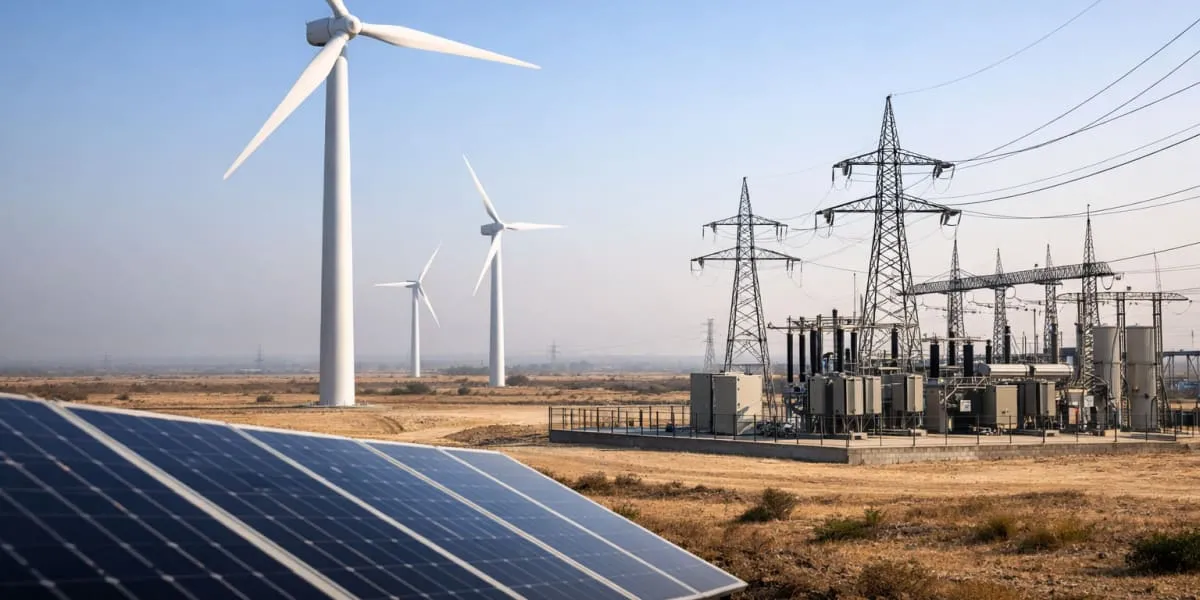
ACME Solar's subsidiary has commissioned a four megawatt (MW) wind power project in Gujarat, adding new renewable capacity to the state grid and augmenting the organisation's clean energy portfolio. The project was completed under the subsidiary's construction and commissioning schedule and is now synchronised with the local distribution network to supply power to nearby load centres. The facility's commissioning marks a step in the firm's strategy to broaden its generation mix beyond solar.

Designed to operate alongside the parent company's solar assets, the wind installation will contribute to diurnal balancing and reduce reliance on fossil fuel peaking plants, improving overall grid stability. The project employs modern turbine technology and follows industry standards for safety, environmental compliance and performance monitoring, with the subsidiary responsible for ongoing operations and technical maintenance. Grid interconnection arrangements were completed in coordination with state transmission authorities to ensure reliable evacuation of generated power.

During construction the initiative supported local employment and engaged regional contractors, helping to stimulate the surrounding economy while limiting long term land use impacts through siting and design considerations. The subsidiary has indicated that operational staffing will be drawn from nearby communities and that training programmes will be offered to develop requisite technical skills, reinforcing local capacity. Environmental assessments and stakeholder consultations were conducted as part of project planning to address community concerns and mitigate ecological effects.

The commissioning forms part of a broader push by ACME Solar to diversify its renewable portfolio and to pursue integrated solutions that combine wind and solar generation for more predictable output profiles. The company views such hybrid approaches as supportive of national targets for clean energy expansion and as attractive propositions for utilities seeking firming options. The subsidiary will continue to monitor performance and pursue further opportunities in the region as part of the parent group's growth strategy.

ACME Solar's subsidiary has commissioned a four megawatt (MW) wind power project in Gujarat, adding new renewable capacity to the state grid and augmenting the organisation's clean energy portfolio. The project was completed under the subsidiary's construction and commissioning schedule and is now synchronised with the local distribution network to supply power to nearby load centres. The facility's commissioning marks a step in the firm's strategy to broaden its generation mix beyond solar. Designed to operate alongside the parent company's solar assets, the wind installation will contribute to diurnal balancing and reduce reliance on fossil fuel peaking plants, improving overall grid stability. The project employs modern turbine technology and follows industry standards for safety, environmental compliance and performance monitoring, with the subsidiary responsible for ongoing operations and technical maintenance. Grid interconnection arrangements were completed in coordination with state transmission authorities to ensure reliable evacuation of generated power. During construction the initiative supported local employment and engaged regional contractors, helping to stimulate the surrounding economy while limiting long term land use impacts through siting and design considerations. The subsidiary has indicated that operational staffing will be drawn from nearby communities and that training programmes will be offered to develop requisite technical skills, reinforcing local capacity. Environmental assessments and stakeholder consultations were conducted as part of project planning to address community concerns and mitigate ecological effects. The commissioning forms part of a broader push by ACME Solar to diversify its renewable portfolio and to pursue integrated solutions that combine wind and solar generation for more predictable output profiles. The company views such hybrid approaches as supportive of national targets for clean energy expansion and as attractive propositions for utilities seeking firming options. The subsidiary will continue to monitor performance and pursue further opportunities in the region as part of the parent group's growth strategy.

Next Story
Infrastructure Urban

Implementation Status of Jal Jeevan Mission

Since August 2019 the Government has implemented Jal Jeevan Mission to provide assured potable water through household tap connections in rural India. At the start of the mission only 32.3 million (mn) rural households, representing 16.7 per cent, were reported to have tap water connections. States and union territories have reported that 125.8 mn additional rural households have since been provided with tap connections. As a result, of about 193.6 mn rural households roughly 158.2 mn, or 81.71 per cent, are reported to have tap water supply at home.\n\nThe State, district and village level st..

Next Story
Infrastructure Urban

Jal Jeevan Mission Reaches Eighty One Per Cent Rural Coverage

The Government reported substantial progress under the Jal Jeevan Mission, launched in August 2019 to provide tap water to every rural household. At launch only 32.3 million (mn) rural households had tap connections and states and Union territories reported provision of 125.8 mn additional households by March 2026. Consequently, out of about 193.6 mn rural households around 158.2 mn, or 81.71 per cent, are reported to have tap water at home. The Finance Minister announced extension of the mission until 2028 in the 2025-26 budget speech. The Swachh Bharat Mission Grameen, launched in October 20..

Next Story
Infrastructure Urban

Empowering Local Governance for Sustainable Rural Water Supply

The Ministry of Jal Shakti has aligned the Jal Jeevan Mission (JJM) with the 73rd Amendment to strengthen village level planning and community ownership of water supply. Gram Panchayats, village water and sanitation committees and Pani Samitis are to plan, implement, manage and maintain piped water systems, with gram sabha processes formalising handover and oversight. Implementation support agencies including non government organisations, community based organisations and self help groups have been empanelled to train local committees and promote women participation. Under JJM, the department ..

Advertisement

Subscribe to Our Newsletter

Get daily newsletters around different themes from Construction world.

STAY CONNECTED

Advertisement

Advertisement

Advertisement