





CDS Inaugurates Conference On Brain-Computer Interface
DEFENSE

CDS Inaugurates Conference On Brain-Computer Interface

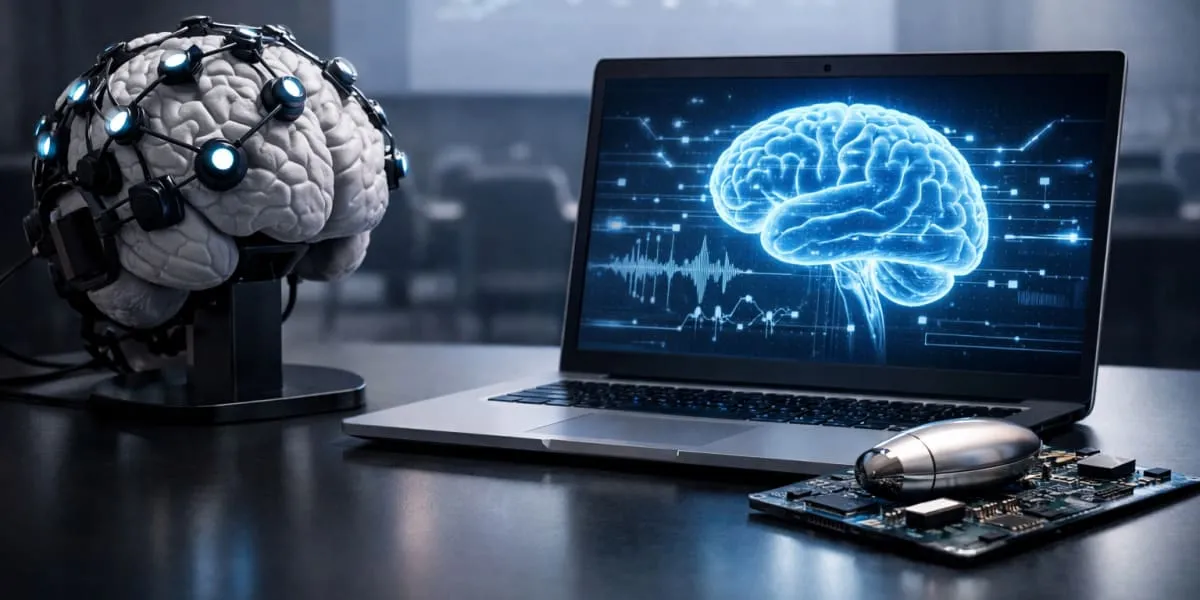
The Chief of Defence Staff, General Anil Chauhan, inaugurated a conference on Brain-Computer Interface (BCI) jointly organised by Headquarters Integrated Defence Staff and the Centre for Joint Warfare Studies in New Delhi on May five, 2026. The event brought together senior military leaders, policymakers, scientists, medical experts, industry representatives, start-ups and academics.

The Director General of the Centre for Joint Warfare Studies, Major General (Dr) Ashok Kumar (retd), highlighted the transformative potential of neural technologies and explained that the Brain-Computer Interface enables neural signals to be translated into meaningful actions and outcomes. He noted that development will require multidisciplinary collaboration.

The Director General Armed Forces Medical Services, Vice Admiral Arti Sarin, emphasised the growing convergence between human cognition and computational systems and noted that the traditional distinction is increasingly merging. The Professor and Head of the Department of Electrical and Biomedical Engineering at IIT Delhi, Dr T. K. Gandhi, observed that BCI has moved rapidly from concept to scientific reality with applications widening across civilian welfare and warfare.

Technical sessions addressed the current status of BCI, its medical and technological dimensions and strategic defence applications. The Deputy Chief of Integrated Defence Staff (Medical), Air Marshal S Shankar, presented an overview of present and future technologies. Delegates from IIT Delhi, the Defence Research and Development Organisation, the National Institute of Mental Health and Neurosciences, the Centre for Development of Advanced Computing and start-ups outlined ongoing research, indigenous innovation and pathways for integration. Discussions covered ethical considerations, human-machine integration, neuro-security and the role of BCI in enhancing operational efficiency, rehabilitation and decision-making in complex operational environments.

A panel of senior defence officials, scientists and industry leaders explored military uses of BCI, including augmentation of cognitive capabilities, improved human performance and reinforcement of command-and-control systems. 10 start-ups demonstrated devices and technologies. The seminar concluded with a call for sustained collaboration among the Armed Forces, academia, industry and research organisations to harness BCI for national security and societal benefit.

The Chief of Defence Staff, General Anil Chauhan, inaugurated a conference on Brain-Computer Interface (BCI) jointly organised by Headquarters Integrated Defence Staff and the Centre for Joint Warfare Studies in New Delhi on May five, 2026. The event brought together senior military leaders, policymakers, scientists, medical experts, industry representatives, start-ups and academics. The Director General of the Centre for Joint Warfare Studies, Major General (Dr) Ashok Kumar (retd), highlighted the transformative potential of neural technologies and explained that the Brain-Computer Interface enables neural signals to be translated into meaningful actions and outcomes. He noted that development will require multidisciplinary collaboration. The Director General Armed Forces Medical Services, Vice Admiral Arti Sarin, emphasised the growing convergence between human cognition and computational systems and noted that the traditional distinction is increasingly merging. The Professor and Head of the Department of Electrical and Biomedical Engineering at IIT Delhi, Dr T. K. Gandhi, observed that BCI has moved rapidly from concept to scientific reality with applications widening across civilian welfare and warfare. Technical sessions addressed the current status of BCI, its medical and technological dimensions and strategic defence applications. The Deputy Chief of Integrated Defence Staff (Medical), Air Marshal S Shankar, presented an overview of present and future technologies. Delegates from IIT Delhi, the Defence Research and Development Organisation, the National Institute of Mental Health and Neurosciences, the Centre for Development of Advanced Computing and start-ups outlined ongoing research, indigenous innovation and pathways for integration. Discussions covered ethical considerations, human-machine integration, neuro-security and the role of BCI in enhancing operational efficiency, rehabilitation and decision-making in complex operational environments. A panel of senior defence officials, scientists and industry leaders explored military uses of BCI, including augmentation of cognitive capabilities, improved human performance and reinforcement of command-and-control systems. 10 start-ups demonstrated devices and technologies. The seminar concluded with a call for sustained collaboration among the Armed Forces, academia, industry and research organisations to harness BCI for national security and societal benefit.

Next Story
Infrastructure Urban

Cabinet Approves Mission For Cotton Productivity

The Union Cabinet has approved Rs 56.59 billion (bn) for the Mission for Cotton Productivity covering the period 2026–27 to 2030–31, with the objective of addressing bottlenecks, reversing declining growth and improving quality in India’s cotton sector. The initiative aligns with the Government of India’s five F vision from farm to foreign and is intended to raise the competitiveness of the textile sector in global markets through coordinated action across ministries and research bodies. The mission will support the development of high-yielding variety (HYV) seeds that are climate resi..

Next Story
Infrastructure Transport

Cabinet Approves Three Rail Multitracking Projects

The Cabinet Committee on Economic Affairs, chaired by the Prime Minister, approved three multitracking projects for the Ministry of Railways at a total cost of Rs 234.37 billion (bn). The projects are Nagda–Mathura third and fourth line, Guntakal–Wadi third and fourth line, and Burhwal–Sitapur third and fourth line. The investment is intended to increase line capacity and improve operational efficiency and service reliability for Indian Railways. The schemes cover 19 districts across Madhya Pradesh, Rajasthan, Uttar Pradesh, Karnataka, Andhra Pradesh and Telangana and will increase the e..

Next Story
Infrastructure Transport

Cabinet Approves Ship Repair Facility At Vadinar

The Cabinet Committee on Economic Affairs has approved the development of a state of the art ship repair facility at Vadinar in Gujarat, to be jointly implemented by Deendayal Port Authority (DPA) and Cochin Shipyard Limited (CSL). The project carries a combined investment of Rs 15.7 billion (Rs 15.7 bn). It is planned as a brownfield facility with a 650 metres jetty, two large floating dry docks, workshops and associated marine infrastructure. Vadinar has a natural deep draft and direct connectivity to major shipping routes and its proximity to ports such as Mundra and Kandla makes it favoura..

Advertisement

Subscribe to Our Newsletter

Get daily newsletters around different themes from Construction world.

STAY CONNECTED

Advertisement

Advertisement

Advertisement












