First Solar Reports $349M Q4 Profit Amidst Strong U.S. Demand
POWER & RENEWABLE ENERGY

First Solar Reports $349M Q4 Profit Amidst Strong U.S. Demand

U.S.-based solar module giant First Solar announced a remarkable turnaround in its fourth-quarter performance, reporting a net income of $349 million. This marks a significant shift from the previous year's loss of $7.5 million. The surge in profit was attributed to robust demand for its modules, particularly in the United States.

CEO Mark Widmar highlighted the company's resilience amidst industry challenges during a post-earnings conference call with analysts. Despite global oversupply and pricing volatility, First Solar remains bullish on long-term U.S. demand.

In Q4 2023, net sales soared 33% to $1.2 billion, driven by higher module volumes and average selling prices. Cost of sales dropped by approximately 30%, further bolstering bottom-line figures. However, the gross margin slightly decreased to 43% due to factors including tax credit sales and a higher mix of non-U.S. factory sales.

The company also reported a $23 million impairment charge from its investment in CubicPV, a solar-wafer technology firm. CubicPV's decision to abandon plans for a U.S. manufacturing facility due to rising construction costs and declining wafer prices triggered the impairment.

For the full year 2023, First Solar posted a net income of $831 million, a significant improvement from the $464 million loss in 2022. Net sales surged 27% to $3.3 billion, driven by increased module volumes and ASPs.

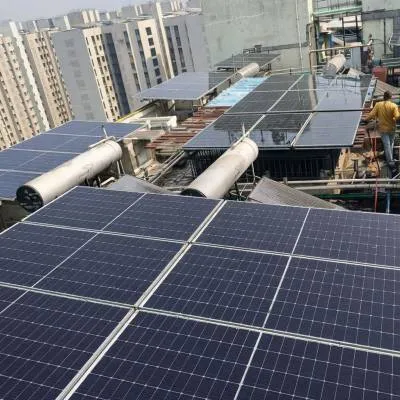
First Solar's expansion plans include ramping up manufacturing capacity to 25 GW by 2026, with a focus on U.S. operations. The company recently inaugurated a solar manufacturing facility in Tamil Nadu, India, with a capacity of 3.3 GW, adding to its existing factories in the U.S., Malaysia, and Vietnam.

In addition, First Solar entered into tax credit transfer agreements, generating significant revenue from the sale of solar modules and advanced manufacturing production tax credits. These strategic moves position First Solar for continued growth and innovation in the renewable energy sector.

U.S.-based solar module giant First Solar announced a remarkable turnaround in its fourth-quarter performance, reporting a net income of $349 million. This marks a significant shift from the previous year's loss of $7.5 million. The surge in profit was attributed to robust demand for its modules, particularly in the United States. CEO Mark Widmar highlighted the company's resilience amidst industry challenges during a post-earnings conference call with analysts. Despite global oversupply and pricing volatility, First Solar remains bullish on long-term U.S. demand. In Q4 2023, net sales soared 33% to $1.2 billion, driven by higher module volumes and average selling prices. Cost of sales dropped by approximately 30%, further bolstering bottom-line figures. However, the gross margin slightly decreased to 43% due to factors including tax credit sales and a higher mix of non-U.S. factory sales. The company also reported a $23 million impairment charge from its investment in CubicPV, a solar-wafer technology firm. CubicPV's decision to abandon plans for a U.S. manufacturing facility due to rising construction costs and declining wafer prices triggered the impairment. For the full year 2023, First Solar posted a net income of $831 million, a significant improvement from the $464 million loss in 2022. Net sales surged 27% to $3.3 billion, driven by increased module volumes and ASPs. First Solar's expansion plans include ramping up manufacturing capacity to 25 GW by 2026, with a focus on U.S. operations. The company recently inaugurated a solar manufacturing facility in Tamil Nadu, India, with a capacity of 3.3 GW, adding to its existing factories in the U.S., Malaysia, and Vietnam. In addition, First Solar entered into tax credit transfer agreements, generating significant revenue from the sale of solar modules and advanced manufacturing production tax credits. These strategic moves position First Solar for continued growth and innovation in the renewable energy sector.

Next Story
Infrastructure Urban

Implementation Status of Jal Jeevan Mission

Since August 2019 the Government has implemented Jal Jeevan Mission to provide assured potable water through household tap connections in rural India. At the start of the mission only 32.3 million (mn) rural households, representing 16.7 per cent, were reported to have tap water connections. States and union territories have reported that 125.8 mn additional rural households have since been provided with tap connections. As a result, of about 193.6 mn rural households roughly 158.2 mn, or 81.71 per cent, are reported to have tap water supply at home.\n\nThe State, district and village level st..

Next Story
Infrastructure Urban

Jal Jeevan Mission Reaches Eighty One Per Cent Rural Coverage

The Government reported substantial progress under the Jal Jeevan Mission, launched in August 2019 to provide tap water to every rural household. At launch only 32.3 million (mn) rural households had tap connections and states and Union territories reported provision of 125.8 mn additional households by March 2026. Consequently, out of about 193.6 mn rural households around 158.2 mn, or 81.71 per cent, are reported to have tap water at home. The Finance Minister announced extension of the mission until 2028 in the 2025-26 budget speech. The Swachh Bharat Mission Grameen, launched in October 20..

Next Story
Infrastructure Urban

Empowering Local Governance for Sustainable Rural Water Supply

The Ministry of Jal Shakti has aligned the Jal Jeevan Mission (JJM) with the 73rd Amendment to strengthen village level planning and community ownership of water supply. Gram Panchayats, village water and sanitation committees and Pani Samitis are to plan, implement, manage and maintain piped water systems, with gram sabha processes formalising handover and oversight. Implementation support agencies including non government organisations, community based organisations and self help groups have been empanelled to train local committees and promote women participation. Under JJM, the department ..

Advertisement

Subscribe to Our Newsletter

Get daily newsletters around different themes from Construction world.

STAY CONNECTED

Advertisement

Advertisement

Advertisement