Hinduja to Triple Green Power, Spend Up to Rs 332 Billion
POWER & RENEWABLE ENERGY

Hinduja to Triple Green Power, Spend Up to Rs 332 Billion

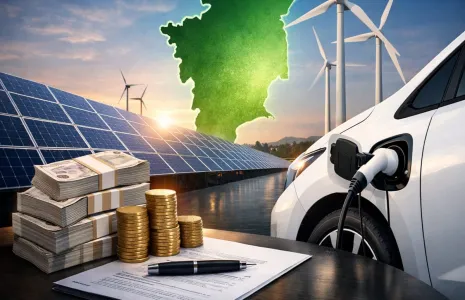
The Hinduja Group is set to make a substantial investment of between Rs 249 billion and Rs 332 billion (approximately $3–4 billion) to expand its renewable energy portfolio from the current 3 GW to over 10 GW by 2030. This major move positions energy as a strategic focus alongside the group’s established sectors—automotive, financial services, and digital.
According to Amit Saharia, Group President – Strategy, the group’s renewable arm, Hinduja Renewables, operates over 40 plants across India in states such as Tamil Nadu, Maharashtra, Rajasthan, Gujarat, Uttarakhand, and Karnataka. The firm holds long-term power purchase agreements with central agencies like SECI and NTPC, providing stable revenues and fast receivables with a 15-day collection period.
The group has built in-house engineering, procurement, construction, and O&M capabilities to optimise performance and asset quality. By 2030, it plans for 70–75 per cent of its capacity to be utility-based, 15–20 per cent to be commercial and industrial (C&I), and about 10 per cent to be pumped storage. This mix is aimed at mitigating risks across segments while enhancing competitiveness in complex tenders.
Saharia emphasised a disciplined investment approach, with each project required to meet internal ROI thresholds and supported by robust risk controls. A significant portion of new capacity will come from hybrid models such as solar-wind-storage combinations, with over 75 per cent of future capacity expected in firm and dispatchable renewable energy (FDRE) and round-the-clock (RTC) formats.
Battery energy storage systems (BESS) and pumped hydro storage will play vital roles, with viability boosted by falling battery costs and government funding of up to 40 per cent through viability gap funding. Hinduja Renewables is preparing to bid for BESS-backed tenders and is in talks with state governments for pumped hydro storage projects.
The group is also leveraging synergies with its automotive arms—Ashok Leyland and Switch Mobility—to align its energy and mobility ambitions. Hinduja Renewables will supply green power, while Ashok Leyland and Switch will produce e-vehicles, OHM Global Mobility will offer mobility services, and Gulf Oil will support EV charging infrastructure. 

The Hinduja Group is set to make a substantial investment of between Rs 249 billion and Rs 332 billion (approximately $3–4 billion) to expand its renewable energy portfolio from the current 3 GW to over 10 GW by 2030. This major move positions energy as a strategic focus alongside the group’s established sectors—automotive, financial services, and digital.According to Amit Saharia, Group President – Strategy, the group’s renewable arm, Hinduja Renewables, operates over 40 plants across India in states such as Tamil Nadu, Maharashtra, Rajasthan, Gujarat, Uttarakhand, and Karnataka. The firm holds long-term power purchase agreements with central agencies like SECI and NTPC, providing stable revenues and fast receivables with a 15-day collection period.The group has built in-house engineering, procurement, construction, and O&M capabilities to optimise performance and asset quality. By 2030, it plans for 70–75 per cent of its capacity to be utility-based, 15–20 per cent to be commercial and industrial (C&I), and about 10 per cent to be pumped storage. This mix is aimed at mitigating risks across segments while enhancing competitiveness in complex tenders.Saharia emphasised a disciplined investment approach, with each project required to meet internal ROI thresholds and supported by robust risk controls. A significant portion of new capacity will come from hybrid models such as solar-wind-storage combinations, with over 75 per cent of future capacity expected in firm and dispatchable renewable energy (FDRE) and round-the-clock (RTC) formats.Battery energy storage systems (BESS) and pumped hydro storage will play vital roles, with viability boosted by falling battery costs and government funding of up to 40 per cent through viability gap funding. Hinduja Renewables is preparing to bid for BESS-backed tenders and is in talks with state governments for pumped hydro storage projects.The group is also leveraging synergies with its automotive arms—Ashok Leyland and Switch Mobility—to align its energy and mobility ambitions. Hinduja Renewables will supply green power, while Ashok Leyland and Switch will produce e-vehicles, OHM Global Mobility will offer mobility services, and Gulf Oil will support EV charging infrastructure. 

Next Story
Real Estate

Dubai Real Estate Sales Reach AED48 Billion

Dubai’s real estate market recorded 13,977 sales transactions worth AED48 billion in April 2026, reflecting continued resilience across residential and commercial segments.According to a market update by fäm Properties, sales volume rose 3.5 per cent month-on-month compared to March, while total sales value increased by 10.7 per cent. The commercial sector, including offices and shops, recorded the strongest growth, with 561 transactions valued at AED4 billion, up 33.9 per cent year-on-year and 36.2 per cent month-on-month.Apartment sales rose 6.5 per cent month-on-month to 11,377 transacti..

Next Story
Real Estate

Casagrand Launches 35-Acre Hyderabad Project

Casagrand has launched Casagrand Vybe, its largest residential project in Hyderabad, spread across 35 acres in Rajendra Nagar. The launch marks the company’s fifth residential rollout in 2026 and strengthens its expansion momentum in the city.As part of its Hyderabad growth strategy, Casagrand is adding 3.98 million sq ft of residential space to its portfolio. Since entering the Hyderabad residential market in 2023, the company has scaled its presence with projects across key micro-markets. In 2025, it launched four projects — Casagrand Evon, Casagrand Windsor Court, Casagrand Belair and C..

Next Story
Technology

Bentley Event Spotlights AI Infrastructure

Bentley Systems recently hosted Illuminate Mumbai 2026, bringing together infrastructure leaders, policymakers, technology experts and academia to discuss how AI-driven engineering and digital twins can accelerate India’s journey towards Viksit Bharat 2047.The event focused on scaling intelligent and connected infrastructure ecosystems beyond digital adoption. Discussions covered the use of infrastructure AI, open data environments and digital twin technologies to improve project delivery, sustainability and long-term asset performance across key sectors.Kamalakannan Thiruvadi, Regional Exec..

Advertisement

Subscribe to Our Newsletter

Get daily newsletters around different themes from Construction world.

STAY CONNECTED

Advertisement

Advertisement

Advertisement