Vedanta Aluminium Uses 1.57 bn Units of Green Energy in FY25
POWER & RENEWABLE ENERGY

Vedanta Aluminium Uses 1.57 bn Units of Green Energy in FY25

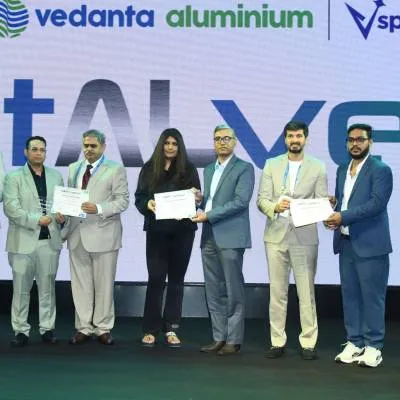
Vedanta Aluminium, India’s largest aluminium producer, recently reported consumption of 1.57 billion units of renewable energy in FY25, marking a significant milestone in its 2030 decarbonisation roadmap. The company also achieved an 8.96 per cent reduction in greenhouse gas (GHG) emissions intensity compared to FY21, reinforcing its leadership in India’s low-carbon manufacturing transition.

During FY25, Vedanta Aluminium expanded its renewable energy portfolio through long-term power purchase agreements, strengthening its strategy to source nearly 1,500 MW of renewable power over the long term. Clean energy continues to remain a core pillar of the company’s operational approach, alongside a strong focus on energy efficiency and process optimisation.

The company has made substantial progress across energy conservation, digital interventions and resource efficiency. Key initiatives include waste heat recovery systems, enhanced boiler and turbine performance, deployment of energy-efficient technologies and real-time monitoring solutions to reduce energy consumption across operations. Its patented potlining technology has delivered energy savings of 200 kWh per tonne of aluminium, improving smelter efficiency, while comprehensive sustainability measures have resulted in 378 million units of energy savings.

Strengthening its long-term climate strategy, Vedanta Aluminium formalised a strategic partnership with PwC India in 2025 to scale decarbonisation, water positivity and biodiversity initiatives across locations. Dedicated ‘Communities of Practice’ have been established across carbon, water, waste, biodiversity and tailings to enable consistent implementation and performance tracking. Under its 2030 targets, the company aims for 30 per cent of its portfolio to comprise low-carbon aluminium, supported by the expansion of its Restora and Restora Ultra product lines.

Commenting on the milestone, Rajiv Kumar, CEO, Vedanta Aluminium, said that the company’s sustainability efforts focus on transforming aluminium production in India by embedding clean energy and efficiency at the core of operations, while creating long-term value for communities and stakeholders.

Vedanta Aluminium has also rolled out comprehensive energy-efficiency training programmes across its sites, aligned with global best practices and ISO 50001 standards, to build a strong culture of energy responsibility. The company continues to invest in community development, biomass utilisation, natural gas adoption and electrification of material handling, while progressing steadily towards its Net Water Positivity target by 2030.

These initiatives collectively underline Vedanta Aluminium’s contribution to India’s energy conservation and clean industry ambitions, supporting a more sustainable and resilient growth trajectory.

Vedanta Aluminium, India’s largest aluminium producer, recently reported consumption of 1.57 billion units of renewable energy in FY25, marking a significant milestone in its 2030 decarbonisation roadmap. The company also achieved an 8.96 per cent reduction in greenhouse gas (GHG) emissions intensity compared to FY21, reinforcing its leadership in India’s low-carbon manufacturing transition. During FY25, Vedanta Aluminium expanded its renewable energy portfolio through long-term power purchase agreements, strengthening its strategy to source nearly 1,500 MW of renewable power over the long term. Clean energy continues to remain a core pillar of the company’s operational approach, alongside a strong focus on energy efficiency and process optimisation. The company has made substantial progress across energy conservation, digital interventions and resource efficiency. Key initiatives include waste heat recovery systems, enhanced boiler and turbine performance, deployment of energy-efficient technologies and real-time monitoring solutions to reduce energy consumption across operations. Its patented potlining technology has delivered energy savings of 200 kWh per tonne of aluminium, improving smelter efficiency, while comprehensive sustainability measures have resulted in 378 million units of energy savings. Strengthening its long-term climate strategy, Vedanta Aluminium formalised a strategic partnership with PwC India in 2025 to scale decarbonisation, water positivity and biodiversity initiatives across locations. Dedicated ‘Communities of Practice’ have been established across carbon, water, waste, biodiversity and tailings to enable consistent implementation and performance tracking. Under its 2030 targets, the company aims for 30 per cent of its portfolio to comprise low-carbon aluminium, supported by the expansion of its Restora and Restora Ultra product lines. Commenting on the milestone, Rajiv Kumar, CEO, Vedanta Aluminium, said that the company’s sustainability efforts focus on transforming aluminium production in India by embedding clean energy and efficiency at the core of operations, while creating long-term value for communities and stakeholders. Vedanta Aluminium has also rolled out comprehensive energy-efficiency training programmes across its sites, aligned with global best practices and ISO 50001 standards, to build a strong culture of energy responsibility. The company continues to invest in community development, biomass utilisation, natural gas adoption and electrification of material handling, while progressing steadily towards its Net Water Positivity target by 2030. These initiatives collectively underline Vedanta Aluminium’s contribution to India’s energy conservation and clean industry ambitions, supporting a more sustainable and resilient growth trajectory.

Next Story
Infrastructure Urban

Runaya–ECKART JV Launches India’s First Gas-Atomised Al Unit

Runaya Metsource and Germany-based ECKART have announced the launch of their joint venture facility, Runaya Eckart Aluminium Powders Private Limited (REL), in Jharsuguda, Odisha, marking the establishment of India’s first plant for manufacturing green, spherical gas-atomised aluminium powders.The facility will produce high-precision aluminium powders for advanced applications across aviation, aerospace, space exploration, solar technology, process catalyst industries and effect pigments. These fine spherical powders, which were previously fully imported into India, represent a significant mi..

Next Story
Infrastructure Urban

Tamil Nadu Extends 100% EV Road Tax Exemption Till 2027

The Tamil Nadu government has extended the 100% road tax exemption for battery-operated electric vehicles for another two years, reinforcing its efforts to sustain momentum in EV adoption across the state.According to a government order issued on December 29, the tax exemption has been extended for all categories of battery-operated vehicles, including both transport and non-transport vehicles, from January 1, 2026, to December 31, 2027. The move ensures continuity of fiscal incentives as electric vehicle penetration continues to rise in the state.The decision follows sustained representations..

Next Story
Infrastructure Energy

Coal India Arm BCCL Targets 54 MT Output, Rs 200 Bn by FY30

Bharat Coking Coal (BCCL), a subsidiary of Coal India, plans to scale up its coking coal production to 54 million tonnes by FY 2029–30, with the bulk of incremental supplies earmarked for the steel sector. The expansion is expected to drive the company’s revenue close to Rs 200 billion by the end of the decade, senior officials said.The production push aligns with India’s broader objective of achieving a national coking coal output target of 140 million tonnes to reduce dependence on imports. BCCL currently produces around 40.5 million tonnes of coking coal and contributes nearly 58.5 pe..

Advertisement

Subscribe to Our Newsletter

Get daily newsletters around different themes from Construction world.

STAY CONNECTED

Advertisement

Advertisement

Advertisement

Advertisement

Open In App