IFC to Invest $70 mn in Shore Power Project at JNPA
POWER & RENEWABLE ENERGY

IFC to Invest $70 mn in Shore Power Project at JNPA

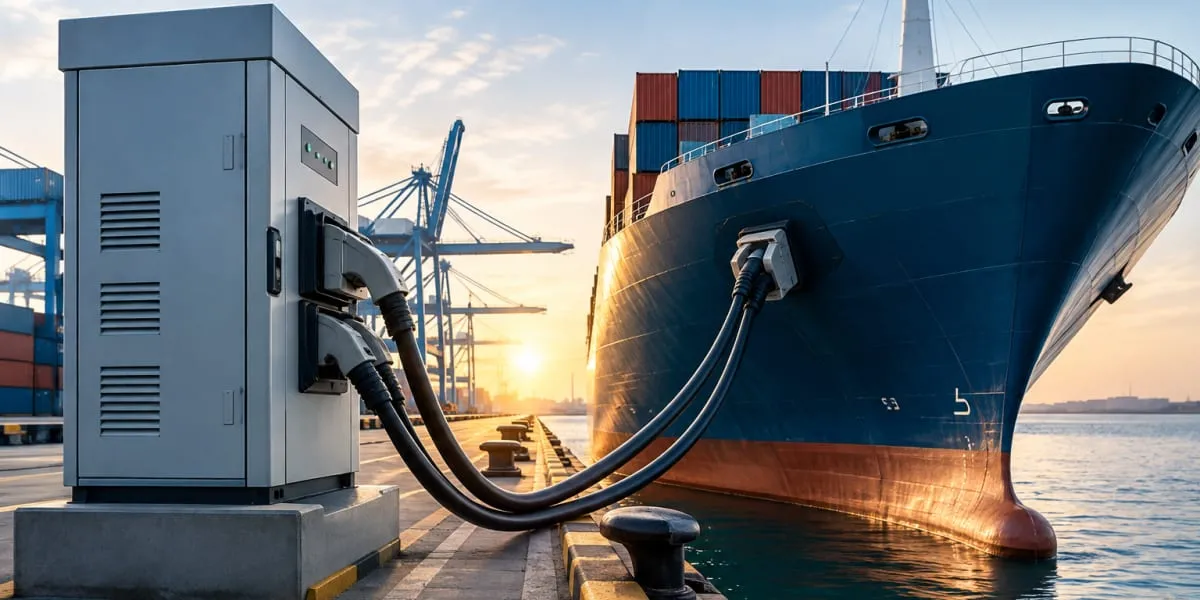
The Jawaharlal Nehru Port Authority (JNPA) has partnered with the International Finance Corporation (IFC) to develop shore power supply (SPS) infrastructure across its terminals, with IFC investing $70 mn. The organisations described the arrangement as India’s first blue financing framework for the maritime sector.

The financing will enable ships berthed at JNPA to switch off their diesel engines and connect to land-based electricity. JNPA said the project is projected to cut carbon emissions by 63 per cent, reduce harmful air pollution by up to 90 per cent and create more than 400 jobs.

Shore power has not yet been commercially deployed at scale at any major Indian port. JNPA said IFC’s long-term financing would help it manage early-stage commercial risks, develop operational experience and adopt international practices before wider deployment. The project is intended to establish a commercial and operational model that can be applied at other Indian ports and in emerging markets.

JNPA described the initiative as the first labelled blue financing for port infrastructure in the Asia-Pacific region and one of the first aligned with blue finance guidelines under the Indian Ports Act, 2025. It is also the first investment by a development finance institution (DFI) in India’s state-owned major port authorities, according to JNPA. IFC has supported the development of JNPA’s Sustainable Finance Framework to help attract further green and blue financing.

The project is aligned with Maritime India Vision 2030 and the Harit Sagar Green Port Guidelines, which identify shore power as a key measure for reducing port emissions and pollution. JNPA operates five container terminals, other cargo facilities and a 277-hectare special economic zone. It is also developing the Rs. 762.2 bn Vadhvan Port in Maharashtra, an all-weather deep-draft greenfield facility that will be India’s 13th major port.

The Jawaharlal Nehru Port Authority (JNPA) has partnered with the International Finance Corporation (IFC) to develop shore power supply (SPS) infrastructure across its terminals, with IFC investing $70 mn. The organisations described the arrangement as India’s first blue financing framework for the maritime sector. The financing will enable ships berthed at JNPA to switch off their diesel engines and connect to land-based electricity. JNPA said the project is projected to cut carbon emissions by 63 per cent, reduce harmful air pollution by up to 90 per cent and create more than 400 jobs. Shore power has not yet been commercially deployed at scale at any major Indian port. JNPA said IFC’s long-term financing would help it manage early-stage commercial risks, develop operational experience and adopt international practices before wider deployment. The project is intended to establish a commercial and operational model that can be applied at other Indian ports and in emerging markets. JNPA described the initiative as the first labelled blue financing for port infrastructure in the Asia-Pacific region and one of the first aligned with blue finance guidelines under the Indian Ports Act, 2025. It is also the first investment by a development finance institution (DFI) in India’s state-owned major port authorities, according to JNPA. IFC has supported the development of JNPA’s Sustainable Finance Framework to help attract further green and blue financing. The project is aligned with Maritime India Vision 2030 and the Harit Sagar Green Port Guidelines, which identify shore power as a key measure for reducing port emissions and pollution. JNPA operates five container terminals, other cargo facilities and a 277-hectare special economic zone. It is also developing the Rs. 762.2 bn Vadhvan Port in Maharashtra, an all-weather deep-draft greenfield facility that will be India’s 13th major port.

Related Stories

Gold Stories

Next Story
Real Estate

Japanese companies expand GCC operations in India

More than 100 Japanese companies have established or are expanding Global Capability Centres (GCCs) in India, with a growing focus on artificial intelligence (AI), engineering, digital innovation, product development, cybersecurity and advanced analytics. The shift marks an expansion beyond traditional back-office and operational support functions towards higher-value technology and innovation activities.Japanese companies are increasingly using their Indian GCCs to support digital transformation, address talent shortages and contribute to global business strategies. These centres are taking o..

Next Story
Real Estate

India’s flexible office stock projected to reach 160 million sq ft by 2030

India retained its position as the world's most mature flexible office market, scoring 100 per cent on Cushman & Wakefield's Flexible Office Market Maturity Index, according to the firm's Global Trends in Flexible Office 2026 report.India's flexible office inventory reached 88.7 million sq ft (MSF) in H1 2026, accounting for 10.5 per cent of the country's total office stock. The report projects this to exceed 100 MSF in 2026 and reach approximately 160 MSF by 2030.Flexible office operators leased 8.5 MSF across India's top eight cities in H1 2026, their strongest first-half performance to ..

Next Story
Infrastructure Urban

K2 Infragen appoints Abhishek Sharma as DGM, supply chain

K2 Infragen has appointed Abhishek Sharma as Deputy General Manager, Supply Chain Management. He will oversee procurement planning, vendor partnerships and coordination with project teams.Sharma brings nearly two decades of experience in infrastructure procurement across railways, highways, expressways and hydropower. His experience includes procurement responsibilities associated with the Delhi–Meerut Expressway and the Delhi–Vadodara greenfield corridor. ..

Advertisement

Subscribe to Our Newsletter

Get daily newsletters around different themes from Construction world.

STAY CONNECTED

Advertisement

SPECIAL OFFER
QR Code