India Energy Stack Taskforce Reviews Version 0.2 Strategy
POWER & RENEWABLE ENERGY

India Energy Stack Taskforce Reviews Version 0.2 Strategy

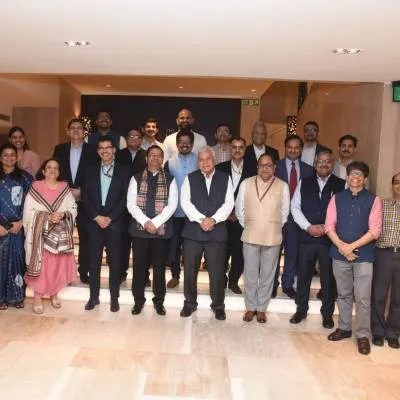
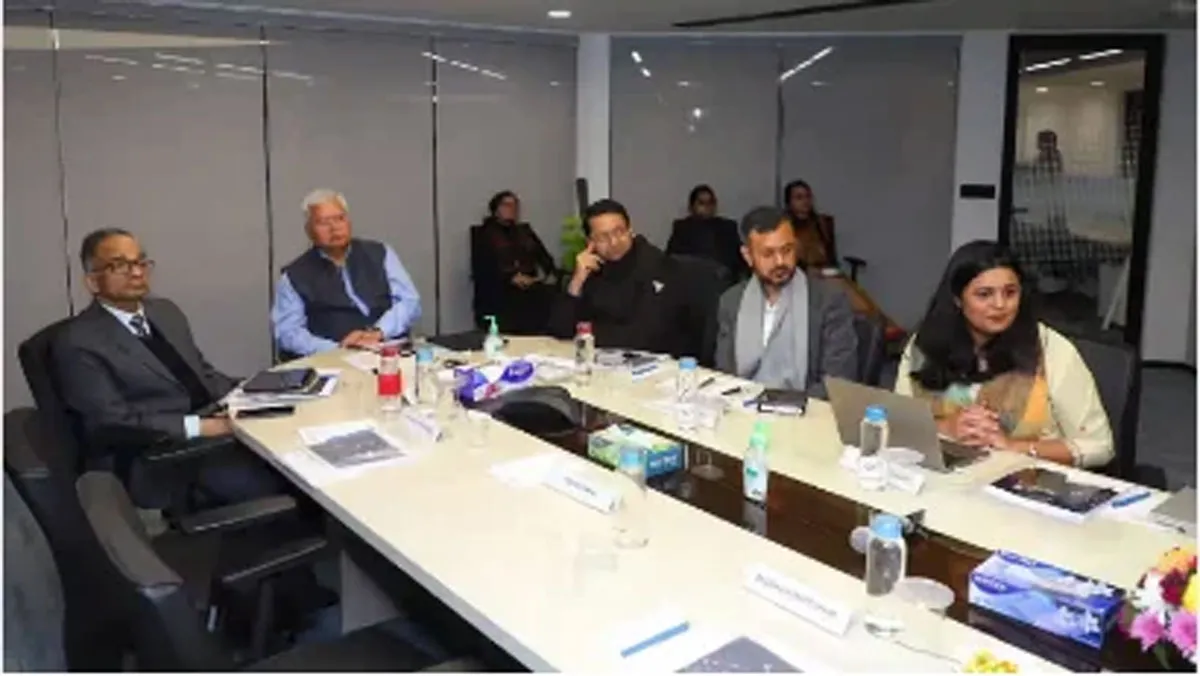
The second meeting of the India Energy Stack (IES) Taskforce was held with participation from members of the Taskforce and representatives from the Ministry of Power, regulators, industry, academia and other key stakeholders. The meeting reviewed the Version 0.2 drafts of the IES Strategy and Architecture documents, developed following guidance from the inaugural meeting convened by the Ministry of Power.

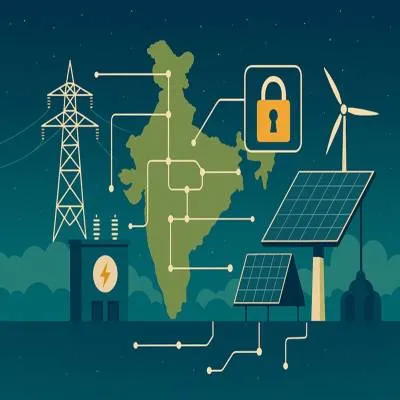
During the earlier meeting, the Taskforce had aligned on positioning the India Energy Stack as India’s Digital Public Infrastructure (DPI) for the power sector, anchored in modularity, interoperability, standards-led design and real-world implementability. Building on this foundation, Version 0.2 of the Strategy document places a stronger emphasis on execution by proposing the development of IES through complete “use case packages”.

The updated strategy introduces a structured framework for prioritising early use cases, maps existing national digital platforms relevant to the power sector and strengthens the data governance approach. It also outlines the rationale for a National Power Sector Data Policy to support secure, standardised and trusted data sharing across the ecosystem.

The meeting was chaired by Ram Sewak Sharma, Chairman, IES Taskforce, and attended by Pradeep Kumar Pujari, Vice Chair, IES Taskforce, along with senior representatives from REC Limited, power utilities, industry bodies, think tanks and the Ministry of Power.

Speaking at the meeting, Jitendra Srivastava, Chairman and Managing Director, REC Limited, said, “The India Energy Stack represents a transformational step towards building a unified, trusted, and future-ready digital foundation for India’s power sector. Version 0.2 reflects the Taskforce’s collective wisdom and a strong shift from concept to execution.”

The Version 0.2 Architecture document sharpens focus on the trust and security framework of IES, including digital identity, verifiable credentials, secure APIs, auditability and policy-as-code. To demonstrate practical adoption, pilot DISCOMs have been invited to implement inter-state peer-to-peer power trading using the defined specifications.

The India Energy Stack project is targeted for completion by July 2026.

The second meeting of the India Energy Stack (IES) Taskforce was held with participation from members of the Taskforce and representatives from the Ministry of Power, regulators, industry, academia and other key stakeholders. The meeting reviewed the Version 0.2 drafts of the IES Strategy and Architecture documents, developed following guidance from the inaugural meeting convened by the Ministry of Power.During the earlier meeting, the Taskforce had aligned on positioning the India Energy Stack as India’s Digital Public Infrastructure (DPI) for the power sector, anchored in modularity, interoperability, standards-led design and real-world implementability. Building on this foundation, Version 0.2 of the Strategy document places a stronger emphasis on execution by proposing the development of IES through complete “use case packages”.The updated strategy introduces a structured framework for prioritising early use cases, maps existing national digital platforms relevant to the power sector and strengthens the data governance approach. It also outlines the rationale for a National Power Sector Data Policy to support secure, standardised and trusted data sharing across the ecosystem.The meeting was chaired by Ram Sewak Sharma, Chairman, IES Taskforce, and attended by Pradeep Kumar Pujari, Vice Chair, IES Taskforce, along with senior representatives from REC Limited, power utilities, industry bodies, think tanks and the Ministry of Power.Speaking at the meeting, Jitendra Srivastava, Chairman and Managing Director, REC Limited, said, “The India Energy Stack represents a transformational step towards building a unified, trusted, and future-ready digital foundation for India’s power sector. Version 0.2 reflects the Taskforce’s collective wisdom and a strong shift from concept to execution.”The Version 0.2 Architecture document sharpens focus on the trust and security framework of IES, including digital identity, verifiable credentials, secure APIs, auditability and policy-as-code. To demonstrate practical adoption, pilot DISCOMs have been invited to implement inter-state peer-to-peer power trading using the defined specifications.The India Energy Stack project is targeted for completion by July 2026.

Next Story
Infrastructure Energy

Delhi HC Stays PGCIL Order against KEC International

KEC International has informed stock exchanges of a significant legal development concerning its eligibility to participate in tenders floated by Power Grid Corporation of India (PGCIL), in a disclosure made under Regulation 30 of the SEBI (Listing Obligations and Disclosure Requirements) Regulations.The update follows the company’s earlier intimation dated November 18, 2025, regarding an order issued by PGCIL that excluded KEC International from participating in its tenders for a period of nine months. Challenging the said order, the company filed a writ petition before the Hon’ble High C..

Next Story
Building Material

LANXESS Advances Pigment Solutions for New-Age Concrete Technologies

LANXESS is deepening its engagement with next-generation concrete technologies by advancing research into the performance of iron oxide pigments across emerging construction applications, including self-compacting concrete (SCC), geopolymers and 3D-printed concrete. Through extensive investigations and long-term weathering tests, iron oxide pigments have proven their suitability for a wide range of concrete construction materials, though their use in new formulations requires a thorough understanding of construction chemistry and material interactions.According to Oliver Fleschentraeger, Techn..

Next Story
Infrastructure Urban

JHS Svendgaard to Invest Rs 250 Million in Kala Amb Expansion

JHS Svendgaard Laboratories (JHS), a leading Indian manufacturer of oral care products, has announced an investment of Rs 250 million to expand its manufacturing footprint in Kala Amb, Himachal Pradesh. The investment is aimed at strengthening production capacity, introducing advanced technologies and supporting the company’s next phase of growth in response to rising domestic and global demand.As part of the expansion plan, JHS will construct a new 100,000 sq ft manufacturing facility on its existing five-acre land parcel at Kala Amb. The project is expected to be executed over a two-year p..

Advertisement

Subscribe to Our Newsletter

Get daily newsletters around different themes from Construction world.

STAY CONNECTED

Advertisement

Advertisement

Advertisement

Advertisement

Open In App