India Hits 50% Non-Fossil Power Capacity Five Years Early
POWER & RENEWABLE ENERGY

India Hits 50% Non-Fossil Power Capacity Five Years Early

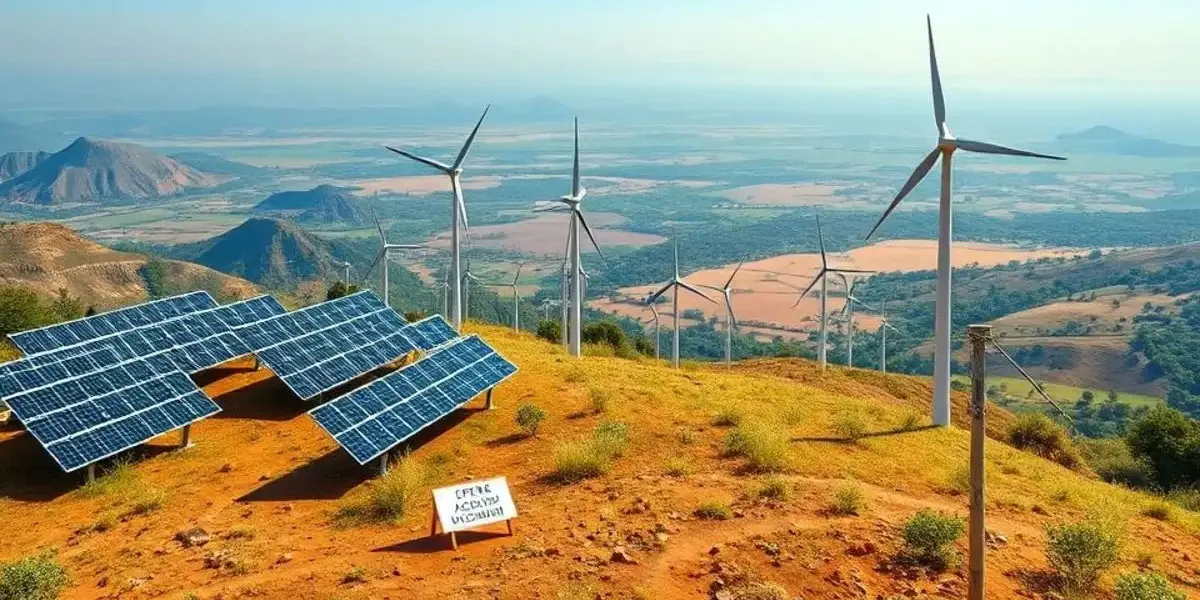
India has achieved 50 per cent of its installed electricity capacity from non-fossil fuel sources—five years ahead of the target set under its Nationally Determined Contributions to the Paris Agreement. As of 31 October 2025, non-fossil capacity stands at approximately 259 GW, with 31.2 GW added so far in the current financial year.

Between April 2023 and October 2025, Renewable Energy Implementing Agencies (REIAs) under the Ministry of New and Renewable Energy—SECI, NTPC, NHPC and SJVN—have issued Letters of Award (LoAs) totalling 67,554 MW. No LoAs have been cancelled. In addition to REIA-led tenders, states are issuing their own renewable procurement bids, and further capacity is being added through Green Energy Open Access and captive routes in the commercial and industrial sectors. Renewable capacity growth is therefore progressing through multiple channels.

With declining costs of solar-plus-storage and dispatchable renewable power, distribution companies and major consumers are increasingly favouring solutions that can supply energy during peak hours. This shift has reduced the demand for plain solar projects. Solar-plus-storage is now being preferred over wind–solar hybrids, due to its ability to provide firm, time-specific output. The Government has accordingly encouraged REIAs to move away from plain solar tenders and instead issue bids for solar with storage, renewable energy configured for peak-hour supply and firm and dispatchable renewable energy (FDRE).

To ensure timely execution of power purchase agreements (PPAs), the Government has urged states to comply with the Renewable Consumption Obligation (RCO) under the Energy Conservation Act. REIAs have also been advised to aggregate demand from DISCOMs and bulk consumers before designing tenders. Regional workshops with major renewable-procuring states have been held to address operational bottlenecks and accelerate PPA signing.

The Central Electricity Authority (CEA) prepares long-term transmission plans based on renewable potential identified by MNRE, giving developers visibility on future network availability. Transmission systems are implemented in phases to match generation additions and optimise network utilisation.

For planning up to 2032, around 47.2 GW of Battery Energy Storage Systems (BESS) has been incorporated. BESS deployment enables peak shifting, reduces congestion and enhances transmission asset utilisation. Recent regulations—specifically the Central Electricity Regulatory Commission’s 2025 amendment on Connectivity and General Network Access—mandate granting grid connectivity for both solar and non-solar hours. This measure will improve transmission efficiency and allow additional renewable energy, including co-located BESS, to be integrated without requiring parallel expansion of transmission corridors.

This information was provided in the Rajya Sabha by Union Minister of New and Renewable Energy Pralhad Joshi.

India has achieved 50 per cent of its installed electricity capacity from non-fossil fuel sources—five years ahead of the target set under its Nationally Determined Contributions to the Paris Agreement. As of 31 October 2025, non-fossil capacity stands at approximately 259 GW, with 31.2 GW added so far in the current financial year. Between April 2023 and October 2025, Renewable Energy Implementing Agencies (REIAs) under the Ministry of New and Renewable Energy—SECI, NTPC, NHPC and SJVN—have issued Letters of Award (LoAs) totalling 67,554 MW. No LoAs have been cancelled. In addition to REIA-led tenders, states are issuing their own renewable procurement bids, and further capacity is being added through Green Energy Open Access and captive routes in the commercial and industrial sectors. Renewable capacity growth is therefore progressing through multiple channels. With declining costs of solar-plus-storage and dispatchable renewable power, distribution companies and major consumers are increasingly favouring solutions that can supply energy during peak hours. This shift has reduced the demand for plain solar projects. Solar-plus-storage is now being preferred over wind–solar hybrids, due to its ability to provide firm, time-specific output. The Government has accordingly encouraged REIAs to move away from plain solar tenders and instead issue bids for solar with storage, renewable energy configured for peak-hour supply and firm and dispatchable renewable energy (FDRE). To ensure timely execution of power purchase agreements (PPAs), the Government has urged states to comply with the Renewable Consumption Obligation (RCO) under the Energy Conservation Act. REIAs have also been advised to aggregate demand from DISCOMs and bulk consumers before designing tenders. Regional workshops with major renewable-procuring states have been held to address operational bottlenecks and accelerate PPA signing. The Central Electricity Authority (CEA) prepares long-term transmission plans based on renewable potential identified by MNRE, giving developers visibility on future network availability. Transmission systems are implemented in phases to match generation additions and optimise network utilisation. For planning up to 2032, around 47.2 GW of Battery Energy Storage Systems (BESS) has been incorporated. BESS deployment enables peak shifting, reduces congestion and enhances transmission asset utilisation. Recent regulations—specifically the Central Electricity Regulatory Commission’s 2025 amendment on Connectivity and General Network Access—mandate granting grid connectivity for both solar and non-solar hours. This measure will improve transmission efficiency and allow additional renewable energy, including co-located BESS, to be integrated without requiring parallel expansion of transmission corridors. This information was provided in the Rajya Sabha by Union Minister of New and Renewable Energy Pralhad Joshi.

Next Story
Products

Kuche7 Launches Ruby Vanity for Sculpted, High-Performance Bathrooms

Kuche7, India’s leading maker of premium stainless-steel kitchens, has unveiled the Ruby Vanity, a bathroom system engineered for long-term performance with a warm, sculpted aesthetic. Built on a 304-grade stainless-steel framework, the vanity offers corrosion resistance, structural strength and high durability suited to humid environments.Precision metal-forming enables the seamless curved façade, finished in a matte beige PU coat and paired with a marble countertop for depth and texture. Stainless-steel internal carcasses ensure efficient, moisture-resistant storage for everyday use. The ..

Next Story
Resources

Knauf India Doubles Capacity with New Metal Line at Khushkhera Plant

Knauf India, the world’s leading drywall and ceiling solutions company, has inaugurated a new Metal Line at its Khushkhera plant, doubling the facility’s overall production capacity. The expansion strengthens Knauf’s local manufacturing footprint and supports the growing domestic demand for advanced building materials.The launch was held during Knauf’s Dealer Engagement Day, which brought together dealers, partners and team members from across the country for a full-day programme combining technical demonstrations and engagement activities. The event began with a guided plant tour show..

Next Story
Products

Valueline Launches Tiberio by Ceramica Cielo in India

Valueline, a premium home solutions brand established in 2002, has announced the launch of Tiberio by Ceramica Cielo, an Italian bathroom collection that pairs traditional ceramic craftsmanship with contemporary design. The series is positioned to bring refined elegance and architectural depth to modern interiors.Designed by Andrea Parisio and Giuseppe Pezzano, Tiberio emphasises balanced proportions and a harmonious integration of ceramic and wood. The collection offers both modular and freestanding formats, enabling application across varied settings including high-end residences, boutique h..

Advertisement

Subscribe to Our Newsletter

Get daily newsletters around different themes from Construction world.

STAY CONNECTED

Advertisement

Advertisement

Advertisement

Advertisement

Get CW App