The International Solar Alliance and the Government of India hosted a high-level pre-summit dialogue ahead of the AI Impact Summit 2026 to advance the use of artificial intelligence in building resilient, efficient and sustainable energy systems across India and the Global South.
The convening, led by the Ministry of Electronics and Information Technology, the Ministry of Power and the International Solar Alliance, brought together senior government officials, power utilities, technology providers, entrepreneurs and international development partners in Delhi. Discussions focused on the Global AI Mission for Energy and India’s vision of developing “AI Products for the World of Energy”, with an emphasis on deployable solutions rather than fragmented pilot projects.
Organised as an official pre-summit event to the AI Impact Summit 2026, scheduled for February next year, the dialogue marked a key milestone in India’s preparatory roadmap. It served as a platform to align mission priorities, encourage product-oriented AI thinking and build coalitions around real-world applications of AI in the energy sector.
Opening the session, Ashish Khanna, Director General of the International Solar Alliance, said the digitisation of power distribution systems has become foundational as solar and other distributed renewable energy sources expand rapidly. He noted that managing variability, improving power procurement efficiency, reducing system losses and delivering better customer service at scale would require AI-enabled digital infrastructure such as digital twins, interoperable platforms and open protocols.
Khanna added that while energy challenges are common across developed and developing economies, the key constraint today is fragmentation rather than a lack of pilots. He said the Global South’s strength lies in its ability to build high-quality, low-cost AI innovations and move decisively towards concrete products, real-world use cases and a collaborative Global AI Mission for Energy.
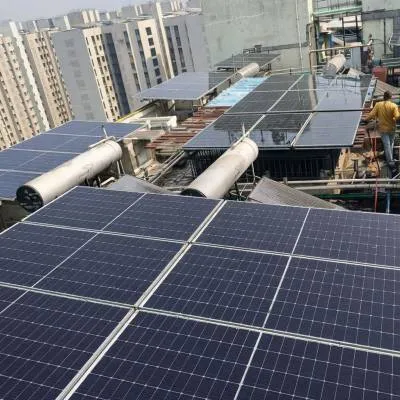
Highlighting operational priorities, Ghanshyam Prasad, Chairperson of the Central Electricity Authority, stressed the urgency of end-to-end digitalisation. He said large-scale deployment of distributed renewable energy, particularly rooftop solar, demands full visibility across distribution networks, from consumers to system operators. Artificial intelligence and digital tools, he added, must be applied with clearly defined use cases focused on operational needs rather than isolated experimentation.
Bringing a global perspective, Florent Mangin, representing the ISA Co-Presidency, said AI can be a powerful enabler of the energy transition if deployed in a trusted, secure and sustainable manner. He underlined the importance of transparency, environmental responsibility and capacity building, reaffirming France’s commitment to working with India and ISA member countries to deliver practical outcomes that strengthen energy system resilience.
The dialogue was structured into two sessions, with the first examining India’s AI products for the global energy transition. Discussions explored how initiatives such as the India Energy Stack, digital grids and AI-enabled grid pilots could evolve into scalable platforms.
Moderated by Shashank Misra, the session highlighted the transformative potential of real-time grid and consumer data enabled by India’s rapid rollout of smart meters. Misra noted that as the world’s largest single electricity grid integrates unprecedented volumes of real-time data, effective use of this information could significantly improve load forecasting, power purchase optimisation, theft reduction and tariff competitiveness.
Participants emphasised the need for clearly defined use cases to avoid fragmented systems, particularly in forecasting, power procurement optimisation and the integration of emerging technologies such as vehicle-to-grid solutions. Speakers also cautioned against premature standardisation that could stifle innovation, while underscoring the need to build digital and AI capabilities within DISCOMs, many of which remain at an early stage of digital transformation.
Sharing sub-national experience, Arti Dogra, described how AI-enabled energy accounting and predictive asset management have helped address localised losses, improve reliability and shift operations from reactive to predictive modes, highlighting the role of digital twins and artificial intelligence in utility modernisation.