India Reaches 50 Per Cent Clean Power Capacity Ahead Of Target
POWER & RENEWABLE ENERGY

India Reaches 50 Per Cent Clean Power Capacity Ahead Of Target

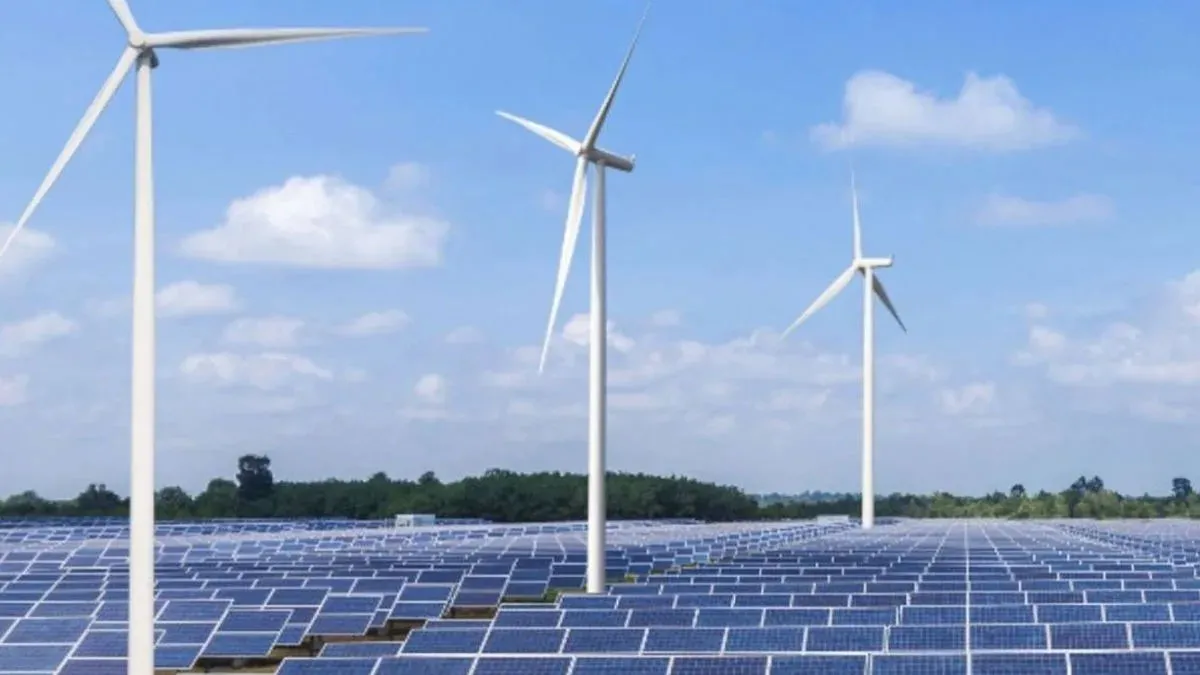
India has achieved 50 per cent of its installed electricity capacity from non-fossil fuel sources — five years ahead of the timeline pledged under its Nationally Determined Contributions to the Paris Agreement. As of 31 October 2025, non-fossil power capacity stands at around 259 GW, with 31.2 GW added in the current financial year up to October.

Recent reports have suggested that the Ministry of New and Renewable Energy (MNRE) has advised lenders to pause financing for renewable energy projects due to concerns around overcapacity. The Ministry has now clarified that no such advisory has been issued to any financial institution for stopping lending to renewable power projects or renewable energy equipment manufacturers.

MNRE explained that it has only shared information with the Department of Financial Services and NBFCs — including PFC, REC and IREDA — on the current domestic manufacturing capacity in the solar PV value chain. This includes modules, solar cells, ingots and wafers, polysilicon, and ancillary components such as solar glass and aluminium frames. The aim is to ensure that lenders adopt a calibrated and well-informed approach when assessing new proposals, and expand financing to upstream stages rather than limiting support to module manufacturing alone.

The Government of India remains committed to building self-reliance in solar PV manufacturing and positioning the country as a key player in global supply chains. This vision is supported through measures such as the Production Linked Incentive (PLI) Scheme for High Efficiency Solar PV Modules, along with policies designed to ensure a level playing field for domestic industry.

These interventions have helped expand India’s solar module manufacturing capacity from just 2.3 GW in 2014 to roughly 122 GW today, as per MNRE’s Approved List of Models and Manufacturers (ALMM). This remarkable scale-up reflects coordinated efforts between industry, State Governments and the Centre. It also reinforces India’s broader commitment to achieving 500 GW of non-fossil fuel capacity by 2030 and contributing significantly to global decarbonisation.

MNRE stated that it will continue to strengthen the solar manufacturing ecosystem through sustained policy support, infrastructure enhancement and innovation. Engagement with stakeholders will remain central to ensuring that India’s clean energy transition remains competitive, inclusive and future-ready.

India has achieved 50 per cent of its installed electricity capacity from non-fossil fuel sources — five years ahead of the timeline pledged under its Nationally Determined Contributions to the Paris Agreement. As of 31 October 2025, non-fossil power capacity stands at around 259 GW, with 31.2 GW added in the current financial year up to October. Recent reports have suggested that the Ministry of New and Renewable Energy (MNRE) has advised lenders to pause financing for renewable energy projects due to concerns around overcapacity. The Ministry has now clarified that no such advisory has been issued to any financial institution for stopping lending to renewable power projects or renewable energy equipment manufacturers. MNRE explained that it has only shared information with the Department of Financial Services and NBFCs — including PFC, REC and IREDA — on the current domestic manufacturing capacity in the solar PV value chain. This includes modules, solar cells, ingots and wafers, polysilicon, and ancillary components such as solar glass and aluminium frames. The aim is to ensure that lenders adopt a calibrated and well-informed approach when assessing new proposals, and expand financing to upstream stages rather than limiting support to module manufacturing alone. The Government of India remains committed to building self-reliance in solar PV manufacturing and positioning the country as a key player in global supply chains. This vision is supported through measures such as the Production Linked Incentive (PLI) Scheme for High Efficiency Solar PV Modules, along with policies designed to ensure a level playing field for domestic industry. These interventions have helped expand India’s solar module manufacturing capacity from just 2.3 GW in 2014 to roughly 122 GW today, as per MNRE’s Approved List of Models and Manufacturers (ALMM). This remarkable scale-up reflects coordinated efforts between industry, State Governments and the Centre. It also reinforces India’s broader commitment to achieving 500 GW of non-fossil fuel capacity by 2030 and contributing significantly to global decarbonisation. MNRE stated that it will continue to strengthen the solar manufacturing ecosystem through sustained policy support, infrastructure enhancement and innovation. Engagement with stakeholders will remain central to ensuring that India’s clean energy transition remains competitive, inclusive and future-ready.

Next Story
Infrastructure Urban

Centre Boosts FPO Growth With New Credit And Market Support

The Government is implementing the Central Sector Scheme on the formation and promotion of 10,000 Farmer Producer Organisations (FPOs), under which all 10,000 FPOs have now been registered. The scheme provides Rs 1.8 million per FPO for three years as management support, a matching equity grant of up to Rs 1.5 million, and a credit guarantee of up to Rs 0.02 billion through eligible lending institutions. It also offers assistance for training, market linkages and alignment with other schemes. FPOs receive support to obtain input licences for seed, fertiliser and pesticide supplies, as well as..

Next Story
Infrastructure Urban

PM-KISAN Drives Farm Income Gains And Rural Stability

The PM-KISAN scheme, a central sector initiative launched in February 2019, aims to support the financial needs of farmers holding cultivable land. Under the scheme, Rs 6,000 per year is transferred in three equal instalments to Aadhaar-seeded bank accounts through Direct Benefit Transfer. Eligibility is based primarily on cultivable landholding, with certain exclusions for individuals of higher economic status. A farmer-centric digital infrastructure ensures scheme benefits reach farmers across India without intermediaries. With full transparency in registration and verification, the Governm..

Next Story
Infrastructure Urban

Govt Extends Pro Tem Security Certificate To Two Years

In a further push to improve ease of doing business and ensure continuity for the telecom industry, the National Centre for Communication Security (NCCS) under the Department of Telecommunications has extended the validity of the Pro Tem Security Certification from six months to two years. The Pro Tem Certification, initially launched in October 2024 with a six-month validity, was designed to prevent business disruption for IP Router and Wi-Fi CPE products, which became subject to mandatory security certification from 1 October 2024. Under this certification, OEMs submit a declaration confirm..

Advertisement

Subscribe to Our Newsletter

Get daily newsletters around different themes from Construction world.

STAY CONNECTED

Advertisement

Advertisement

Advertisement

Advertisement

Open In App