+
India to Reduce Oil and Gas Dependence, Power Secretary Says
POWER & RENEWABLE ENERGY

India to Reduce Oil and Gas Dependence, Power Secretary Says

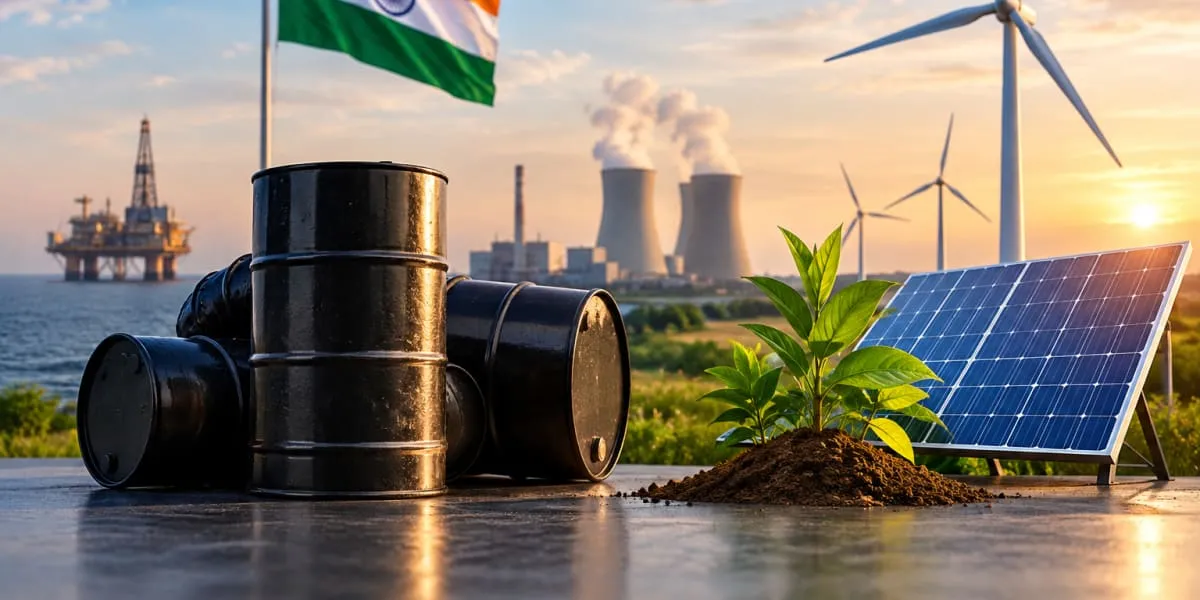
India needs to reduce its dependence on oil and gas and accelerate its transition to renewable energy as energy security gains importance amid changing global conditions, Pankaj Agarwal, Secretary, Ministry of Power, said at the FICCI Indian Power Sector Conference in New Delhi. He said recent developments around the Strait of Hormuz had reinforced the need to reduce reliance on hydrocarbons wherever possible.

Agarwal said solar, wind, biomass, nuclear power and coal would all remain part of the energy mix, but renewable energy had become central to India’s energy security. He added that the rising share of variable renewable generation would require greater flexibility on both the supply and demand sides of the electricity system.

The economics and underlying assumptions of the power sector have changed significantly over the past three years, Agarwal said, noting that battery storage costs had declined from about Rs. 10 per unit in 2023 to Rs. 4 per unit currently. India is also preparing a roadmap for 100 GW of nuclear capacity by 2047, while pumped storage projects with a combined capacity of about 16,000 MW are under implementation.

Agarwal identified the geographical concentration of renewable generation as a challenge for grid stability, with substantial solar and wind capacity located in Rajasthan and Gujarat. The government is considering storage, transmission expansion, time-of-day tariffs and market-based mechanisms to manage fluctuations in generation.

The forthcoming National Electricity Policy is expected to include flexibility mandates for large consumers, including data centres and green hydrogen projects, whose electricity demand can fluctuate considerably. Agarwal also highlighted investment opportunities in battery and pumped storage, particularly in renewable-rich states, saying these assets could reduce curtailment, support the grid and enable energy arbitrage. He said India should use the grid-stability challenge to develop and manufacture power-electronics equipment and other solutions domestically.

India needs to reduce its dependence on oil and gas and accelerate its transition to renewable energy as energy security gains importance amid changing global conditions, Pankaj Agarwal, Secretary, Ministry of Power, said at the FICCI Indian Power Sector Conference in New Delhi. He said recent developments around the Strait of Hormuz had reinforced the need to reduce reliance on hydrocarbons wherever possible. Agarwal said solar, wind, biomass, nuclear power and coal would all remain part of the energy mix, but renewable energy had become central to India’s energy security. He added that the rising share of variable renewable generation would require greater flexibility on both the supply and demand sides of the electricity system. The economics and underlying assumptions of the power sector have changed significantly over the past three years, Agarwal said, noting that battery storage costs had declined from about Rs. 10 per unit in 2023 to Rs. 4 per unit currently. India is also preparing a roadmap for 100 GW of nuclear capacity by 2047, while pumped storage projects with a combined capacity of about 16,000 MW are under implementation. Agarwal identified the geographical concentration of renewable generation as a challenge for grid stability, with substantial solar and wind capacity located in Rajasthan and Gujarat. The government is considering storage, transmission expansion, time-of-day tariffs and market-based mechanisms to manage fluctuations in generation. The forthcoming National Electricity Policy is expected to include flexibility mandates for large consumers, including data centres and green hydrogen projects, whose electricity demand can fluctuate considerably. Agarwal also highlighted investment opportunities in battery and pumped storage, particularly in renewable-rich states, saying these assets could reduce curtailment, support the grid and enable energy arbitrage. He said India should use the grid-stability challenge to develop and manufacture power-electronics equipment and other solutions domestically.

Related Stories

Gold Stories

Next Story
Real Estate

Ajyal Holding Acquires 25% Stake in Sterling Ark

Sterling Ark, an independent integrated real estate advisory and project delivery firm, has announced a strategic alliance with Abu Dhabi-headquartered Ajyal Holding. Under the agreement, Ajyal Holding has acquired a 25 per cent stake in Sterling Ark.The alliance is expected to provide Sterling Ark with a broader platform to pursue opportunities and expand its presence across the region. Ajyal Holding operates across real estate, contracting, fit-out, building materials and technology, among other sectors.Sterling Ark provides end-to-end advisory and project delivery capabilities across real e..

Next Story
Infrastructure Urban

YEIDA Allots Land for Five Projects Worth Rs 4.69 bn

A significant step towards converting industrial investment proposals into on-ground projects was taken at the inauguration of the Uttar Pradesh International Trade Show (UPITS) 2026. Union Home and Cooperation Minister Amit Shah presented Letters of Allotment to representatives of five companies investing in the Yamuna Expressway Industrial Development Authority (YEIDA) region.The five projects have been allotted a total of 71,190 sq m of land and involve a proposed investment of Rs 4.69 bn, with the potential to generate 4,625 employment opportunities.C&R Textiles Private Limited has bee..

Next Story
Infrastructure Energy

Hindustan Zinc Restores 1,105 Hectares of Land

Hindustan Zinc Limited has restored 1,105 hectares of land as part of its efforts to integrate ecological restoration with responsible mining. The rehabilitated area, equivalent to more than 1,500 football fields, covers mining and operational landscapes restored through reclamation, plantation, biodiversity enhancement and sustainable land-use practices.The initiatives form part of Hindustan Zinc’s Sustainability Goals 2030 and its broader focus on creating long-term ecological value alongside business growth.Amarendu Prakash, CEO, Hindustan Zinc, said: “The future of mining will increasi..

Advertisement

Subscribe to Our Newsletter

Get daily newsletters around different themes from Construction world.

STAY CONNECTED

Advertisement

SPECIAL OFFER
QR Code