Juniper Green Commissions 100-MW Solar Project for Bhutan
POWER & RENEWABLE ENERGY

Juniper Green Commissions 100-MW Solar Project for Bhutan

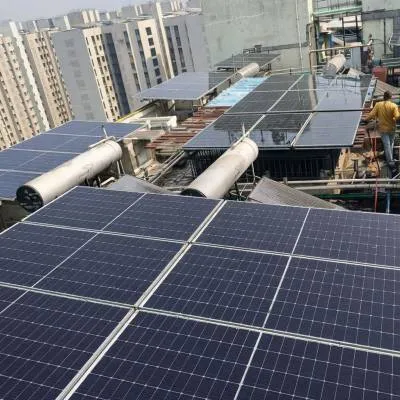
The New Delhi Municipal Council (NDMC) held its first council meeting since the Delhi Assembly polls focusing on a comprehensive Summer Action Plan aimed at achieving 100% solar energy adoption by 2026.

The meeting, led by MP Bansuri Swaraj, began with the swearing-in of three new NDMC members — Delhi Minister and New Delhi MLA Parvesh Sahib Singh, Delhi Cantt. MLA Virender Singh Kadian, and Ravi Kumar Arora, Additional Secretary of the Ministry of Housing and Urban Affairs.

Solar Energy Push NDMC Vice Chairman Kuljeet Singh Chahal announced the civic body's ambitious solar energy plans, promising subsidies equivalent to those offered by the central government to encourage widespread adoption.

“In the coming days, solar panels will be installed on every rooftop in the NDMC area, with a final decision expected in the next council meeting. The goal is to make NDMC self-sustainable by 2026,” Chahal stated.

Water Connection Drive & Anti-Waterlogging Measures As part of the Summer Action Plan, the NDMC aims to install 9,000 new water connections across 34 clusters within six months. This initiative is expected to benefit approximately 47,000 residents, according to a statement from MLA Parvesh Sahib Singh’s office.

To tackle Delhi’s persistent waterlogging issues, the NDMC is also preparing to acquire new machinery and enhance rainwater harvesting systems throughout the city.

Other Civic Measures Night sweeping, previously limited to Khan Market, has been expanded to five more locations. Chahal emphasized that stringent action would be taken against agencies failing to meet contractual obligations, with a dedicated committee being formed to identify and address such gaps.

NDMC council member Anil Valmiki underscored the importance of employee welfare, promising that staff concerns would be a consistent topic of discussion in future council meetings.

The NDMC's progressive approach towards sustainability and civic management marks a significant step towards improving public services in the capital, with further updates expected in the next council meeting.

The New Delhi Municipal Council (NDMC) held its first council meeting since the Delhi Assembly polls focusing on a comprehensive Summer Action Plan aimed at achieving 100% solar energy adoption by 2026. The meeting, led by MP Bansuri Swaraj, began with the swearing-in of three new NDMC members — Delhi Minister and New Delhi MLA Parvesh Sahib Singh, Delhi Cantt. MLA Virender Singh Kadian, and Ravi Kumar Arora, Additional Secretary of the Ministry of Housing and Urban Affairs. Solar Energy Push NDMC Vice Chairman Kuljeet Singh Chahal announced the civic body's ambitious solar energy plans, promising subsidies equivalent to those offered by the central government to encourage widespread adoption. “In the coming days, solar panels will be installed on every rooftop in the NDMC area, with a final decision expected in the next council meeting. The goal is to make NDMC self-sustainable by 2026,” Chahal stated. Water Connection Drive & Anti-Waterlogging Measures As part of the Summer Action Plan, the NDMC aims to install 9,000 new water connections across 34 clusters within six months. This initiative is expected to benefit approximately 47,000 residents, according to a statement from MLA Parvesh Sahib Singh’s office. To tackle Delhi’s persistent waterlogging issues, the NDMC is also preparing to acquire new machinery and enhance rainwater harvesting systems throughout the city. Other Civic Measures Night sweeping, previously limited to Khan Market, has been expanded to five more locations. Chahal emphasized that stringent action would be taken against agencies failing to meet contractual obligations, with a dedicated committee being formed to identify and address such gaps. NDMC council member Anil Valmiki underscored the importance of employee welfare, promising that staff concerns would be a consistent topic of discussion in future council meetings. The NDMC's progressive approach towards sustainability and civic management marks a significant step towards improving public services in the capital, with further updates expected in the next council meeting.

Next Story
Infrastructure Transport

Dhalbhumgarh Airport Faces 150-km Rule Hurdle

The issue has resurfaced following a recent statement by Union Civil Aviation Minister Ram Mohan Naidu, who said that under existing aviation policy, a new greenfield airport is generally not permitted within an aerial distance of 150 kilometres of an operational civilian airport. He added, however, that if a formal proposal is submitted, its impact on the existing airport can be examined and relaxations may be considered on a case-by-case basis. While the clarification has revived some hope for Dhalbhumgarh, it has also underlined the scale of the technical challenge facing the project. Unde..

Next Story
Infrastructure Transport

Stakeholders Seek Parallel Ops For Vizag Airports

With road and metro rail links to Bhogapuram still several years away, stakeholders in north Andhra Pradesh have renewed demands to continue civil operations at INS Dega even after the commissioning of Bhogapuram International Airport. The new airport is expected to begin commercial operations from June. Officials said close to 80 per cent of the airport infrastructure at Bhogapuram, including the terminal building and internal approach roads, has already been completed. However, inadequate external connectivity remains a key concern. Making a case for parallel operations, Andhra Pradesh Air ..

Next Story
Infrastructure Transport

Govt To Roll Out V2V Tech To Cut Road Crashes

In an effort to curb road accidents, particularly in low-visibility conditions such as dense fog, the government is set to roll out vehicle-to-vehicle (V2V) communication technology that will allow cars to exchange real-time data and alert drivers to potential dangers. The announcement was made by Union Road Transport and Highways Minister Nitin Gadkari after the 43rd meeting of the Transport Development Council. The technology involves installing an on-board unit (OBU) in vehicles, enabling wireless data exchange between nearby cars. This will allow vehicles to share information such as spee..

Advertisement

Subscribe to Our Newsletter

Get daily newsletters around different themes from Construction world.

STAY CONNECTED

Advertisement

Advertisement

Advertisement

Advertisement

Open In App