Kosol Energie Unveils 730 W G12 TOPCon Solar Panel
POWER & RENEWABLE ENERGY

Kosol Energie Unveils 730 W G12 TOPCon Solar Panel

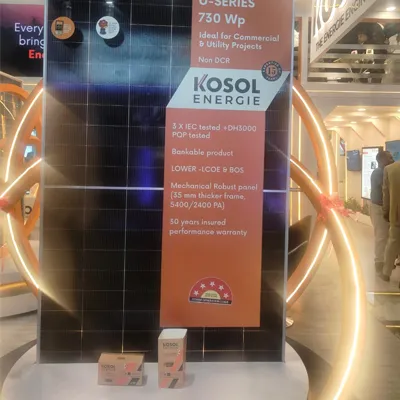
Kosol Energie unveiled a high-efficiency 730 W G12 TOPCon solar panel for commercial and utility-scale applications at the Renewable Energy India (REI) 2025 exhibition.

According to the company, the panels use high-transparency glass and POE encapsulants to enhance durability and improve light transmission. These innovations are designed to reduce the bill of materials by 2 to 3 per cent while improving overall plant performance through greater power output and lower transportation costs.

The panels are currently undergoing certification, with commercial production expected to begin by April or May 2026. They will complement Kosol Energie’s existing range of high-efficiency models, including the 610 W, 620 W, and G12R-based 630 W to 640 W panels.

Kosol Energie presently operates a 3 GW module manufacturing facility, producing around 2 GW annually. The company plans to expand capacity by an additional 6 GW, bringing total production capability to 9 GW by the end of 2026.

In a parallel move, Kosol Energie is venturing into large-scale battery energy storage system (BESS) manufacturing, with an initial annual capacity target of 3 GWh to 3.5 GWh. The containerised storage systems will cater to utility-scale developers, with unit capacities ranging from 0.5 MWh to 5 MWh.

The company stated that its BESS line will employ proven US technology already implemented in its overseas projects. The new production facility is currently under civil construction, located adjacent to the ongoing module plant expansion.

Kosol Energie unveiled a high-efficiency 730 W G12 TOPCon solar panel for commercial and utility-scale applications at the Renewable Energy India (REI) 2025 exhibition. According to the company, the panels use high-transparency glass and POE encapsulants to enhance durability and improve light transmission. These innovations are designed to reduce the bill of materials by 2 to 3 per cent while improving overall plant performance through greater power output and lower transportation costs. The panels are currently undergoing certification, with commercial production expected to begin by April or May 2026. They will complement Kosol Energie’s existing range of high-efficiency models, including the 610 W, 620 W, and G12R-based 630 W to 640 W panels. Kosol Energie presently operates a 3 GW module manufacturing facility, producing around 2 GW annually. The company plans to expand capacity by an additional 6 GW, bringing total production capability to 9 GW by the end of 2026. In a parallel move, Kosol Energie is venturing into large-scale battery energy storage system (BESS) manufacturing, with an initial annual capacity target of 3 GWh to 3.5 GWh. The containerised storage systems will cater to utility-scale developers, with unit capacities ranging from 0.5 MWh to 5 MWh. The company stated that its BESS line will employ proven US technology already implemented in its overseas projects. The new production facility is currently under civil construction, located adjacent to the ongoing module plant expansion.

Next Story
Infrastructure Energy

Delhi HC Stays PGCIL Order against KEC International

KEC International has informed stock exchanges of a significant legal development concerning its eligibility to participate in tenders floated by Power Grid Corporation of India (PGCIL), in a disclosure made under Regulation 30 of the SEBI (Listing Obligations and Disclosure Requirements) Regulations.The update follows the company’s earlier intimation dated November 18, 2025, regarding an order issued by PGCIL that excluded KEC International from participating in its tenders for a period of nine months. Challenging the said order, the company filed a writ petition before the Hon’ble High C..

Next Story
Building Material

LANXESS Advances Pigment Solutions for New-Age Concrete Technologies

LANXESS is deepening its engagement with next-generation concrete technologies by advancing research into the performance of iron oxide pigments across emerging construction applications, including self-compacting concrete (SCC), geopolymers and 3D-printed concrete. Through extensive investigations and long-term weathering tests, iron oxide pigments have proven their suitability for a wide range of concrete construction materials, though their use in new formulations requires a thorough understanding of construction chemistry and material interactions.According to Oliver Fleschentraeger, Techn..

Next Story
Infrastructure Urban

JHS Svendgaard to Invest Rs 250 Million in Kala Amb Expansion

JHS Svendgaard Laboratories (JHS), a leading Indian manufacturer of oral care products, has announced an investment of Rs 250 million to expand its manufacturing footprint in Kala Amb, Himachal Pradesh. The investment is aimed at strengthening production capacity, introducing advanced technologies and supporting the company’s next phase of growth in response to rising domestic and global demand.As part of the expansion plan, JHS will construct a new 100,000 sq ft manufacturing facility on its existing five-acre land parcel at Kala Amb. The project is expected to be executed over a two-year p..

Advertisement

Subscribe to Our Newsletter

Get daily newsletters around different themes from Construction world.

STAY CONNECTED

Advertisement

Advertisement

Advertisement

Advertisement

Open In App