Madagascar Launches 46 Solar Projects To Add 932 MW
POWER & RENEWABLE ENERGY

Madagascar Launches 46 Solar Projects To Add 932 MW

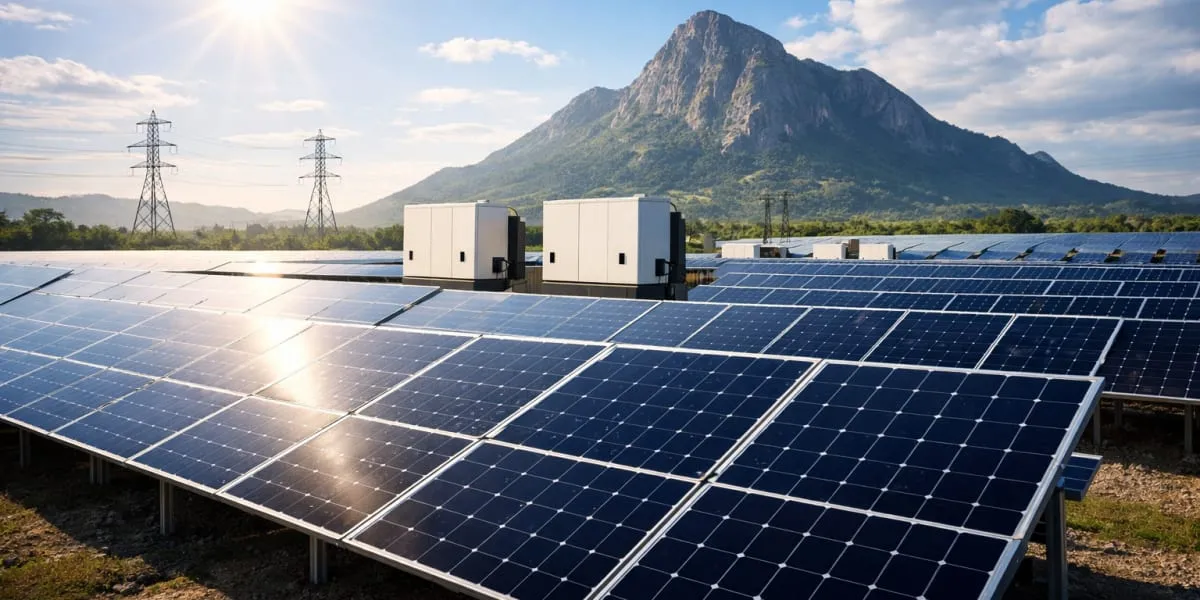
JIRAMA, Madagascar's national electricity utility, has launched 46 solar projects that will generate around 932 megawatts (MW) of electricity, marking one of the largest renewable energy initiatives in the island nation. The programme is designed to reduce persistent power shortages and cut dependence on costly fossil fuels. Officials described the move as a strategic effort to transform the energy sector and improve service reliability.

For years Madagascar has struggled with an ageing electricity grid and high production costs driven by thermal power plants that rely on imported fuel, which has contributed to frequent power cuts and constrained access in rural areas. The new solar projects are expected to strengthen grid stability and expand electricity availability across diverse regions. The mix of generation sources aims to reduce operational volatility and provide a steadier supply for residential and commercial users.

The rollout combines large solar farms with smaller decentralised systems to reach communities that are not well connected to the main network and to support facilities such as schools and healthcare centres. By reducing reliance on imported fuel, solar generation is anticipated to lower production costs and ease the financial burden on the utility and the state. Improvements in cost structure are likely to create fiscal space for further investment in transmission and distribution upgrades.

Implementation will involve international partners and private investors providing funding and technical expertise to ensure timely execution at scale. As the solar plants come online they will contribute to the country's environmental objectives by cutting carbon emissions and reducing pollution associated with fossil generation. The initiative represents a significant step towards a more reliable, affordable and environmentally sustainable power sector for Madagascar. Stakeholder coordination and timely permitting will be critical to maintain project schedules and achieve anticipated benefits.

JIRAMA, Madagascar's national electricity utility, has launched 46 solar projects that will generate around 932 megawatts (MW) of electricity, marking one of the largest renewable energy initiatives in the island nation. The programme is designed to reduce persistent power shortages and cut dependence on costly fossil fuels. Officials described the move as a strategic effort to transform the energy sector and improve service reliability. For years Madagascar has struggled with an ageing electricity grid and high production costs driven by thermal power plants that rely on imported fuel, which has contributed to frequent power cuts and constrained access in rural areas. The new solar projects are expected to strengthen grid stability and expand electricity availability across diverse regions. The mix of generation sources aims to reduce operational volatility and provide a steadier supply for residential and commercial users. The rollout combines large solar farms with smaller decentralised systems to reach communities that are not well connected to the main network and to support facilities such as schools and healthcare centres. By reducing reliance on imported fuel, solar generation is anticipated to lower production costs and ease the financial burden on the utility and the state. Improvements in cost structure are likely to create fiscal space for further investment in transmission and distribution upgrades. Implementation will involve international partners and private investors providing funding and technical expertise to ensure timely execution at scale. As the solar plants come online they will contribute to the country's environmental objectives by cutting carbon emissions and reducing pollution associated with fossil generation. The initiative represents a significant step towards a more reliable, affordable and environmentally sustainable power sector for Madagascar. Stakeholder coordination and timely permitting will be critical to maintain project schedules and achieve anticipated benefits.

Next Story
Infrastructure Urban

Cabinet Approves Mission For Cotton Productivity

The Union Cabinet has approved Rs 56.59 billion (bn) for the Mission for Cotton Productivity covering the period 2026–27 to 2030–31, with the objective of addressing bottlenecks, reversing declining growth and improving quality in India’s cotton sector. The initiative aligns with the Government of India’s five F vision from farm to foreign and is intended to raise the competitiveness of the textile sector in global markets through coordinated action across ministries and research bodies. The mission will support the development of high-yielding variety (HYV) seeds that are climate resi..

Next Story
Infrastructure Transport

Cabinet Approves Three Rail Multitracking Projects

The Cabinet Committee on Economic Affairs, chaired by the Prime Minister, approved three multitracking projects for the Ministry of Railways at a total cost of Rs 234.37 billion (bn). The projects are Nagda–Mathura third and fourth line, Guntakal–Wadi third and fourth line, and Burhwal–Sitapur third and fourth line. The investment is intended to increase line capacity and improve operational efficiency and service reliability for Indian Railways. The schemes cover 19 districts across Madhya Pradesh, Rajasthan, Uttar Pradesh, Karnataka, Andhra Pradesh and Telangana and will increase the e..

Next Story
Infrastructure Transport

Cabinet Approves Ship Repair Facility At Vadinar

The Cabinet Committee on Economic Affairs has approved the development of a state of the art ship repair facility at Vadinar in Gujarat, to be jointly implemented by Deendayal Port Authority (DPA) and Cochin Shipyard Limited (CSL). The project carries a combined investment of Rs 15.7 billion (Rs 15.7 bn). It is planned as a brownfield facility with a 650 metres jetty, two large floating dry docks, workshops and associated marine infrastructure. Vadinar has a natural deep draft and direct connectivity to major shipping routes and its proximity to ports such as Mundra and Kandla makes it favoura..

Advertisement

Subscribe to Our Newsletter

Get daily newsletters around different themes from Construction world.

STAY CONNECTED

Advertisement

Advertisement

Advertisement