NTPC Opens Solar–Hydrogen Microgrid For Ladakh Army Base
POWER & RENEWABLE ENERGY

NTPC Opens Solar–Hydrogen Microgrid For Ladakh Army Base

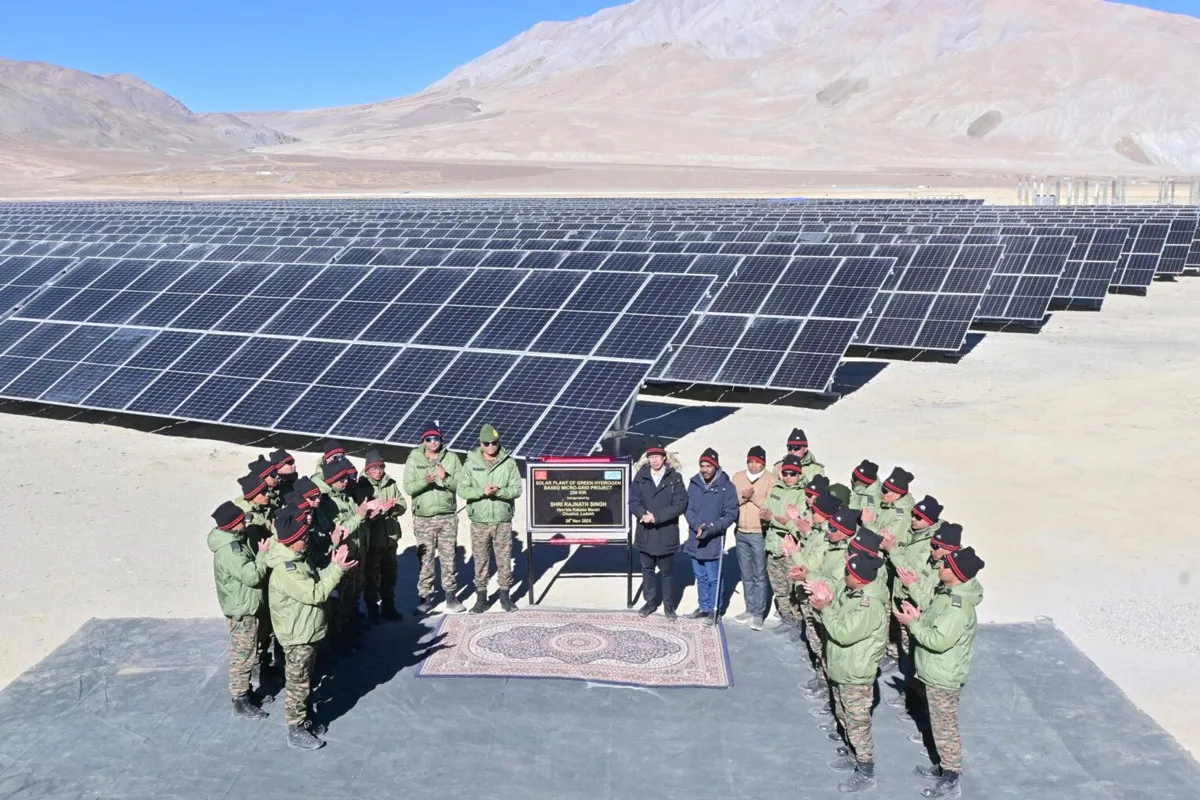
Defence Minister Rajnath Singh has virtually inaugurated NTPC’s 3.7 MW solar plant, a key part of the solar–hydrogen–battery energy storage system (BESS) based microgrid at Chushul, Ladakh. The project has been developed jointly by NTPC and the Indian Army to power remote high-altitude locations.

The system comprises a 3.7 MW solar PV plant supplying power to a 200 kW load and supporting hydrogen production. It includes a PEM electrolyser for hydrogen generation, hydrogen storage infrastructure, a BESS to provide continuous power and emergency backup, and a fuel cell capable of producing 200 kW of electricity.

NTPC noted that the project was commissioned in just eight months despite the difficult terrain and harsh weather conditions at high altitude.

The new microgrid will replace diesel generator sets currently used at remote Army sites, cutting carbon emissions and offering a cleaner and more dependable energy source. With the facility enabling local generation and use of green energy, it eliminates the need to transport fuel from the plains, improving energy security and reducing logistical burdens. NTPC highlighted that every three units of power generated by the system will avoid transporting one litre of diesel to these Himalayan posts.

The company added that the stand-alone microgrid, designed to provide 200 kW of power at any time of day throughout the year, is located at an altitude of 4,500 metres where winter temperatures can fall to –40°C. NTPC described it as one of the world’s most unique projects of its kind and said it represents a significant step towards decarbonising defence operations in high-altitude regions.

Defence Minister Rajnath Singh has virtually inaugurated NTPC’s 3.7 MW solar plant, a key part of the solar–hydrogen–battery energy storage system (BESS) based microgrid at Chushul, Ladakh. The project has been developed jointly by NTPC and the Indian Army to power remote high-altitude locations. The system comprises a 3.7 MW solar PV plant supplying power to a 200 kW load and supporting hydrogen production. It includes a PEM electrolyser for hydrogen generation, hydrogen storage infrastructure, a BESS to provide continuous power and emergency backup, and a fuel cell capable of producing 200 kW of electricity. NTPC noted that the project was commissioned in just eight months despite the difficult terrain and harsh weather conditions at high altitude. The new microgrid will replace diesel generator sets currently used at remote Army sites, cutting carbon emissions and offering a cleaner and more dependable energy source. With the facility enabling local generation and use of green energy, it eliminates the need to transport fuel from the plains, improving energy security and reducing logistical burdens. NTPC highlighted that every three units of power generated by the system will avoid transporting one litre of diesel to these Himalayan posts. The company added that the stand-alone microgrid, designed to provide 200 kW of power at any time of day throughout the year, is located at an altitude of 4,500 metres where winter temperatures can fall to –40°C. NTPC described it as one of the world’s most unique projects of its kind and said it represents a significant step towards decarbonising defence operations in high-altitude regions.

Next Story
Real Estate

Modon, Related, Panepinto form JV for Harborside 4 in Jersey City

Abu Dhabi-based Modon Holding PSC has formed a joint venture with US real estate major Related Companies and Jersey City-based Panepinto Properties to develop Harborside 4, a 54-storey luxury residential tower on a prime waterfront site in downtown Jersey City, New Jersey.Under the partnership, Modon will hold a majority equity stake alongside Related and Panepinto, marking another step in the group’s strategy to scale and diversify its global real estate portfolio. The project will be developed on one of the last remaining premium waterfront parcels in the city.Designed by Handel Architects..

Next Story
Infrastructure Urban

P+Ex and Post-Tensioning Institute partner to drive sustainability

P+Ex, the Center of Excellence for Concrete Preservation and Service Life Extension, has announced a strategic partnership with the Post-Tensioning Institute (PTI) aimed at advancing sustainability, durability, and resilience in the built environment.The collaboration brings together P+Ex’s expertise in concrete preservation, repair, and service life extension with PTI’s global leadership in post-tensioning technology. Through this alliance, the two organisations will work to advance best practices in durability-focused design for new structures, while also promoting effective repair, reha..

Next Story
Infrastructure Energy

India’s Largest 2,000 MW Subansiri Hydro Project Turns Operational

India’s largest hydropower project, the 2,000 MW Subansiri Lower Hydroelectric Project, has finally become operational with the commissioning of its first unit, marking a major milestone after nearly 20 years of development marked by delays, protests and cost escalation.The 250 MW Unit-2 of the project, located on the Subansiri River at Gerukamukh on the Assam–Arunachal Pradesh border, was virtually inaugurated from New Delhi by Union Minister of Power Manohar Lal Khattar. The event was attended by Pankaj Agarwal, Secretary (Power), and Bhupender Gupta, Chairman and Managing Director, Nati..

Advertisement

Subscribe to Our Newsletter

Get daily newsletters around different themes from Construction world.

STAY CONNECTED

Advertisement

Advertisement

Advertisement

Advertisement

Open In App