PM-DHARA Scheme Gets Rs. 1.86 tn Cabinet Approval
POWER & RENEWABLE ENERGY

PM-DHARA Scheme Gets Rs. 1.86 tn Cabinet Approval

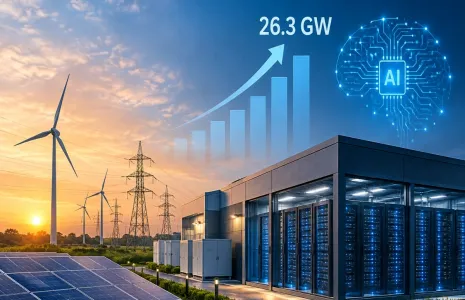
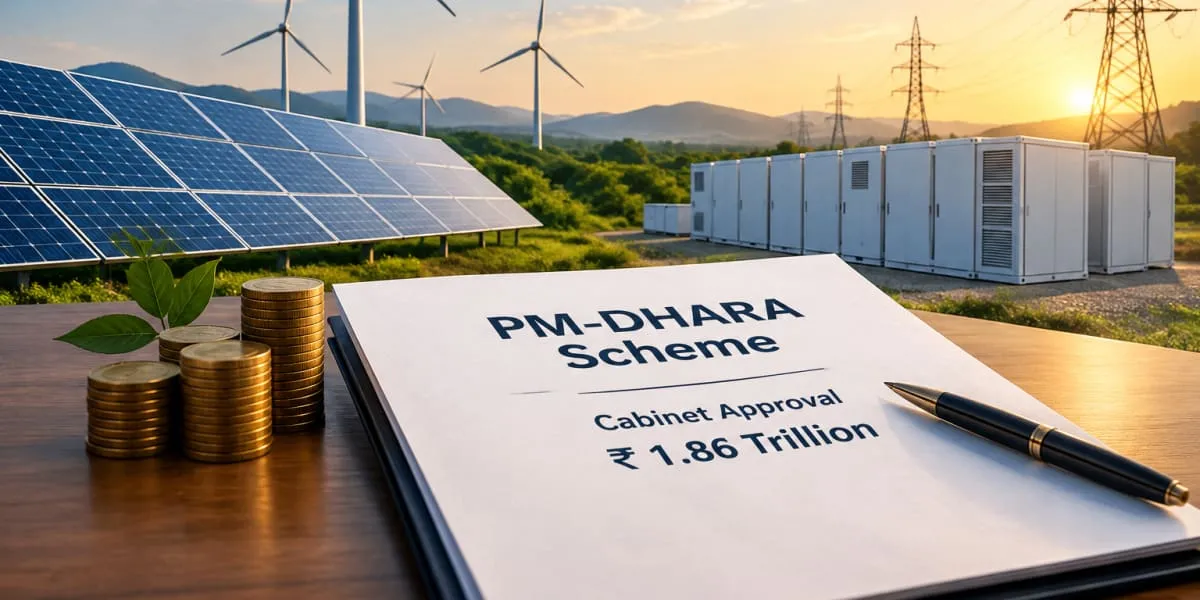
The Union Cabinet has approved the Rs. 1.86 tn PM-DHARA scheme to strengthen India’s intra-state transmission network and facilitate the evacuation of up to 135 GW of renewable energy across states and Union Territories. The programme is intended to support the country’s renewable energy expansion and wider non-fossil power capacity goals.

PM-DHARA, or PM-Developing Harmonized and Accelerated Renewable-energy Access, includes 50 GWh of Battery Energy Storage Systems (BESS). These systems will be deployed at renewable energy developers’ or generators’ facilities, or at other locations considered important for grid flexibility. They will help manage renewable energy intermittency, transmission congestion, peak-hour curtailment and electricity demand during non-solar hours.

The scheme has a total project outlay of Rs. 1.86 tn and is targeted for implementation by FY 2032-33. Of this amount, Rs. 1.36 tn has been earmarked for intra-state transmission systems under Green Energy Corridor Phase-III, while Rs. 500 bn has been allocated for 50 GWh of BESS. Central Financial Support of Rs. 540.82 bn is also included to offset intra-state transmission charges and help contain consumer power costs.

Greenfield transmission projects will be implemented through Tariff Based Competitive Bidding, while brownfield upgrades and network-strengthening works will follow a Cost Plus Basis. State Transmission Utilities will serve as the overall implementing agencies, and Transmission Service Providers will participate in competitively bid projects through a Build-Own-Operate-Maintain model.

The scheme is designed to support India’s target of 900 GW of installed non-fossil capacity by 2035. It is also intended to strengthen long-term energy security, reduce the carbon footprint associated with power supply and create employment in the power, manufacturing, construction and domestic energy storage sectors. The programme combines new transmission infrastructure with storage capacity to address renewable power evacuation and grid flexibility requirements as clean-energy generation expands.

The Union Cabinet has approved the Rs. 1.86 tn PM-DHARA scheme to strengthen India’s intra-state transmission network and facilitate the evacuation of up to 135 GW of renewable energy across states and Union Territories. The programme is intended to support the country’s renewable energy expansion and wider non-fossil power capacity goals. PM-DHARA, or PM-Developing Harmonized and Accelerated Renewable-energy Access, includes 50 GWh of Battery Energy Storage Systems (BESS). These systems will be deployed at renewable energy developers’ or generators’ facilities, or at other locations considered important for grid flexibility. They will help manage renewable energy intermittency, transmission congestion, peak-hour curtailment and electricity demand during non-solar hours. The scheme has a total project outlay of Rs. 1.86 tn and is targeted for implementation by FY 2032-33. Of this amount, Rs. 1.36 tn has been earmarked for intra-state transmission systems under Green Energy Corridor Phase-III, while Rs. 500 bn has been allocated for 50 GWh of BESS. Central Financial Support of Rs. 540.82 bn is also included to offset intra-state transmission charges and help contain consumer power costs. Greenfield transmission projects will be implemented through Tariff Based Competitive Bidding, while brownfield upgrades and network-strengthening works will follow a Cost Plus Basis. State Transmission Utilities will serve as the overall implementing agencies, and Transmission Service Providers will participate in competitively bid projects through a Build-Own-Operate-Maintain model. The scheme is designed to support India’s target of 900 GW of installed non-fossil capacity by 2035. It is also intended to strengthen long-term energy security, reduce the carbon footprint associated with power supply and create employment in the power, manufacturing, construction and domestic energy storage sectors. The programme combines new transmission infrastructure with storage capacity to address renewable power evacuation and grid flexibility requirements as clean-energy generation expands.

Related Stories

Gold Stories

Next Story
Real Estate

Landmark Group plans Rs 150 billion NCR expansion

Landmark Group has announced expansion plans across two real estate projects in the National Capital Region (NCR), with a combined estimated sales potential of Rs 150 billion. The projects include Landmark One, a 2.1 million sq ft corporate office development on Golf Course Extension Road in Gurugram, and a proposed integrated hospitality, commercial and residential development on Dwarka Expressway.Landmark One has an estimated sales value of Rs 40 billion. The project involves an estimated construction investment of Rs 10 billion, apart from the underlying land, currently valued at around Rs ..
Next Story
Real Estate

RMZ entities secure 5-Star ratings in GRESB 2026

RMZ has been recognised as a Global and Regional Sector Leader in the 2026 Global Real Estate Sustainability Benchmark (GRESB) Real Estate Development Assessment, with three of its entities scoring 99.6 out of 100. RMZ Nexus LLP, Millenia Realtors Private Limited and Infralogix LLP secured 5-Star ratings in their respective categories across the Office and Industrial sectors.In the 2026 Development Benchmark, RMZ Nexus LLP and Millenia Realtors Private Limited were named Sector Leaders in the Office and Office Non-Listed categories in Asia. Infralogix LLP received the distinction in the Indust..

Next Story
Products

Schneider Electric deploys smart building systems at Jupiter Hospitals

Schneider Electric has partnered with Jupiter Hospitals to deploy connected building technologies aimed at improving energy efficiency, patient comfort and operational performance across its hospital campus. The deployment of its EcoStruxure Building Operation platform and SpaceLogic thermostats is helping the hospital achieve energy savings of up to 28 per cent, according to the company.With heating, ventilation and air-conditioning (HVAC) systems accounting for nearly 60 per cent of the hospital's total energy consumption, improving efficiency while maintaining the conditions required for pa..

Advertisement

Subscribe to Our Newsletter

Get daily newsletters around different themes from Construction world.

STAY CONNECTED

Advertisement

SPECIAL OFFER
QR Code