Power Firms Seek Relaxation Of HERC Fuel Surcharge Rules
POWER & RENEWABLE ENERGY

Power Firms Seek Relaxation Of HERC Fuel Surcharge Rules

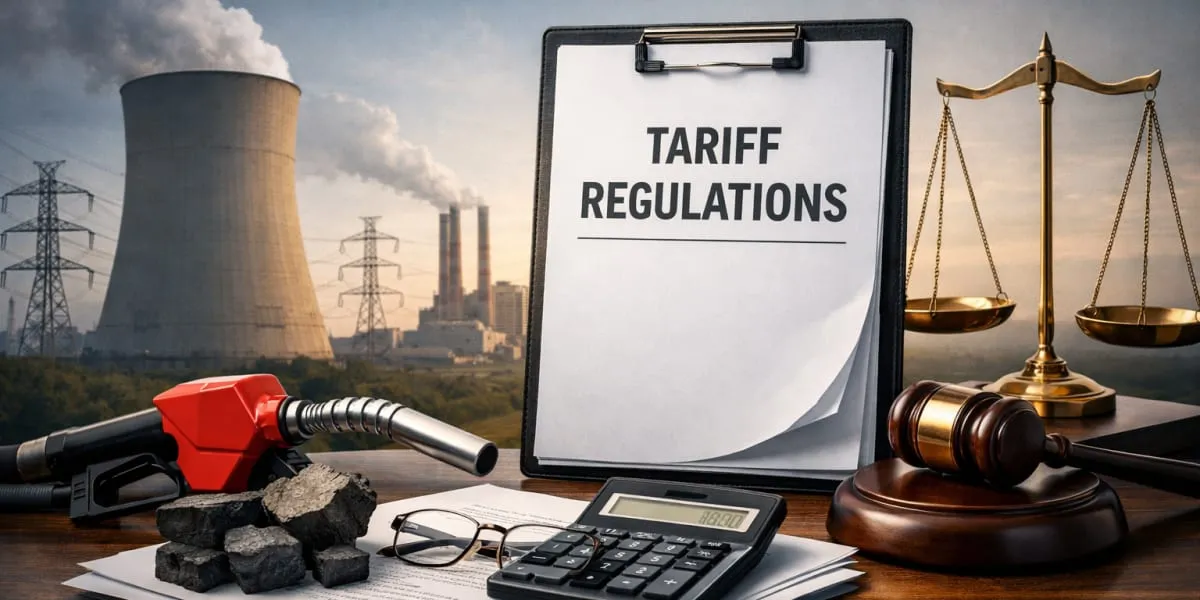
Uttar Haryana Bijli Vitran Nigam (UHBVN) and Dakshin Haryana Bijli Vitran Nigam (DHBVN) have approached the Haryana Electricity Regulatory Commission (HERC) seeking relaxation of rules that govern recovery of fuel and power purchase costs. The distribution companies have filed petitions proposing amendments to Regulation sixty eight of the Multi-Year Tariff (MYT) Regulations, 2024 for financial year 2025-26, and have asked the regulator to consider alternative recovery mechanisms to the current monthly arrangement.

Under the existing framework, additional costs arising from fuel and power purchase are recovered from consumers each month through the Fuel and Power Purchase Adjustment Surcharge (FPPAS). The discoms have proposed that the monthly recovery be deferred and that the amount be collected in subsequent financial years instead, at a uniform rate of 47 paise per unit across all consumer categories, in order to manage immediate cash flow pressures.

The petitioners have also sought permission to include a carrying cost on deferred amounts so that dues can be recovered in full over the proposed period. The distribution companies argue that a deferred, uniform charge would smooth the burden on consumers and help stabilise the utilities' revenue streams while permitting predictable recovery over time.

HERC has not taken an immediate decision and is following a public consultation process to seek stakeholder input before ruling on the requests. The commission has issued a public notice inviting objections and suggestions from individuals and organisations, which may be submitted by May one, and has scheduled a public hearing on May 14 at 11:30 am in its courtroom at Panchkula to allow stakeholders to present their views.

The commission will take a final decision after considering public feedback, with the stated objective of balancing the financial health of power utilities and consumer interests. Officials indicate that the consultation process is intended to ensure transparency and to weigh the wider implications of changing the timing and structure of fuel surcharge recovery.

Uttar Haryana Bijli Vitran Nigam (UHBVN) and Dakshin Haryana Bijli Vitran Nigam (DHBVN) have approached the Haryana Electricity Regulatory Commission (HERC) seeking relaxation of rules that govern recovery of fuel and power purchase costs. The distribution companies have filed petitions proposing amendments to Regulation sixty eight of the Multi-Year Tariff (MYT) Regulations, 2024 for financial year 2025-26, and have asked the regulator to consider alternative recovery mechanisms to the current monthly arrangement. Under the existing framework, additional costs arising from fuel and power purchase are recovered from consumers each month through the Fuel and Power Purchase Adjustment Surcharge (FPPAS). The discoms have proposed that the monthly recovery be deferred and that the amount be collected in subsequent financial years instead, at a uniform rate of 47 paise per unit across all consumer categories, in order to manage immediate cash flow pressures. The petitioners have also sought permission to include a carrying cost on deferred amounts so that dues can be recovered in full over the proposed period. The distribution companies argue that a deferred, uniform charge would smooth the burden on consumers and help stabilise the utilities' revenue streams while permitting predictable recovery over time. HERC has not taken an immediate decision and is following a public consultation process to seek stakeholder input before ruling on the requests. The commission has issued a public notice inviting objections and suggestions from individuals and organisations, which may be submitted by May one, and has scheduled a public hearing on May 14 at 11:30 am in its courtroom at Panchkula to allow stakeholders to present their views. The commission will take a final decision after considering public feedback, with the stated objective of balancing the financial health of power utilities and consumer interests. Officials indicate that the consultation process is intended to ensure transparency and to weigh the wider implications of changing the timing and structure of fuel surcharge recovery.

Next Story
Infrastructure Transport

Pune To Build Nine Km Link Road Between Highways

The Pune Municipal Corporation (PMC) has decided to appoint an expert to plan the development of a nine km long, 60 metre wide road from Khadi Machine chowk to Wadki chowk as an extension to the Katraj-Kondhwa road to link the Mumbai-Satara and Pune-Solapur national highways. The scheme is intended to divert heavy vehicle traffic away from the city and improve access between the two arterial routes. The project has been prioritised by the PMC and forms part of a larger set of schemes in which 19 roads have been identified for development at a combined cost of Rs 9.82 billion (bn) to address c..

Next Story
Infrastructure Transport

Barabanki Bahraich Six Lane Highway Approved in Uttar Pradesh

The Uttar Pradesh government has approved construction of a new six-lane highway linking Barabanki and Bahraich as part of National Highway 927, and the cabinet has cleared the project. The alignment will pass through Mustafabad and Kaiserganj and extend for about 101.5 km, creating a key corridor for local and long-distance movement. The National Highways Authority of India will oversee the work and has signalled the scheme is intended to strengthen regional connectivity and cross-border access to Nepal. The project carries an estimated total cost of Rs 69,690 million, equivalent to Rs 69.69..

Next Story
Infrastructure Transport

Toll At Kharegaon Likely As Highway Upgrade Nears Completion

A section of the highway at Kharegaon has undergone an upgrade and is approaching completion, and authorities have indicated plans for a toll to be introduced once works finish. The project has focused on strengthening the carriageway, improving drainage and upgrading intersections to enhance safety and capacity. Officials have said the toll will be used to recover construction costs and fund ongoing maintenance. The upgrade included resurfacing of the pavement, widening of certain stretches and installation of modern signage and lighting to reduce accident risk. Contractors completed most ma..

Advertisement

Subscribe to Our Newsletter

Get daily newsletters around different themes from Construction world.

STAY CONNECTED

Advertisement

Advertisement

Advertisement