PSU Energy Majors Can Redirect Rs Two Trillion Annual Capex to Clean Power
POWER & RENEWABLE ENERGY

PSU Energy Majors Can Redirect Rs Two Trillion Annual Capex to Clean Power

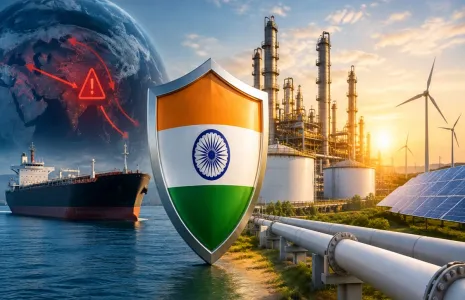
A new analysis by the International Institute for Sustainable Development finds that nine state-owned energy companies could progressively redirect a significant share of their annual capital expenditure towards clean and reliable power. In fiscal year 2025 these firms commanded Rs 2.6 trillion (tn) in investments across fossil fuels and clean energy, positioning them to reshape long-term strategic priorities.

The report found that Rs 2.3 tn of that total was directed to fossil fuels while about Rs 0.3 tn went to clean energy in FY 2025, indicating substantial scope to rebalance spending. Progressively redirecting a portion of existing CapEx could free up close to Rs two tn a year for clean energy investment and support India’s net zero trajectory.

In FY 2025 the nine PSUs generated Rs 26 tn in revenues, nearly eight per cent of India’s GDP, and transferred Rs six tn to governments in taxes and dividends, giving them leverage to align public finances with long-term investment priorities. The analysis frames their scale and public ownership as decisive for system-wide change.

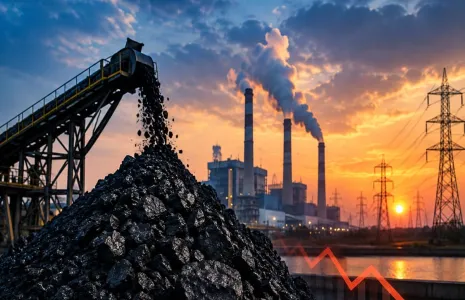
On a Scope 1 basis eight of the nine firms account for around 11 per cent of national greenhouse gas emissions, and when Scope 3 downstream combustion is included the footprint rises by 33 percentage points to nearly 44 per cent. The study emphasised the interdependence across the group, noting that coal mined by Coal India Limited is burned by National Thermal Power Corporation and that NTPC electricity supplies PSU refineries.

The report argued that PSUs have the financial strength, access to low-cost financing, and system-wide influence to scale firm renewable capacity, storage, and grid improvements. It noted NTPC’s shift towards a 60 gigawatt (GW) clean energy target as an example of state firms expanding portfolios and contracting for reliable renewables and storage.

IISD consultant Deepak Sharma said that with aligned mandates and coordinated planning PSUs can rebalance risk, reduce exposure to volatile fuel markets, and accelerate emissions reductions, turning public sector scale into a decisive lever for India’s low-carbon transition and energy security.

A new analysis by the International Institute for Sustainable Development finds that nine state-owned energy companies could progressively redirect a significant share of their annual capital expenditure towards clean and reliable power. In fiscal year 2025 these firms commanded Rs 2.6 trillion (tn) in investments across fossil fuels and clean energy, positioning them to reshape long-term strategic priorities. The report found that Rs 2.3 tn of that total was directed to fossil fuels while about Rs 0.3 tn went to clean energy in FY 2025, indicating substantial scope to rebalance spending. Progressively redirecting a portion of existing CapEx could free up close to Rs two tn a year for clean energy investment and support India’s net zero trajectory. In FY 2025 the nine PSUs generated Rs 26 tn in revenues, nearly eight per cent of India’s GDP, and transferred Rs six tn to governments in taxes and dividends, giving them leverage to align public finances with long-term investment priorities. The analysis frames their scale and public ownership as decisive for system-wide change. On a Scope 1 basis eight of the nine firms account for around 11 per cent of national greenhouse gas emissions, and when Scope 3 downstream combustion is included the footprint rises by 33 percentage points to nearly 44 per cent. The study emphasised the interdependence across the group, noting that coal mined by Coal India Limited is burned by National Thermal Power Corporation and that NTPC electricity supplies PSU refineries. The report argued that PSUs have the financial strength, access to low-cost financing, and system-wide influence to scale firm renewable capacity, storage, and grid improvements. It noted NTPC’s shift towards a 60 gigawatt (GW) clean energy target as an example of state firms expanding portfolios and contracting for reliable renewables and storage. IISD consultant Deepak Sharma said that with aligned mandates and coordinated planning PSUs can rebalance risk, reduce exposure to volatile fuel markets, and accelerate emissions reductions, turning public sector scale into a decisive lever for India’s low-carbon transition and energy security.

Next Story
Real Estate

Integrated Waterproofing Strategies

Waterproofing buildings used to be an annual pre-monsoon affair but the evolution of real-estate development has changed that approach. In new developments, developers are weaving waterproofing solutions into both the design and construction phases, an approach that Nikhil Madan, Managing Director, Mahima Group, says, “is all about ensuring lasting durability [of the building] and keeping lifecycle risks including water seepage and extensive maintenance to a minimum.”Watertight by designAluminium formwork systems aren’t commonly thought of as a waterproofing tool but at the Mahima Group,..

Next Story
Infrastructure Urban

GROHE Showcases Water-Led Design At Milan

GROHE unveiled its GROHE SPA Aqua Sanctuary at Milan Design Week 2026, transforming Piccolo Teatro Studio Melato into an immersive showcase of water, design and wellbeing. Built on the philosophy of ‘Wellbeing Through Water’, the installation reimagined bathrooms as holistic spaces for relaxation, rejuvenation and self-care.The Aqua Sanctuary was presented through three interconnected sanctums. The first showcased the 3D-printed GROHE SPA AquaTree shower and faucet, highlighting bespoke innovation and biophilic design. The second featured the Atrio Private Collection and GROHE SPA x Buster..

Next Story
Infrastructure Transport

Rahee Group Expands Rail Manufacturing Capacity

Rahee Group has outlined a multi-year investment roadmap to expand its operational footprint and strengthen manufacturing capabilities for India’s growing railway and urban transit sector. The Group is expanding in Odisha with a new Track Component Casting Unit, for which the groundbreaking ceremony was held on 8 April 2026 in the presence of Odisha Chief Minister Mohan Charan Majhi.The Group’s flagship EPC arm, Rahee Infratech Ltd, continues to focus on complex rail infrastructure projects, including track systems, bridges, viaducts and ballastless infrastructure. Its wholly owned subsidi..

Advertisement

Subscribe to Our Newsletter

Get daily newsletters around different themes from Construction world.

STAY CONNECTED

Advertisement

Advertisement

Advertisement