Renewables Could Save India USD 240 bn in Fuel Imports by 2030
POWER & RENEWABLE ENERGY

Renewables Could Save India USD 240 bn in Fuel Imports by 2030

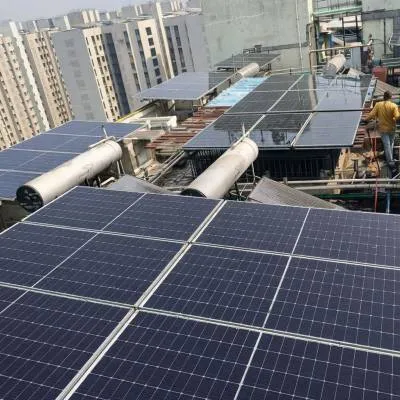
India’s expanding renewable energy capacity could help the country save nearly USD 240 bn in cumulative coal and natural gas import expenditure by 2030, strengthening energy security and reducing exposure to international fuel price volatility, according to the International Energy Agency (IEA).

In its India Renewable Energy Market Report 2026, the agency said renewable electricity had already reduced cumulative spending on coal and natural gas imports by more than USD 100 bn between 2011 and 2025. Assuming fuel prices remain broadly consistent with average levels recorded in 2024 and 2025, cumulative savings could approach USD 240 bn by 2030.

Annual fossil fuel import savings are projected to reach around USD 35 bn by 2030, exceeding India’s actual non-coking coal and natural gas import bill in FY25. Solar photovoltaic power is expected to account for approximately 60 per cent of the cumulative savings, while wind power is projected to contribute almost 30 per cent.

The IEA said renewable expansion had already reduced India’s dependence on imported coal. Without the solar photovoltaic, wind and bioenergy capacity added since 2010, coal imports in 2025 would have been around 110 mn t higher, while the import dependence of electricity generation would have exceeded 30 per cent, approximately twice the actual level.

India’s renewable power capacity is expected to reach around 530 GW by 2030, led by solar photovoltaic capacity of more than 350 GW. Wind capacity is expected to approach 90 GW and hydropower capacity could reach 75 GW. Renewable energy is also projected to provide 35 per cent of electricity generation, with output approaching 950 terawatt-hours (TWh), nearly double current levels. The agency said continued investment in transmission infrastructure, energy storage and power system flexibility would be important to manage the increasing share of variable renewable energy and limit the impact of supply disruptions and fossil fuel price spikes.

India’s expanding renewable energy capacity could help the country save nearly USD 240 bn in cumulative coal and natural gas import expenditure by 2030, strengthening energy security and reducing exposure to international fuel price volatility, according to the International Energy Agency (IEA). In its India Renewable Energy Market Report 2026, the agency said renewable electricity had already reduced cumulative spending on coal and natural gas imports by more than USD 100 bn between 2011 and 2025. Assuming fuel prices remain broadly consistent with average levels recorded in 2024 and 2025, cumulative savings could approach USD 240 bn by 2030. Annual fossil fuel import savings are projected to reach around USD 35 bn by 2030, exceeding India’s actual non-coking coal and natural gas import bill in FY25. Solar photovoltaic power is expected to account for approximately 60 per cent of the cumulative savings, while wind power is projected to contribute almost 30 per cent. The IEA said renewable expansion had already reduced India’s dependence on imported coal. Without the solar photovoltaic, wind and bioenergy capacity added since 2010, coal imports in 2025 would have been around 110 mn t higher, while the import dependence of electricity generation would have exceeded 30 per cent, approximately twice the actual level. India’s renewable power capacity is expected to reach around 530 GW by 2030, led by solar photovoltaic capacity of more than 350 GW. Wind capacity is expected to approach 90 GW and hydropower capacity could reach 75 GW. Renewable energy is also projected to provide 35 per cent of electricity generation, with output approaching 950 terawatt-hours (TWh), nearly double current levels. The agency said continued investment in transmission infrastructure, energy storage and power system flexibility would be important to manage the increasing share of variable renewable energy and limit the impact of supply disruptions and fossil fuel price spikes.

Related Stories

Gold Stories

Next Story
Resources

Prateek Foundation Aakaar celebrates Diwali with children in Noida

Prateek Foundation Aakaar, the community initiative of Prateek Group, organised a Diwali celebration for children at Saikripa, Noida, on 4 November 2026. The one-hour programme brought together members of the foundation and children for an afternoon of creative and recreational activities.The celebration included diya painting, games and interactive sessions, with children designing and decorating diyas. The activities were aimed at encouraging creativity and providing an opportunity for the children to participate in the festive celebrations.Prateek Tiwari, Managing Director, Prateek Group, s..

Next Story
Equipment

Shakti Pumps signs MoU with ISA to expand solar water pumping

Shakti Pumps (India) signed a Memorandum of Understanding (MoU) with the International Solar Alliance (ISA) to strengthen international collaboration and accelerate the adoption of solar water pumping solutions. The agreement was signed by Ashish Khanna, Director General, ISA, and Ramesh Patidar, Managing Director, Shakti Pumps, alongside the ninth ISA Session at the Bharat Renewable Energy Summit and Expo (BRES) 2026, held at Bharat Mandapam, New Delhi.At the summit, Shakti Pumps showcased its integrated renewable energy portfolio, including solar pumping systems, rooftop solar solutions unde..

Next Story
Real Estate

Worli-Lower Parel gains ground as Mumbai’s commercial hub

Mumbai’s Worli-Lower Parel corridor is gaining prominence as a commercial and luxury residential destination, attracting financial institutions, technology companies and high-net-worth individuals. Infrastructure upgrades, including the Coastal Road and improved transit connectivity, are contributing to the shift in occupier interest from established business districts such as Bandra-Kurla Complex (BKC) and Nariman Point.Recent leasing transactions underline the corridor’s growing commercial appeal. At Marathon Futurex in Lower Parel, three financial firms leased a combined 28,976 sq ft at..

Advertisement

Subscribe to Our Newsletter

Get daily newsletters around different themes from Construction world.

STAY CONNECTED

Advertisement

SPECIAL OFFER
QR Code