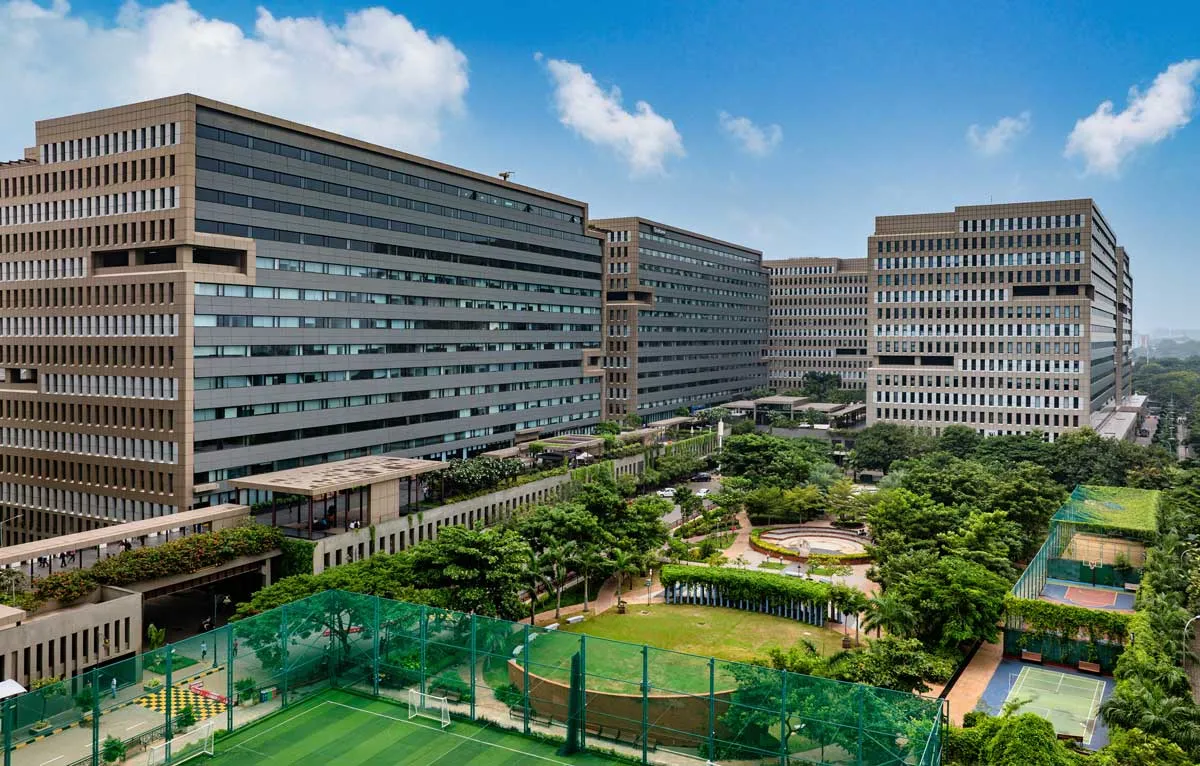
Since 2001, India has seen the emergence of green building rating frameworks by the Indian Green Building Council (IGBC), Leadership in Energy and Environmental Design (LEED), Green Rating for Integrated Habitat Assessment (GRIHA) Council, Excellence in Design for Greater Efficiencies (EDGE) and Green and Ecofriendly Movement (GEM). A direct outcome of their adoption is that India today has over 20 billion sq ft of certified green building footprint over more than 21,000 registered projects based on the IGBC, LEED and GRIHA frameworks.Buildings, green by design through the lens of architecture, simulations and specifications, have ushered in a much-needed shift in thinking about the sustainability of the built environment. India’s green building movement has also paved the way for a thriving green building materials industry spanning concrete blocks, lighting and water fixtures, HVAC components and systems, paints, carpets, partitioning systems, and so on.However, while evaluating a building’s material preferences, consumption of resources and generation of waste may be fairly doable during its construction phase, “the ability to quantify ‘greenness’ in operational terms after occupancy has remained limited,” says Juzer S Kothari, Managing Director, Conserve Consultants. “‘How green is a green-certified building?’ is a difficult question to answer with clarity, especially over time.”Qualitative to quantitativeWhile robust simulations and design strategies can establish strong performance intent, translating this into actual, measurable outcomes over the building’s lifecycle is inherently complex because design-stage assessments rely on standard assumptions related to occupancy, energy and water usage patterns, waste segregation practices and system performance, which can vary widely in practice, leading to deviations from projections, points out Rohit Mohan, Chief Design & Sustainability Officer, Godrej Properties. Essentially, a building’s actual performance over time may not always align with its intended design. In the context of the IGBC framework, this variance can be bridged by a transition to Net Zero, a new paradigm that moves sustainability from being a one-time certification exercise to an ongoing performance discipline.“Shifting from green to Net Zero has fundamentally changed monitoring from periodic compliance checks to continuous, real-time performance validation,” explains Sampath Kumar Kabothu, Senior Counsellor, IGBC, CII Sohrabji Godrej Green Business Centre. “While green buildings lay the foundation for environment-friendliness through design intent and initial tests & verifications, Net Zero buildings require continuous monitoring of energy generation/consumption balance, water efficiency through supply and demand, enhanced waste handling and management to ensure the building actually operates as Net Zero.”For instance, to qualify for Net Zero energy, a building that installed a renewable energy source must install separate meters to track the actual generation of renewable energy onsite, versus its grid energy consumption.With GRIHA embodying the principle ‘what gets measured gets managed’ at its core, which translates sustainability ambitions to quantifiable actions, Sanjay Seth, Vice President & CEO, GRIHA Council, explains that the framework encourages monitoring of resource consumption data that is shared on an online portal tracking for the assessment of consumption trends, benchmarking evaluation and assuring maintenance of committed performance.Measurement spans all the key elements that define a green building. For instance, IGBC’s Net Zero Energy Performance is measured and benchmarked by the Bureau of Energy Efficiency (BEE)-defined Energy Performance Index ratio and a purpose-defined IGBC framework. The benchmarks for IGBC’s Net Zero water are water performance ratio and water back to source ratio, which measures the success of rainwater harvesting. The reduce-reuse-recycle approach guides IGBC’s Net Zero waste to landfill benchmarks to reduce the waste generated and waste going to landfill and encourage recycling and reuse.Data-driven optimisationNet Zero, whether it is Net Zero energy, water, waste or carbon, is inherently data-driven and performance-led. It cannot be claimed without continuous measurement, monitoring and verification. So, Kothari explains, “Organisations committing to Net Zero pathways must invest in metering and sub-metering systems, real-time monitoring, data analytics and performance dashboards, and periodic audits and third-party verification.”For instance, for its Net Zero buildings, the Brigade Group deploys a data driven optimisation framework to capture real time data on electricity and water consumption from smart meters while IoT sensors integrated with BMS enable continuous monitoring, analytics and actionable insights. “We set measurable annual reduction targets and monitor performance consistently at both asset and portfolio levels,” explains Shama Chanekar, Head - Design, Brigade Group. “We track consumption patterns, identify anomalies and address peak load inefficiencies.”While IGBC Net Zero certified buildings are required to file annual data with monthly breakups, and undergo recertification every three years, in practice, the frequency of measurement varies with the criticality of each resource.“Energy and water consumption are monitored in real time or at hourly intervals through smart meters, enabling prompt identification of deviations,” says Chanekar. “Daily monitoring supports operational oversight and variance tracking, while monthly reviews are used for tenant-level billing and consolidated performance analysis. Waste measurement is inherently more complex, as it depends significantly on the quality and consistency of data provided by external vendors.”Measuring challengesGathering data for an entire building presents challenges. For starters, “ensuring data measurement accuracy and system integration, particularly in assets with legacy metering infrastructure or where multiple platforms and vendors operate concurrently,” says Chanekar.Adopting newer systems can surmount the drawbacks of legacy metering infrastructure, but “capital expenditure constraints can limit this pace, as smart infrastructure requires upfront investment and careful RoI evaluation, especially in operational buildings.”Smart monitoring infrastructure is expensive because it must be fairly extensive. “If monitoring remains limited to bulk-level data, it becomes challenging to isolate inefficiencies or identify opportunities for improvement at a detailed level,” explains Mohan. “So, it is essential to provision for submetering, smart meters and IoT-compatible systems at the outset.”“Tenant-level data capture, integration across legacy assets and ensuring vendor compliance are key challenges,” agrees Ritesh Sachdev, Senior Vice President & Head - Commercial Leasing, Asset Management, Sustainability & CSR, Tata Realty & Infra.A unified dashboard or centralised data system bringing energy, water, waste and renewable system data on the same platform is essential “to facilitate holistic analysis and informed decision-making”, adds Mohan.Measuring waste presents unique challenges, the foremost of which Kothari says, “lies not within the building, but in ensuring that the external waste processing ecosystem supports these goals.”Essentially, as segregation typically happens through third-party vendors, waste performance is primarily monitored through vendor-integrated reporting systems, which provide visibility on recycling volumes and landfill diversion metrics.Also, “as waste lacks standardised measurement practices, unlike energy and water, which can be metered, waste generation and segregation are often tracked through manual audits, which may be inconsistent or infrequent, limiting the reliability and comparability of waste-related data,” adds Mohan, who recommends waste-tracking apps or platforms with data logging and analytics for better segregation and reporting.Measuring systems are ultimately used by facility teams, whose understanding and buy-in for Net Zero are vital. Stakeholder alignment and awareness can help overcome their varying levels of understanding and commitment to sustainability goals, and also bring occupants onboard. “Without continuous engagement, capacity-building and even hand-holding in using installed systems, even well-designed monitoring systems may not be fully utilised,” says Mohan.“Tenant and occupant engagement remains a key enabler,” agrees Chanekar. “Consumption dashboards are shared with tenants to build awareness and accountability, complemented by regular sensitisation programmes on energy conservation, responsible water use and waste segregation. Where feasible, green lease clauses are introduced to align tenant practices with broader ESG objectives.”Energy-efficiencyIn the IGBC framework, energy-efficiency is tracked using the Energy Performance Index (EPI), calculated as kilowatt-hours consumed per sq ft per year. While conventional commercial office buildings in India often operate in the range of 120-160 kWh/sqm/year, high-performance buildings are now achieving 80-100 kWh/sqm/year or lower, according to Kothari. “With Net Zero energy targets, the expectation is not only to reduce consumption but also to offset it through renewable energy, making continuous measurement essential.”Godrej One, certified IGBC Net Zero Energy & Waste (Operations), uses renewable energy for its operations. The use of energy is optimised by switching off HVAC systems and equipment during low operational hours, and tracked through BMS and monitored daily. At Tata Realty, smart meters and BMS systems monitor total energy consumption and equipment performance, do fault diagnostics and conduct predictive maintenance.GRIHA assesses energy performance through end-use metering of lighting, HVAC systems and auxiliary loads to reduce peak demand, along with system efficiencies and promoting renewable energy systems integration. This is further evaluated through EPI benchmarks defined for diverse typologies, thus optimising overall building energy consumption.Water managementWater use can be monitored through flow sanitary fixture installations, metering and audits to ensure reduction, recycling and reuse, with performance assessed through per-capita consumption and water leakages, complemented by the proportion of water recycled or reused through systems such as sewage treatment plants and rainwater harvesting. Efficient buildings now have a Water Performance Index of 15-25 litre per person per day, compared to conventional consumption levels of 45-60 litre, says Kothari. However, moving towards Net Zero water brings a more nuanced challenge to reducing consumption – balancing freshwater demand with rainwater harvesting and reuse. “Measuring this balance,” he says, “especially capturing runoff at site boundaries, is still evolving and not yet uniformly practiced at scale”.In February 2026, Brigade Tech Gardens’ daily water consumption varied from 452 kl to 2,012 kl, with the average coming in at 1,398 kl. Low flow fixtures, sensor based faucets and smart leak-detection systems have been deployed to minimise water wastage. Sewage treatment plant (STP) operations are continuously optimised through automation, real-time monitoring and process controls to maximise recycling and reuse, thereby reducing dependencies on freshwater sources.“Recycled water consistently contributes a meaningful portion of the building’s overall demand, reducing reliance on fresh water and supporting our reuse objectives through STP-treated water and other reuse streams as applicable within the site,” says Chanekar.Godrej’s Mohan recommends introducing smart water management systems to ease leak detection and consumption optimisation while at Tata Realty, Sachdev says digital flow meters and STP analytics are used to track water consumption, with ~37 per cent of the total water demand met through recycled water. Monitoring IEQ Measuring indoor environmental quality has gained prominence, particularly with the rise of health and wellness standards. Parameters such as carbon dioxide levels, particulate matter (PM2.5), volatile organic compounds, temperature, humidity and lighting levels are now being monitored. Daylighting metrics such as daylight autonomy and glare indices are increasingly being used to ensure visual comfort, and advancements in technology spanning simulation tools and sensors have made them measurable and actionable in real time.Tata Realty measures indoor air quality, carbon emissions and occupant wellness metrics such as CO2 concentration, PM2.5, PM10 and total volatile organic compounds.Structured waste Waste is becoming more structured in terms of measurement as buildings track the effectiveness of segregation across wet, dry and hazardous waste streams, provision for dedicated segregation spaces or waste rooms, ease of access for collection, treatment practices, recycling rates and landfill diversion percentages, with best-in-class developments aiming for over 90 per cent waste diversion. At Tata Realty, the aim is 100 per cent diversion of waste from landfill across operational assets.At the Brigade Group, strengthening segregation at source through improved infrastructure and awareness initiatives while digitising tracking and vendor reporting is improving transparency and accountability across the waste value chain.Carbon measurementCarbon measurement is the most complex and evolving area. “While operational carbon (Scope 2 emissions from energy use) is relatively straightforward to track, Scope 1 (direct greenhouse gas) and especially Scope 3 (indirect greenhouse gas produced throughout a company’s value chain) emissions, including embodied carbon in materials, remain challenging,” according to Kothari.The need to measure embodied carbon and the development of Environmental Product Declarations and product-level carbon footprints is a step in the right direction, but Kothari notes adoption in India is still at an early stage. As regulatory and market pressures increase, he expects this to become a critical area of measurement.Financial implicationsNet Zero requires an initial investment. Evaluating the impact of this upfront cost, however, necessitates viewing Net Zero through the lens of operations.By virtue of using better materials, optimised systems and improved design strategies, a typical green building can achieve 15-25 per cent savings in energy and water compared to conventional baselines, according to Kothari. However, over time, without continuous monitoring and corrective action, these efficiencies can diminish.In contrast, Net Zero buildings are fundamentally performance-driven across resources like energy and water, and carbon and waste. “Their clarity of objective – to ensure that what is consumed is balanced or neutralised on an ongoing basis – introduces a level of operational discipline and motivation that is often missing in conventional green buildings. Daily or monthly tracking helps leakages in systems, processes or behaviour to become immediately visible and quickly addressed.”Consequently, the operational energy costs of Net Zero buildings can reduce dramatically, in some cases, Kothari says, approaching near-zero electricity costs over time, especially where renewable systems are optimally integrated. After the renewable infrastructure payback period, typically four to six years, the savings directly impact the bottomline.Essentially, “Net Zero transforms operational costs from a variable expense to a fixed, minimal cost, delivering superior RoI over the building lifecycle,” explains Sampath. For instance, where a conventional building would incur grid electricity tariffs (which rise 5-7 per cent annually in India), water supply charges (increasing with scarcity, water tanker charges and municipal rates) fuel costs for backup generators (subject to diesel price volatility), variable third-party agency costs for waste handling and unpredictable maintenance due to reactive repairs, in a Net Zero building, these variable costs are largely eliminated because energy is self-generated via onsite renewables (solar PV), water is recycled onsite, reducing municipal water dependence by 40-60 per cent, organic waste is composted onsite reducing dependence and cost of third-party agencies and maintenance becomes predictable because IoT-enabled BMS shift from reactive to predictive maintenance, scheduling repairs before failures occur.Speaking of GRIHA-rated buildings, they mandatorily have to achieve a 10 per cent reduction in energy consumption, compared to conventional buildings and typically achieve a minimum of 20-40 per cent reduction, directly translating into lower energy bills, says Seth. In high-performance cases, such as Indira Paryavaran Bhawan, energy savings can be as high as 70 per cent compared to conventional benchmarks.Water-efficiency strategies like low-flow fixtures, rainwater harvesting, wastewater treatment and treated water recycling enable GRIHA-certified buildings to achieve 30-50 per cent reduction in freshwater demand of the project.With advancements in building materials, increased availability of efficient technologies and greater industry awareness, the incremental cost of constructing a green building has reduced significantly and can typically be contained within 3-5 per cent of the overall project cost, according to Seth. In most cases, he reckons, “the incremental investment made towards green interventions is recovered within a relatively short payback period, typically ranging between three and five years, depending on the scale and strategies adopted”, which is what may be expected from an ideal green building.Exemplary IGBC Net Zero measurementsUnder Net Zero Water: Hindustan Unilever Research Centre, Bengaluru (operations), ILabs, Hyderabad (operations), MyHome Grava (design)Under Net Zero Energy: Capgemini, Bengaluru (operations), Maharashtra Energy Development Agency office building, Pune (operations)Under Net Zero Waste to Landfill: Divyashree Technopolis, Bengaluru (operations), Mahindra Navy, Malad, Mumbai (design)Strong performance under the GRIHA frameworkGovernment and institutional sector: Central Vista Project, Indira Paryavaran Bhawan, Atal Akshay Urja Bhawan, IIT Gandhinagar, AIIMS Bilaspur and Nalanda University Campus Large public infrastructure and transport sector: Bharat Mandapam, Greenfield Airport Itanagar, Tirupati Airport Terminal BuildingHospitality sector: ITC Grand Chola, ITC KohenurResidential and community infrastructure segment: VVIP Circuit House, XXXXXGRIHA-certified residential complexIn Pune’s Royal Orange County residential complex, 73.7 per cent of the built-up area satisfies the National Building Code's daylight factor requirement, which lessens the need for artificial lighting, and the installation of 151 kW of renewable energy capacity promotes a decreased reliance on conventional energy sources, thus lowering its Energy Performance Index (EPI) by around 65.7 per cent. Water-efficient fixtures and ethical water management techniques have cut its overall water use by over 50 per cent. A 300-kg organic waste composter treats all the wet waste produced on the site, encouraging sustainable waste management and reducing the load on landfills. The addition of 242 trees to the plantation enhances the microclimate and promotes ecological equilibrium.CW LensCertifying buildings green is easier than measuring their green quotient after they become operational. But measuring and monitoring are vital to certify an operational building as truly green, or Net Zero, which means it balances or neutralises the resources it uses on an ongoing basis.Accurately monitoring resources, particularly in buildings with legacy metering infrastructure or where multiple platforms and vendors operate concurrently, is challenging as well as expensive because provision must be made to capture data at the tenant level and a unified dashboard must be installed to bring all the data on the same platform to facilitate holistic analysis and informed decision-making.That said, the incremental cost of constructing a net zero green building has reduced significantly and can typically be recovered within four to six years.