Rosatom Begins Fuel Delivery for Kudankulam Unit 3 Launch
POWER & RENEWABLE ENERGY

Rosatom Begins Fuel Delivery for Kudankulam Unit 3 Launch

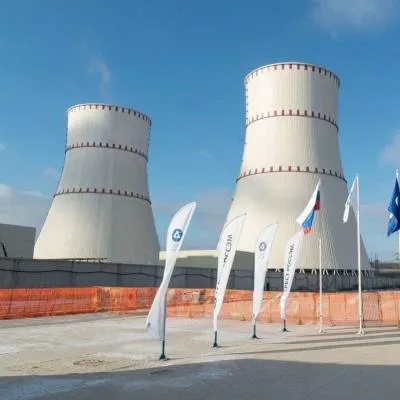
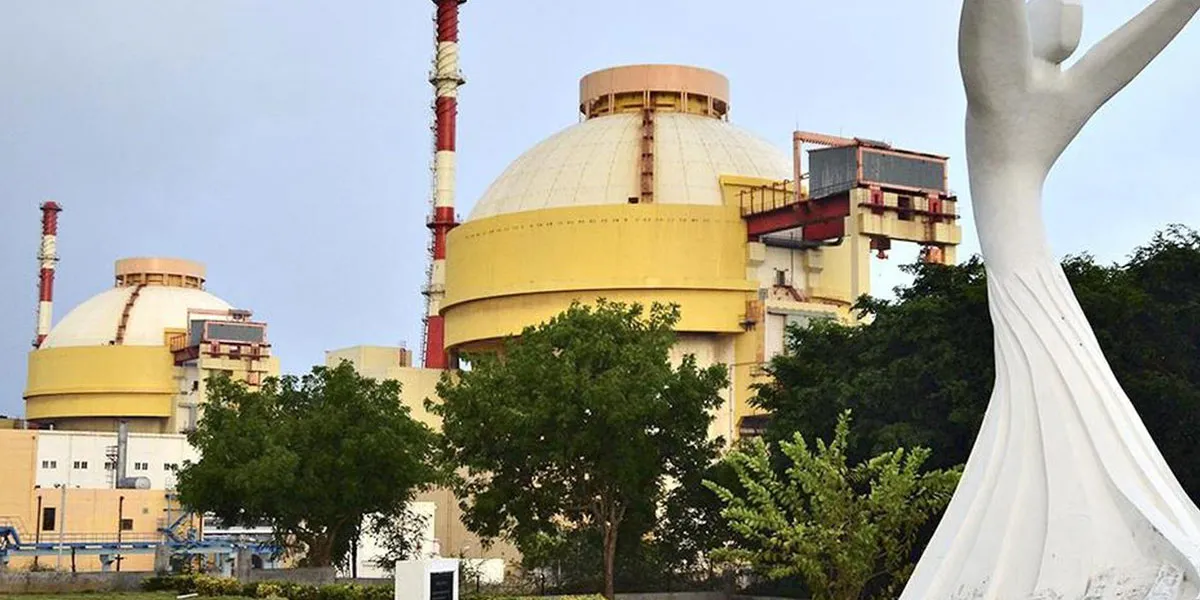
Russia’s Rosatom, which is constructing the nuclear reactors at Kudankulam, has begun delivering nuclear fuel for the initial loading of Unit 3 of the Kudankulam Nuclear Power Project (KKNPP). The delivery marks a major milestone as Unit 3 prepares to become one of the world’s first VVER-1000 reactors to begin operations with an extended 18-month fuel cycle.

A cargo flight carrying the first batch of fuel assemblies — manufactured by the Novosibirsk Chemical Concentrates Plant in Siberia, part of Rosatom’s Nuclear Fuel Division — has successfully arrived in India. Seven flights are scheduled to transport the full reactor core along with reserve fuel. These deliveries fall under a 2024 contract that ensures lifetime fuel supply for Units 3 and 4.

Rosatom and India’s NPCIL have spent years improving the performance of Kudankulam’s first two reactors. Since 2022, the plant has been operating with advanced TVS-2M fuel, which offers a more rigid design, a next-generation anti-debris filter and a higher uranium mass. The upgraded fuel has extended the reactor cycle from 12 to 18 months, reducing outages for reloads and increasing electricity generation.

With the introduction of TVS-2M from the outset, Units 3 and 4 will become the first VVER-1000 reactors globally to launch with an 18-month operating cycle. Rosatom sources described this as the outcome of years of close collaboration with NPCIL and the adaptation of solutions proven in similar units in Russia and China. Beyond supplying fuel, Rosatom continues to provide engineering services to enhance reactor efficiency through new fuel-cycle technologies.

Following the commissioning of the first two 1,000 MW reactors in 2013 and 2017, four more units of similar capacity are at various stages of construction at Kudankulam.

Rosatom’s Nuclear Fuel Division, managed by TVEL JSC, oversees enterprises involved in nuclear fuel fabrication, uranium conversion and enrichment, gas centrifuge manufacturing and specialised R&D. TVEL is the exclusive fuel supplier for Russian-designed reactors, supplying more than 70 power reactors across 15 countries, research reactors in nine nations and propulsion reactors for Russia’s nuclear fleet.

According to Rosatom sources, one in every six power reactors globally operates on TVEL fuel. The division is also the world’s largest producer of enriched uranium and stable isotopes and is expanding into new technologies including energy storage, advanced metallurgy, 3D printing, digital solutions and nuclear decommissioning.

Russia’s Rosatom, which is constructing the nuclear reactors at Kudankulam, has begun delivering nuclear fuel for the initial loading of Unit 3 of the Kudankulam Nuclear Power Project (KKNPP). The delivery marks a major milestone as Unit 3 prepares to become one of the world’s first VVER-1000 reactors to begin operations with an extended 18-month fuel cycle. A cargo flight carrying the first batch of fuel assemblies — manufactured by the Novosibirsk Chemical Concentrates Plant in Siberia, part of Rosatom’s Nuclear Fuel Division — has successfully arrived in India. Seven flights are scheduled to transport the full reactor core along with reserve fuel. These deliveries fall under a 2024 contract that ensures lifetime fuel supply for Units 3 and 4. Rosatom and India’s NPCIL have spent years improving the performance of Kudankulam’s first two reactors. Since 2022, the plant has been operating with advanced TVS-2M fuel, which offers a more rigid design, a next-generation anti-debris filter and a higher uranium mass. The upgraded fuel has extended the reactor cycle from 12 to 18 months, reducing outages for reloads and increasing electricity generation. With the introduction of TVS-2M from the outset, Units 3 and 4 will become the first VVER-1000 reactors globally to launch with an 18-month operating cycle. Rosatom sources described this as the outcome of years of close collaboration with NPCIL and the adaptation of solutions proven in similar units in Russia and China. Beyond supplying fuel, Rosatom continues to provide engineering services to enhance reactor efficiency through new fuel-cycle technologies. Following the commissioning of the first two 1,000 MW reactors in 2013 and 2017, four more units of similar capacity are at various stages of construction at Kudankulam. Rosatom’s Nuclear Fuel Division, managed by TVEL JSC, oversees enterprises involved in nuclear fuel fabrication, uranium conversion and enrichment, gas centrifuge manufacturing and specialised R&D. TVEL is the exclusive fuel supplier for Russian-designed reactors, supplying more than 70 power reactors across 15 countries, research reactors in nine nations and propulsion reactors for Russia’s nuclear fleet. According to Rosatom sources, one in every six power reactors globally operates on TVEL fuel. The division is also the world’s largest producer of enriched uranium and stable isotopes and is expanding into new technologies including energy storage, advanced metallurgy, 3D printing, digital solutions and nuclear decommissioning.

Next Story
Building Material

Cement Makers Set for ~250 bps Margin Boost on Strong Realisations

Cement manufacturers are expected to record a 250–300 basis points (bps) expansion in operating margins this fiscal, supported by improved realisations driven by higher volumes, greater premiumisation and broadly stable input costs. Industry volume is projected to grow 6.5–7.5 per cent this fiscal, up from 5 per cent in the previous year. While the first half saw a moderate 5 per cent on-year rise—recovering from flat demand a year earlier—the second half is likely to strengthen with 8–9 per cent growth backed by pent-up demand and better liquidity.Pan-India cement prices are expecte..

Next Story
Infrastructure Urban

Zen Technologies Bags Rs 1.20 Bn MoD Contract for Combat Training Node

Zen Technologies has secured a Rs 1.20 billion contract from the Ministry of Defence to establish India’s first Combat Training Node (CTN) at the Infantry School in Mhow, Madhya Pradesh. The institution, regarded as the alma mater of the country’s infantry forces, will host this state-of-the-art training ecosystem designed to enhance operational preparedness through advanced simulation technologies.The CTN will integrate more than 60 training simulators and solutions, aimed at modernising and standardising combat training. The initiative aligns with India’s broader goal of strengthening ..

Next Story
Building Material

Shree Cement Rolls Out Bangur Marble Cement in Odisha Market

Shree Cement has expanded its premium portfolio in eastern India with the launch of Bangur Marble Cement in Odisha under its master brand, Bangur Cement. The product, a premium PSC cement, is engineered for superior brightness, enhanced strength and strong crack resistance—qualities that make it particularly suitable for exposed concrete structures and large, visually striking designs. Its composition also makes it well suited to the climatic conditions of coastal Odisha, offering durable performance in challenging environments.The company plans to make the cement available through more than..

Advertisement

Subscribe to Our Newsletter

Get daily newsletters around different themes from Construction world.

STAY CONNECTED

Advertisement

Advertisement

Advertisement

Advertisement

Open In App