Wolffkran Crane Enables Complex Lavalette Dam Rehabilitation
Equipment

Wolffkran Crane Enables Complex Lavalette Dam Rehabilitation

For the complex rehabilitation of the historic Barrage de Lavalette in the Haute-Loire region of southern France, the construction consortium led by Legendre Génie Civil has deployed a tailored lifting solution from Wolffkran to address extreme space and logistical constraints.

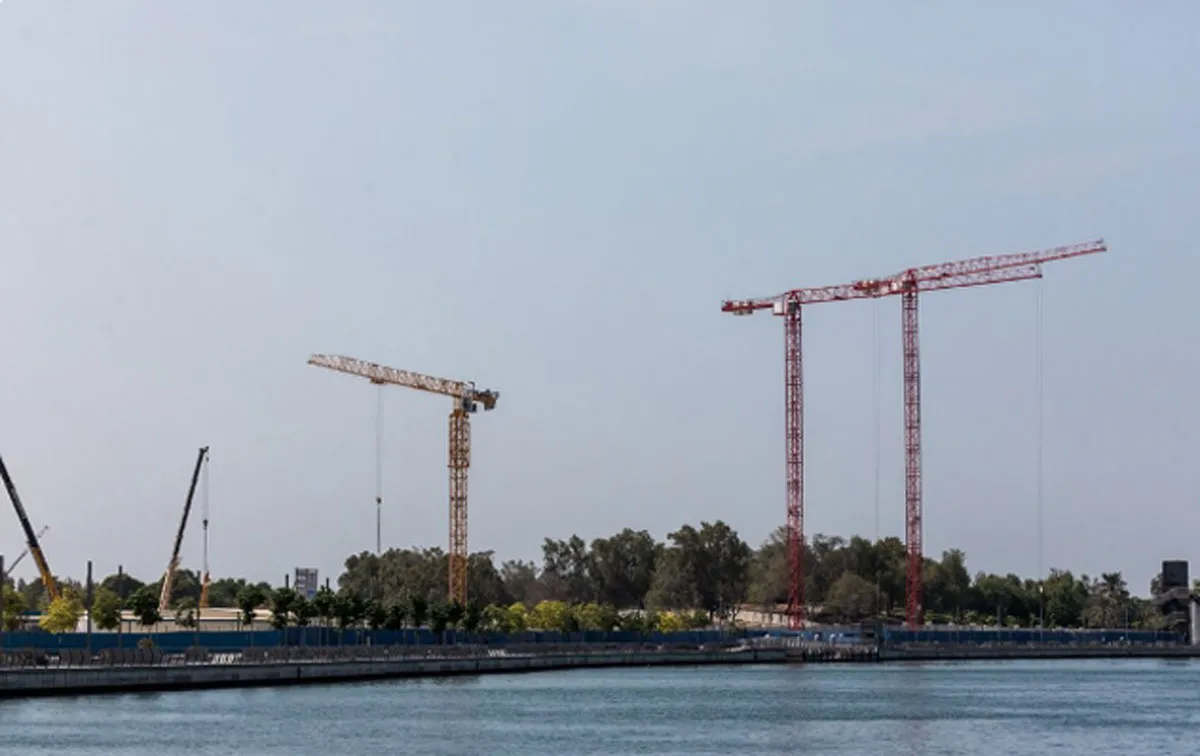
A WOLFF 7534.16 Clear flat-top tower crane, mounted on a WOLFF City Portal 520, has been operational at the site since March 2025. The crane plays a central role in replacing three original floodgates dating back to the 1950s and modernising a fourth gate installed in the 1990s, all of which have experienced significant wear after decades of service.

With a hook height of 20.4 m, a jib length of 40 m and a maximum lifting capacity of 16 tonnes, the crane is being used to install temporary structures and to remove and position both old and new floodgates. The project is particularly challenging as the dam crest measures just 6.7 m in width, significantly restricting crane erection and delivery operations.

According to Wolffkran, wind gusts exceeding 45 km/h further complicated installation works, extending the crane assembly period from the planned two days to around three and a half days.

A key requirement of the project was to keep traffic moving, as a public road runs across the dam and could not be closed for the full construction duration. To address this, the crane was installed on a City Portal solution, allowing vehicles to pass underneath. Load distribution beams were first positioned to spread crane loads evenly across the dam crest, followed by erection of the portal structure and crane using heavy mobile cranes.

While the City Portal enables continued access, road closures are required on weekdays between 9 am and 2 pm, as safety regulations do not permit loads to be slewed over live traffic. All lifting operations are therefore carried out within this restricted window.

One of the most demanding tasks involved removing a floodgate counterweight weighing approximately 51 tonnes. As the concrete block could not be lifted in a single piece, it was cut into sections on site, with individual segments of up to 16 tonnes lifted using the WOLFF crane.

Legendre Génie Civil noted that Wolffkran was the only supplier able to provide a complete package under the site’s constraints, including the crane, portal solution, assembly, operation, service and maintenance. Wolffkran has been involved from the early planning stages and will continue supporting the project throughout the approximately 24-month construction period.

The Lavalette Dam project highlights the role of specialised crane solutions in enabling complex infrastructure rehabilitation works under highly constrained site conditions.

For the complex rehabilitation of the historic Barrage de Lavalette in the Haute-Loire region of southern France, the construction consortium led by Legendre Génie Civil has deployed a tailored lifting solution from Wolffkran to address extreme space and logistical constraints. A WOLFF 7534.16 Clear flat-top tower crane, mounted on a WOLFF City Portal 520, has been operational at the site since March 2025. The crane plays a central role in replacing three original floodgates dating back to the 1950s and modernising a fourth gate installed in the 1990s, all of which have experienced significant wear after decades of service. With a hook height of 20.4 m, a jib length of 40 m and a maximum lifting capacity of 16 tonnes, the crane is being used to install temporary structures and to remove and position both old and new floodgates. The project is particularly challenging as the dam crest measures just 6.7 m in width, significantly restricting crane erection and delivery operations. According to Wolffkran, wind gusts exceeding 45 km/h further complicated installation works, extending the crane assembly period from the planned two days to around three and a half days. A key requirement of the project was to keep traffic moving, as a public road runs across the dam and could not be closed for the full construction duration. To address this, the crane was installed on a City Portal solution, allowing vehicles to pass underneath. Load distribution beams were first positioned to spread crane loads evenly across the dam crest, followed by erection of the portal structure and crane using heavy mobile cranes. While the City Portal enables continued access, road closures are required on weekdays between 9 am and 2 pm, as safety regulations do not permit loads to be slewed over live traffic. All lifting operations are therefore carried out within this restricted window. One of the most demanding tasks involved removing a floodgate counterweight weighing approximately 51 tonnes. As the concrete block could not be lifted in a single piece, it was cut into sections on site, with individual segments of up to 16 tonnes lifted using the WOLFF crane. Legendre Génie Civil noted that Wolffkran was the only supplier able to provide a complete package under the site’s constraints, including the crane, portal solution, assembly, operation, service and maintenance. Wolffkran has been involved from the early planning stages and will continue supporting the project throughout the approximately 24-month construction period. The Lavalette Dam project highlights the role of specialised crane solutions in enabling complex infrastructure rehabilitation works under highly constrained site conditions.

Next Story
Infrastructure Energy

Iran Conflict Risks Slowing India’s Auto Production

India’s automobile industry is facing the risk of production disruptions as the Iran conflict tightens gas supplies, affecting manufacturers and component makers across key industrial regions. Several suppliers serving Maruti Suzuki, Tata Motors and Mahindra have reported gas shortages, raising concerns over forging, casting and paint-shop operations that depend on steady fuel availability. The pressure comes as vehicle demand remains strong, with passenger vehicle sales expected to exceed 4.5 million units in the financial year ending 31 March. With limited buffer inventory, companies are ..

Next Story
Infrastructure Urban

Honda to Invest Rs 15 Billion in Tapukara Plant Expansion

Honda Motorcycle & Scooter India (HMSI) has announced an investment of around Rs 15 billion to set up a third production line at its Tapukara manufacturing plant in Rajasthan. The new line is expected to commence operations in 2028 and will add an annual production capacity of 670,000 units, taking the factory’s total capacity to 2.01 million units per year. The expansion is also expected to create more than 2,000 jobs in the region. The company said the new line will be highly flexible and capable of producing commuter segment scooters and motorcycles, helping it respond more effective..

Next Story
Infrastructure Transport

BMC Plans LAPs Around Metro 3 Stations

The Brihanmumbai Municipal Corporation (BMC) has proposed preparing Local Area Plans (LAPs) for areas around Mumbai Metro Line 3 stations to enhance land use, traffic flow, and infrastructure planning. The initiative is part of efforts to align urban development with the city’s expanding metro network. In the first phase, four stations will be covered at an estimated cost of Rs 1.37 crore, with further phases planned to include all 27 stations along the corridor. The overall project cost is expected to rise as coverage expands. The LAPs will be developed through detailed assessments, inclu..

Advertisement

Subscribe to Our Newsletter

Get daily newsletters around different themes from Construction world.

STAY CONNECTED

Advertisement

Advertisement

Advertisement