Uttar Pradesh Targets Energy Self-Reliance Across 75 Districts
POWER & RENEWABLE ENERGY

Uttar Pradesh Targets Energy Self-Reliance Across 75 Districts

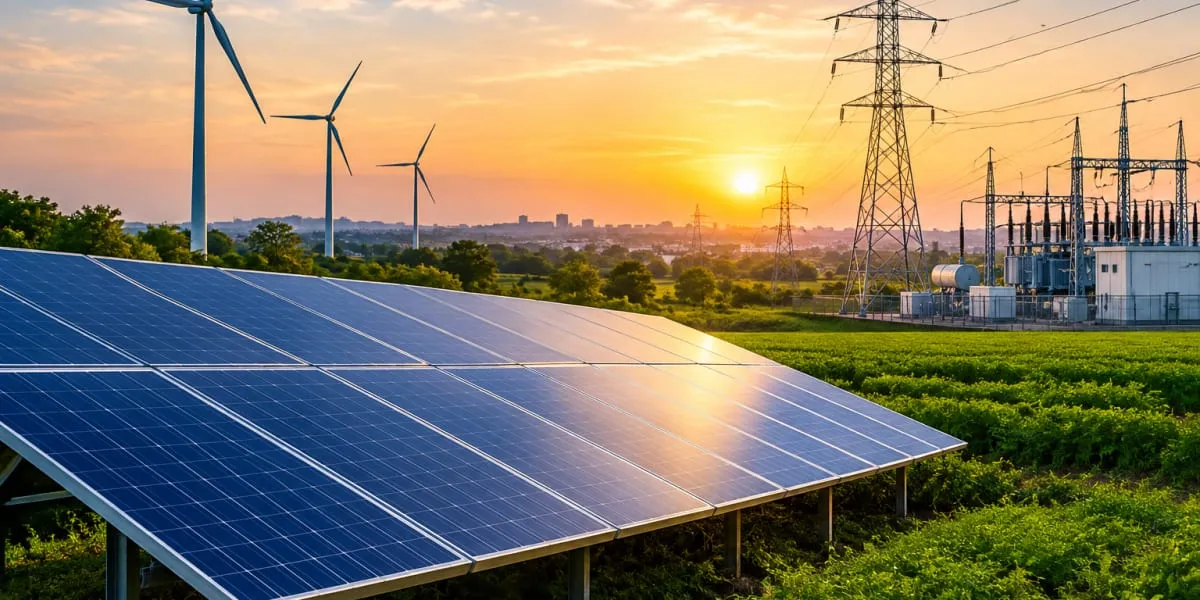
Uttar Pradesh is moving towards energy self-reliance, with adequate electricity supply across all 75 districts and an expanded focus on renewable energy, Deputy Chief Minister Brajesh Pathak said in Lucknow. He was addressing Uttar Pradesh Urja Sangam 2026, organised by ASSOCHAM-India Uttar Pradesh State Development Council in association with UPNEDA and Invest UP.

Pathak highlighted the state’s progress in solar adoption and the implementation of related schemes. He said the PM-KUSUM scheme was enabling farmers to use solar power for irrigation, reducing their dependence on conventional electricity. The PM Surya Ghar scheme was helping households install rooftop solar panels through subsidies, supporting energy conservation, lower electricity expenses and environmental sustainability.

Solar power is providing farmers with lower irrigation costs and an additional income opportunity. The state government provides free electricity for irrigation, while farmers can install solar systems on tubewells, rooftops and unused land. Surplus electricity can then be supplied to the grid, allowing farmers to meet their own energy requirements and earn additional income.

Awanish Kumar Awasthi, Adviser to the Chief Minister, said Uttar Pradesh had introduced its solar energy policy in September 2022 to expand clean-energy generation and encourage investment. He said the state ranked first nationally in solar panel installations and fifth in solar energy capacity. Uttar Pradesh also has approximately 45 to 50 operational compressed biogas (CBG) plants, reflecting the growth of its clean-energy ecosystem.

The programme included sessions on electrolyser manufacturing, green hydrogen technologies, solar energy manufacturing, floating solar projects and project execution. Participants also discussed the PM Surya Ghar and PM-KUSUM schemes, measures to improve ease of doing business and faster approval processes for clean-energy projects. Officials and industry representatives said investment in clean energy, modern power infrastructure and greater farmer participation were supporting industrial growth, employment and sustainable development in the state.

Uttar Pradesh is moving towards energy self-reliance, with adequate electricity supply across all 75 districts and an expanded focus on renewable energy, Deputy Chief Minister Brajesh Pathak said in Lucknow. He was addressing Uttar Pradesh Urja Sangam 2026, organised by ASSOCHAM-India Uttar Pradesh State Development Council in association with UPNEDA and Invest UP. Pathak highlighted the state’s progress in solar adoption and the implementation of related schemes. He said the PM-KUSUM scheme was enabling farmers to use solar power for irrigation, reducing their dependence on conventional electricity. The PM Surya Ghar scheme was helping households install rooftop solar panels through subsidies, supporting energy conservation, lower electricity expenses and environmental sustainability. Solar power is providing farmers with lower irrigation costs and an additional income opportunity. The state government provides free electricity for irrigation, while farmers can install solar systems on tubewells, rooftops and unused land. Surplus electricity can then be supplied to the grid, allowing farmers to meet their own energy requirements and earn additional income. Awanish Kumar Awasthi, Adviser to the Chief Minister, said Uttar Pradesh had introduced its solar energy policy in September 2022 to expand clean-energy generation and encourage investment. He said the state ranked first nationally in solar panel installations and fifth in solar energy capacity. Uttar Pradesh also has approximately 45 to 50 operational compressed biogas (CBG) plants, reflecting the growth of its clean-energy ecosystem. The programme included sessions on electrolyser manufacturing, green hydrogen technologies, solar energy manufacturing, floating solar projects and project execution. Participants also discussed the PM Surya Ghar and PM-KUSUM schemes, measures to improve ease of doing business and faster approval processes for clean-energy projects. Officials and industry representatives said investment in clean energy, modern power infrastructure and greater farmer participation were supporting industrial growth, employment and sustainable development in the state.

Related Stories

Gold Stories

Next Story
Products

Antica Ceramica launches terracotta breeze block collection

Antica Ceramica has introduced its Terracotta Breeze Block Collection, combining terracotta craftsmanship with functional applications in contemporary architecture. The collection is designed for architects, interior designers and homeowners seeking decorative architectural elements that provide natural ventilation, filtered light and privacy.Traditionally used for ventilated partitions and enclosures, terracotta breeze blocks are increasingly being incorporated into residential and commercial spaces as design features. Antica Ceramica's collection can be used across facades, balcony enclosure..

Next Story
Infrastructure Urban

Shivtek Enters Electronic-Grade Speciality Chemicals Market

Shivtek Spechemi Industries, a flagship company of the Shiva Group of Industries, recently announced its entry into India’s semiconductor manufacturing value chain through the production of electronic-grade speciality chemicals.The company plans to establish a manufacturing facility in Pungam, Gujarat, with a proposed annual production capacity of 50,000 tonnes of electronic-grade hydrochloric acid (HCl), 6,000 tonnes of isopropyl alcohol (IPA) under Phase I, and 5,000 tonnes of hydrogen peroxide (H2O2).Commercial production of electronic-grade hydrochloric acid is expected to commence in FY..
Next Story
Infrastructure Urban

SFC Environmental Reports 80.5% Revenue Growth in H1 FY27

SFC Environmental Technologies recently announced its first financial results as a listed company for the quarter and half year ended September 30, 2026. The company reported an 80.5 per cent year-on-year (YoY) increase in revenue from operations to Rs 2.97 billion in H1 FY27.EBITDA increased by 86.9 per cent YoY to Rs 200.5 million, with an EBITDA margin of 6.8 per cent. Profit after tax (PAT) rose to Rs 35.8 million from Rs 0.4 million in H1 FY26. The company’s order book stood at Rs 16.56 billion, approximately 2.1 times its FY26 revenue.The wastewater treatment segment recorded a 77.6 pe..

Subscribe to Our Newsletter

Get daily newsletters around different themes from Construction world.

STAY CONNECTED

Advertisement

SPECIAL OFFER
QR Code