Dalmia Bharat Approves Rs. 7 bn Share Buyback via Open Market
ECONOMY & POLICY

Dalmia Bharat Approves Rs. 7 bn Share Buyback via Open Market

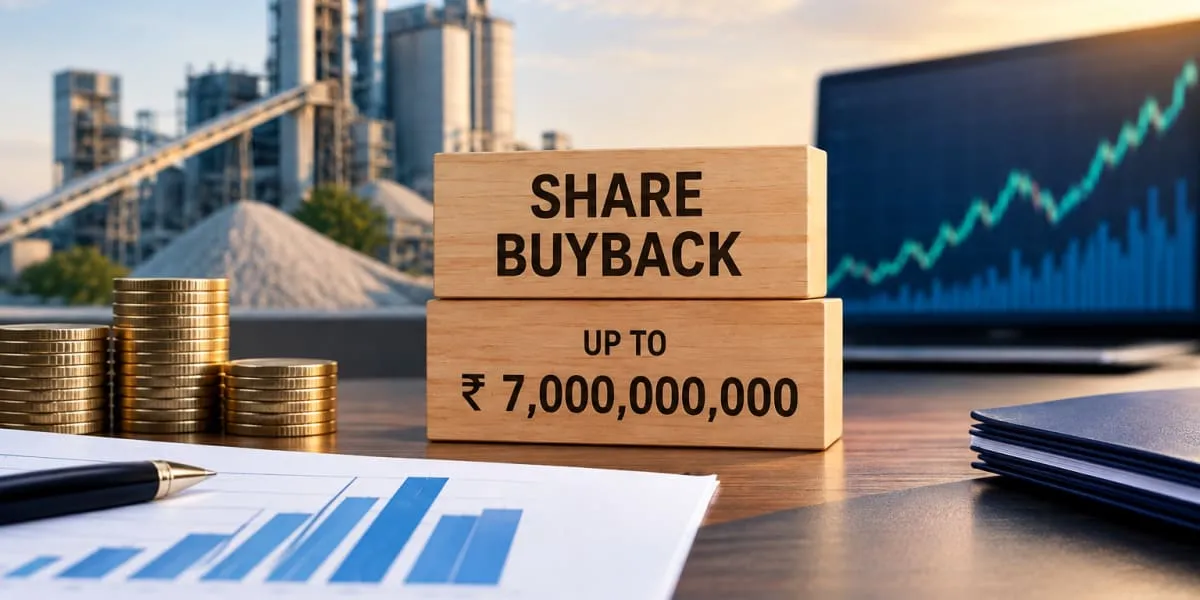
Dalmia Bharat has approved a share buyback of up to Rs. 7 bn at a maximum price of Rs. 1,850 per share. The repurchase will be conducted through the open-market route on the BSE and the National Stock Exchange (NSE), according to a regulatory filing. The board approved the proposal at a meeting held on November 23, 2026.

The buyback will cover up to 3.78 mn fully paid-up equity shares with a face value of Rs. 2 each. This represents approximately 2.02 per cent of the company’s existing paid-up equity share capital, assuming purchases are made at the maximum price. Eligible shareholders and beneficial owners can participate, while promoters, members of the promoter group and persons in control of the company are excluded.

Under the open-market mechanism, Dalmia Bharat will purchase shares through the stock exchanges at prevailing market prices, subject to the approved ceiling of Rs. 1,850 per share. The route differs from a tender offer, in which a company offers to buy shares directly from eligible shareholders at a predetermined price and follows an applicable acceptance process.

The company must use at least 75 per cent of the maximum buyback size, or Rs. 5.25 bn, for the repurchase. It must also deploy at least Rs. 2.8 bn, equivalent to 40 per cent of the maximum amount, during the initial half of the 66 working days from the opening of the buyback.

At the maximum price, the minimum buyback amount would cover approximately 2.84 mn shares. If purchases take place below Rs. 1,850, the number of shares acquired could be higher, subject to the overall limit of Rs. 7 bn. The maximum buyback represents 9.64 per cent of paid-up equity capital and free reserves on a standalone basis and 4.49 per cent on a consolidated basis, based on March 31, 2026, financial statements.

Dalmia Bharat has formed a buyback committee to oversee the process and appointed company secretary and compliance officer Rajeev Kumar as the buyback compliance officer. The company plans to issue a public announcement setting out the process, timelines and other details within two working days of the board resolution.

Dalmia Bharat has approved a share buyback of up to Rs. 7 bn at a maximum price of Rs. 1,850 per share. The repurchase will be conducted through the open-market route on the BSE and the National Stock Exchange (NSE), according to a regulatory filing. The board approved the proposal at a meeting held on November 23, 2026. The buyback will cover up to 3.78 mn fully paid-up equity shares with a face value of Rs. 2 each. This represents approximately 2.02 per cent of the company’s existing paid-up equity share capital, assuming purchases are made at the maximum price. Eligible shareholders and beneficial owners can participate, while promoters, members of the promoter group and persons in control of the company are excluded. Under the open-market mechanism, Dalmia Bharat will purchase shares through the stock exchanges at prevailing market prices, subject to the approved ceiling of Rs. 1,850 per share. The route differs from a tender offer, in which a company offers to buy shares directly from eligible shareholders at a predetermined price and follows an applicable acceptance process. The company must use at least 75 per cent of the maximum buyback size, or Rs. 5.25 bn, for the repurchase. It must also deploy at least Rs. 2.8 bn, equivalent to 40 per cent of the maximum amount, during the initial half of the 66 working days from the opening of the buyback. At the maximum price, the minimum buyback amount would cover approximately 2.84 mn shares. If purchases take place below Rs. 1,850, the number of shares acquired could be higher, subject to the overall limit of Rs. 7 bn. The maximum buyback represents 9.64 per cent of paid-up equity capital and free reserves on a standalone basis and 4.49 per cent on a consolidated basis, based on March 31, 2026, financial statements. Dalmia Bharat has formed a buyback committee to oversee the process and appointed company secretary and compliance officer Rajeev Kumar as the buyback compliance officer. The company plans to issue a public announcement setting out the process, timelines and other details within two working days of the board resolution.

Related Stories

Gold Stories

Next Story
Infrastructure Energy

JSW Motors Signs MoU with ARAI for Vehicle Development

JSW Motors, the passenger vehicle arm of JSW Group, has signed a memorandum of understanding (MoU) with the Automotive Research Association of India (ARAI) for technical collaboration on the design, validation and localisation of new energy vehicles (NEVs). The agreement is intended to create technical foundations for vehicles designed for Indian operating conditions. The companies will work on vehicle engineering and technical baselines, testing, validation and performance assessment, according to JSW Motors. Their programme will also cover advanced driver assistance systems (ADAS), battery s..
Next Story
Infrastructure Urban

Karnataka Offers Support for Toyota Expansion Plans

Karnataka Chief Minister D K Shivakumar assured Toyota Motor Corporation of the state government’s support for expanding its manufacturing operations during a meeting with the company’s senior leadership in Japan. The discussions covered higher production, new mobility solutions and further investment in Karnataka, as Toyota looks to increase vehicle production capacity to 1 mn in the near future. Shivakumar was accompanied by M B Patil, Karnataka’s Minister for Large and Medium Industries and Infrastructure Development. The Toyota delegation was led by Masakazu Yoshimura, the company’..
Next Story
Infrastructure Transport

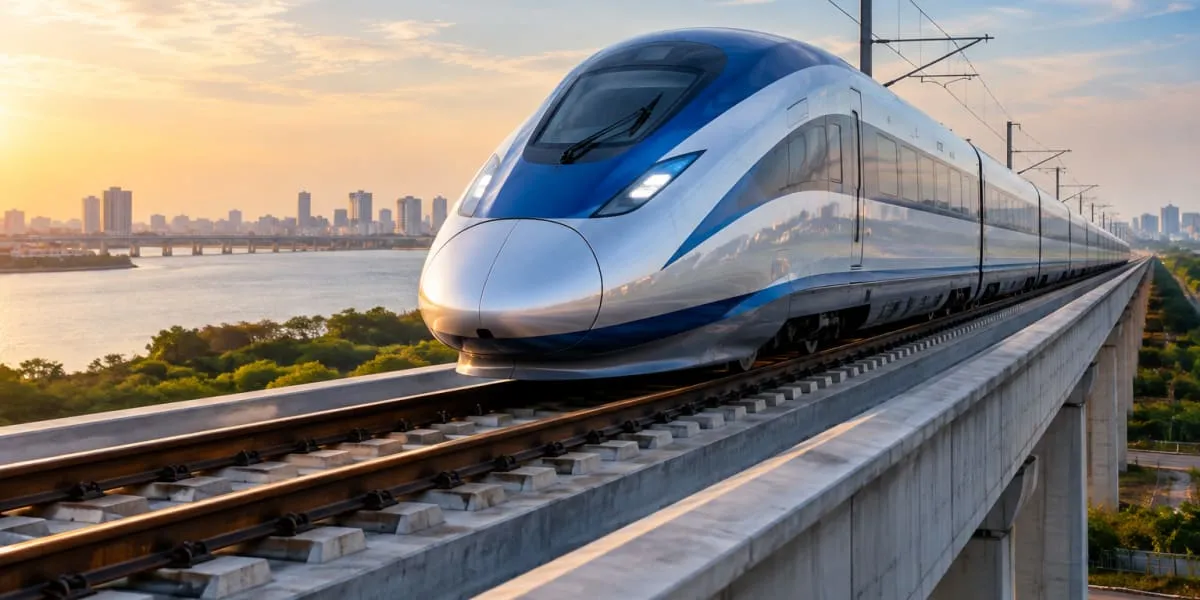
Railways to Begin Bullet Train Trial on Surat-Bilimora Section

Indian Railways will begin a trial run of its bullet train service on the 50 km Surat-Bilimora section by May 2027. The section is part of the Mumbai-Ahmedabad high-speed rail corridor and is expected to provide the first operational segment of the project. The trial will use an indigenous trainset capable of travelling at 280 km per hour. Railway Ministry sources said the first section of the corridor, extending from Surat to Vapi, is scheduled to become operational by the end of 2027. The planned trial marks a step towards introducing high-speed rail services on the corridor, which connects ..

Subscribe to Our Newsletter

Get daily newsletters around different themes from Construction world.

STAY CONNECTED

Advertisement

SPECIAL OFFER
QR Code