Coal Ministry Issues Guidelines for Mining and Mine Closure Plans
COAL & MINING

Coal Ministry Issues Guidelines for Mining and Mine Closure Plans

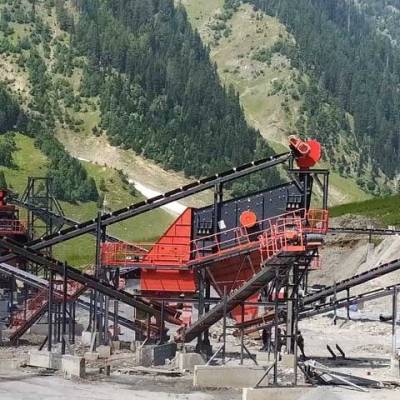
The Coal Ministry has issued guidelines for preparing mining and mine closure plans for coal and lignite blocks, with the provisions coming into force on 20 December 2026. The framework is intended to support systematic and scientific mine planning while streamlining compliance requirements under the existing statutory system.

The guidelines establish defined timelines for various stages of scrutiny and approval, creating a time-bound process for decisions. They also reduce the timeline for reimbursement of mine closure work from escrow accounts to one month after receipt of a claim, while allowing test-checks of submitted claims.

The range of agencies permitted to verify claims submitted every five years for escrow withdrawals has been widened. The guidelines also recognise underground coal gasification as a mining method and incorporate the separate 2026 provisions governing preparation and approval of mining plans for coal and lignite blocks using underground gasification.

Project proponents will have greater flexibility to respond to prevailing conditions, which the Ministry said would help accelerate mine operationalisation. The revised framework is intended to simplify procedures and support energy security, while promoting scientific mine closure and the repurposing of mining areas for local communities.

In a separate order, the Ministry has extended the accreditation cycle for Accredited Prospecting Agencies and Mining Plan Preparing Agencies from three to five years. The longer validity is expected to reduce repeated assessments and re-accreditations, saving agencies time and supporting continuity in the preparation of geological reports and mining plans required before coal and lignite blocks can be operationalised.

The Coal Ministry has issued guidelines for preparing mining and mine closure plans for coal and lignite blocks, with the provisions coming into force on 20 December 2026. The framework is intended to support systematic and scientific mine planning while streamlining compliance requirements under the existing statutory system. The guidelines establish defined timelines for various stages of scrutiny and approval, creating a time-bound process for decisions. They also reduce the timeline for reimbursement of mine closure work from escrow accounts to one month after receipt of a claim, while allowing test-checks of submitted claims. The range of agencies permitted to verify claims submitted every five years for escrow withdrawals has been widened. The guidelines also recognise underground coal gasification as a mining method and incorporate the separate 2026 provisions governing preparation and approval of mining plans for coal and lignite blocks using underground gasification. Project proponents will have greater flexibility to respond to prevailing conditions, which the Ministry said would help accelerate mine operationalisation. The revised framework is intended to simplify procedures and support energy security, while promoting scientific mine closure and the repurposing of mining areas for local communities. In a separate order, the Ministry has extended the accreditation cycle for Accredited Prospecting Agencies and Mining Plan Preparing Agencies from three to five years. The longer validity is expected to reduce repeated assessments and re-accreditations, saving agencies time and supporting continuity in the preparation of geological reports and mining plans required before coal and lignite blocks can be operationalised.

Related Stories

Gold Stories

Next Story
Infrastructure Energy

JSW Motors Signs MoU with ARAI for Vehicle Development

JSW Motors, the passenger vehicle arm of JSW Group, has signed a memorandum of understanding (MoU) with the Automotive Research Association of India (ARAI) for technical collaboration on the design, validation and localisation of new energy vehicles (NEVs). The agreement is intended to create technical foundations for vehicles designed for Indian operating conditions. The companies will work on vehicle engineering and technical baselines, testing, validation and performance assessment, according to JSW Motors. Their programme will also cover advanced driver assistance systems (ADAS), battery s..

Next Story
Infrastructure Urban

Karnataka Offers Support for Toyota Expansion Plans

Karnataka Chief Minister D K Shivakumar assured Toyota Motor Corporation of the state government’s support for expanding its manufacturing operations during a meeting with the company’s senior leadership in Japan. The discussions covered higher production, new mobility solutions and further investment in Karnataka, as Toyota looks to increase vehicle production capacity to 1 mn in the near future. Shivakumar was accompanied by M B Patil, Karnataka’s Minister for Large and Medium Industries and Infrastructure Development. The Toyota delegation was led by Masakazu Yoshimura, the company’..

Next Story
Infrastructure Transport

Railways to Begin Bullet Train Trial on Surat-Bilimora Section

Indian Railways will begin a trial run of its bullet train service on the 50 km Surat-Bilimora section by May 2027. The section is part of the Mumbai-Ahmedabad high-speed rail corridor and is expected to provide the first operational segment of the project. The trial will use an indigenous trainset capable of travelling at 280 km per hour. Railway Ministry sources said the first section of the corridor, extending from Surat to Vapi, is scheduled to become operational by the end of 2027. The planned trial marks a step towards introducing high-speed rail services on the corridor, which connects ..

Subscribe to Our Newsletter

Get daily newsletters around different themes from Construction world.

STAY CONNECTED

Advertisement

SPECIAL OFFER
QR Code