VSL PowerHive to Launch 7.5 GWh Battery Storage Facility
POWER & RENEWABLE ENERGY

VSL PowerHive to Launch 7.5 GWh Battery Storage Facility

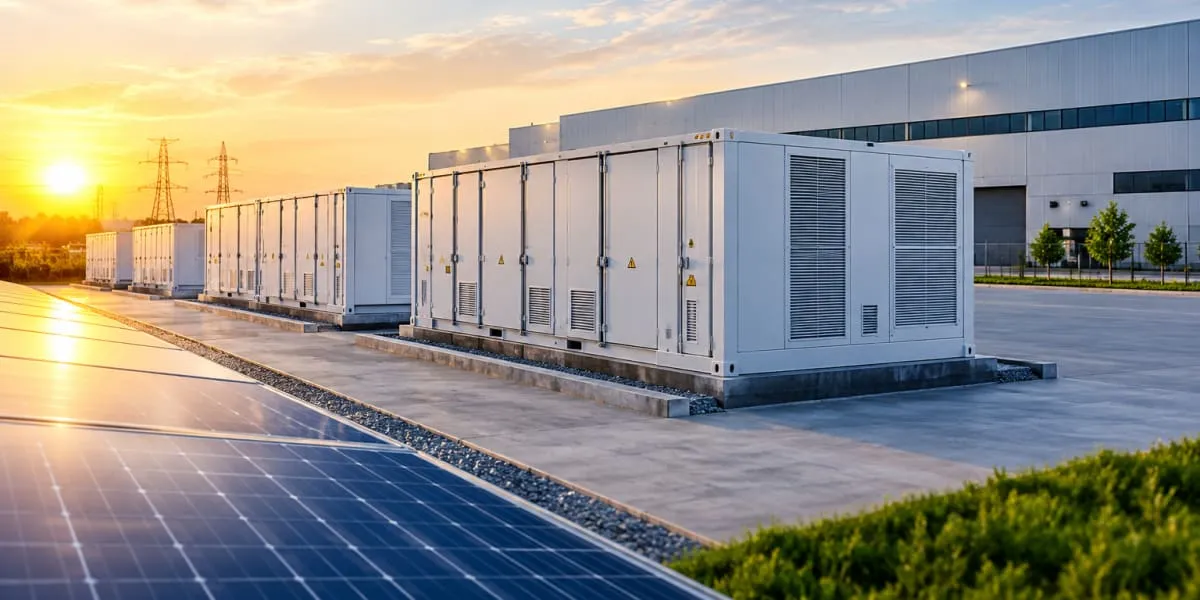
VSL PowerHive, a wholly owned subsidiary of Vikram Solar, plans to establish a 7.5 GWh per annum Battery Energy Storage System (BESS) assembly facility at Oragadam near Chennai in Tamil Nadu. The plant is scheduled for inauguration in January 2027, with commercial operations expected to begin in April 2027. It will initially cover approximately 165,000 square feet and can be expanded to 15 GWh in subsequent phases.

The facility forms part of Vikram Solar’s plan to develop 30 GWh of total battery manufacturing capacity by 2030. The company is also planning a 7.5 GWh battery cell manufacturing programme from 2028, with the aim of creating an integrated domestic ecosystem covering cells and complete energy storage systems.

The Oragadam plant will manufacture lithium iron phosphate-based BESS products for utility-scale and commercial and industrial applications. Its planned portfolio includes 5.016 MWh and 6.25 MWh liquid-cooled BESS containers, PowerHive P261 battery cabinets, utility-scale storage systems and renewable energy-integrated storage solutions. The operations will be developed under the Make in India initiative.

The expansion comes as India increases its solar and wind power capacity and requires storage to manage renewable power variability, support grid stability and shift surplus electricity to periods of peak demand. Projections from the Central Electricity Authority indicate that the country will require approximately 47 GW of energy storage power capacity and 236 GWh of storage capacity by 2031–32, creating opportunities for domestic manufacturers and reducing dependence on imported technologies.

VSL PowerHive is developing indigenous battery technologies and has initiated several patent filings to strengthen its intellectual property portfolio. Vikram Solar chairman and managing director Gyanesh Chaudhary said the facility would extend the company’s clean energy activities beyond solar generation technologies, while chief executive Arun Mittal said the phased expansion would build advanced domestic manufacturing capabilities. The project is also expected to create skilled employment, develop local expertise and support Tamil Nadu’s clean technology manufacturing ecosystem.

VSL PowerHive, a wholly owned subsidiary of Vikram Solar, plans to establish a 7.5 GWh per annum Battery Energy Storage System (BESS) assembly facility at Oragadam near Chennai in Tamil Nadu. The plant is scheduled for inauguration in January 2027, with commercial operations expected to begin in April 2027. It will initially cover approximately 165,000 square feet and can be expanded to 15 GWh in subsequent phases. The facility forms part of Vikram Solar’s plan to develop 30 GWh of total battery manufacturing capacity by 2030. The company is also planning a 7.5 GWh battery cell manufacturing programme from 2028, with the aim of creating an integrated domestic ecosystem covering cells and complete energy storage systems. The Oragadam plant will manufacture lithium iron phosphate-based BESS products for utility-scale and commercial and industrial applications. Its planned portfolio includes 5.016 MWh and 6.25 MWh liquid-cooled BESS containers, PowerHive P261 battery cabinets, utility-scale storage systems and renewable energy-integrated storage solutions. The operations will be developed under the Make in India initiative. The expansion comes as India increases its solar and wind power capacity and requires storage to manage renewable power variability, support grid stability and shift surplus electricity to periods of peak demand. Projections from the Central Electricity Authority indicate that the country will require approximately 47 GW of energy storage power capacity and 236 GWh of storage capacity by 2031–32, creating opportunities for domestic manufacturers and reducing dependence on imported technologies. VSL PowerHive is developing indigenous battery technologies and has initiated several patent filings to strengthen its intellectual property portfolio. Vikram Solar chairman and managing director Gyanesh Chaudhary said the facility would extend the company’s clean energy activities beyond solar generation technologies, while chief executive Arun Mittal said the phased expansion would build advanced domestic manufacturing capabilities. The project is also expected to create skilled employment, develop local expertise and support Tamil Nadu’s clean technology manufacturing ecosystem.

Related Stories

Gold Stories

Next Story
Infrastructure Energy

GEON Commissions 10 MW/20 MWh BESS in Jaisalmer

GEON, the future technologies division of Kabra Extrusiontechnik, has commissioned a 10 MW/20 MWh battery energy storage system (BESS) in Jaisalmer, Rajasthan, on an engineering, procurement and construction (EPC) basis.Executed in accordance with the Rajasthan Integrated Clean Energy Policy, 2024, the project covered detailed engineering and design, equipment procurement and supply, installation, testing and commissioning.The system has a power capacity of 10 MW and an energy storage capacity of 20 MWh. It is designed to improve energy management, support grid stability and facilitate the int..
Next Story
Infrastructure Urban

Tembo Lists on BSE, Expands Defence Manufacturing Plans

Tembo Global Industries has listed its equity shares on the Main Board of BSE while expanding its focus on defence manufacturing and unmanned aerial vehicle (UAV) technologies alongside its existing engineering and industrial businesses.Through its subsidiary, Tembo Classic Engineering, the company is developing manufacturing capabilities in small arms and ammunition. Its defence facility in Amravati, Maharashtra, is under development, with commercial production targeted for Q1 FY2028. The subsidiary has obtained government licences for ammunition and small-arms manufacturing.The company is co..
Next Story
Infrastructure Urban

Bondada Gets NSE In-Principle Nod for Main Board Migration

Bondada Engineering has received in-principle approval from the National Stock Exchange of India (NSE) to migrate its equity shares from the BSE SME Platform to NSE’s Capital Market Segment, or Main Board.The approval, conveyed through a letter dated 14 October 2026, follows BSE’s in-principle approval on 9 September 2026 for migration to its Main Board. The company now holds preliminary approvals to establish a presence on the Main Boards of both exchanges.Bondada Engineering will complete the subsequent formalities required under applicable regulatory and stock exchange requirements. The..

Advertisement

Subscribe to Our Newsletter

Get daily newsletters around different themes from Construction world.

STAY CONNECTED

Advertisement

SPECIAL OFFER
QR Code