Wärtsilä Study Projects EUR 196bn in Data Centre Power Savings
POWER & RENEWABLE ENERGY

Wärtsilä Study Projects EUR 196bn in Data Centre Power Savings

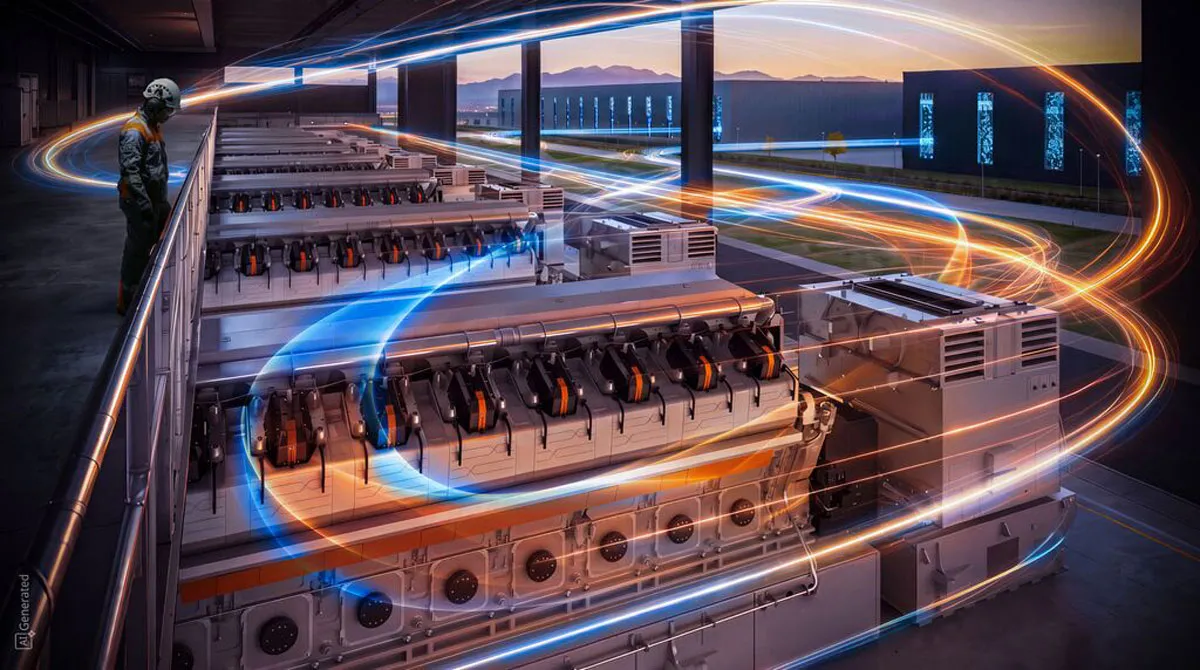
A new Wärtsilä study estimates that powering 55 GW of off-grid data centre capacity with flexible engines instead of combined-cycle gas turbines (CCGTs) could save EUR 196 billion over 20 years.

In the modelled scenario, engine-based solutions could use 99.97% less water than CCGTs and require land equivalent to 2,200 fewer football pitches. The study attributes the lower water use to reduced cooling requirements and the smaller land footprint to less generation equipment and battery storage being needed to meet the same data centre demand.

The 55 GW figure represents the upper end of the deployment outlook assessed for 2035, not a prediction. Wärtsilä based its modelling on third-party forecasts, including BloombergNEF data, and an assessment of announced projects. The technology scenarios are illustrative; actual deployment is expected to involve a mix of technologies.

Wärtsilä says onsite power could help developers avoid lengthy grid connection queues. Once connected, flexible engines could provide backup power and help balance fluctuations in wind and solar generation.

The study also notes the potential to use data centres’ recovered waste heat in district heating networks. Citing an International Energy Agency estimate, it says this heat could meet around 10% of Europe’s space-heating demand and create EUR 180 billion in net economic value over 20 years. Wärtsilä is calling for data centre developers, regulators and power system operators to work together to realise these potential benefits.

A new Wärtsilä study estimates that powering 55 GW of off-grid data centre capacity with flexible engines instead of combined-cycle gas turbines (CCGTs) could save EUR 196 billion over 20 years.In the modelled scenario, engine-based solutions could use 99.97% less water than CCGTs and require land equivalent to 2,200 fewer football pitches. The study attributes the lower water use to reduced cooling requirements and the smaller land footprint to less generation equipment and battery storage being needed to meet the same data centre demand.The 55 GW figure represents the upper end of the deployment outlook assessed for 2035, not a prediction. Wärtsilä based its modelling on third-party forecasts, including BloombergNEF data, and an assessment of announced projects. The technology scenarios are illustrative; actual deployment is expected to involve a mix of technologies.Wärtsilä says onsite power could help developers avoid lengthy grid connection queues. Once connected, flexible engines could provide backup power and help balance fluctuations in wind and solar generation.The study also notes the potential to use data centres’ recovered waste heat in district heating networks. Citing an International Energy Agency estimate, it says this heat could meet around 10% of Europe’s space-heating demand and create EUR 180 billion in net economic value over 20 years. Wärtsilä is calling for data centre developers, regulators and power system operators to work together to realise these potential benefits.

Related Stories

Gold Stories

Next Story
Equipment

TIL Revenue Surges 143% to Rs 1.98 Billion in Q2 FY27

TIL Limited, a manufacturer of material handling and infrastructure equipment, has reported a 143 per cent year-on-year increase in consolidated revenue to Rs 1.98 billion for the second quarter of FY27, compared with Rs 814.5 million in the corresponding period last year. Consolidated EBITDA surged 433 per cent to Rs 173.7 million, while EBITDA margin improved to 8.8 per cent from 4 per cent.The performance was supported by equipment deliveries, defence contracts, aftermarket services and the contribution of Tulip Compression Private Limited (TCPL), which became a majority-owned subsidiary in..

Next Story
Infrastructure Transport

India to Develop Civil Aircraft Within Two Years, Build 100 Airports

India aims to develop its own civil aircraft within the next two years as it seeks to strengthen domestic aerospace capabilities and reduce dependence on foreign aircraft manufacturers, Civil Aviation Minister Ram Mohan Naidu said on November 12. He said the ambition extended beyond assembling aircraft to developing expertise in aircraft design and production. Speaking at the inaugural session of the Confederation of Indian Industry (CII) Partnership Summit 2026 in Visakhapatnam, Naidu said India wanted to establish itself as a major aerospace manufacturing hub. The government’s approach is ..

Next Story
Infrastructure Urban

Two Korean Firms to Invest Rs. 13.7 bn in Tamil Nadu

Two South Korean automotive component suppliers to Hyundai and Kia plan to invest a combined Rs. 13.7 bn in Tamil Nadu over the next five years, according to sources in the state industries department. The proposed investments come after a political dispute over the reported movement of some automotive investments to Andhra Pradesh. The state government has received letters of intent (LoIs) from Hwashin and Seoyon, while memorandums of understanding (MoUs) are expected to be signed shortly. Both companies communicated their investment plans in letters dated November 11, reaffirming their inten..

Advertisement

Subscribe to Our Newsletter

Get daily newsletters around different themes from Construction world.

STAY CONNECTED

Advertisement

SPECIAL OFFER
QR Code