
We are looking at a business of over Rs.200 crore in India
Formwork

We are looking at a business of over Rs.200 crore in India

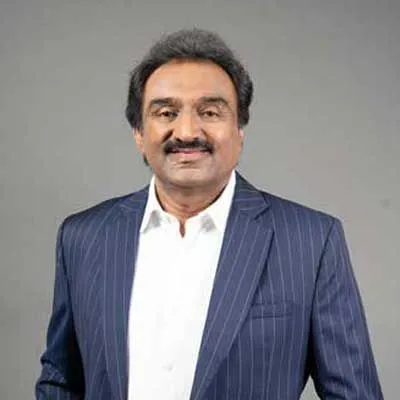
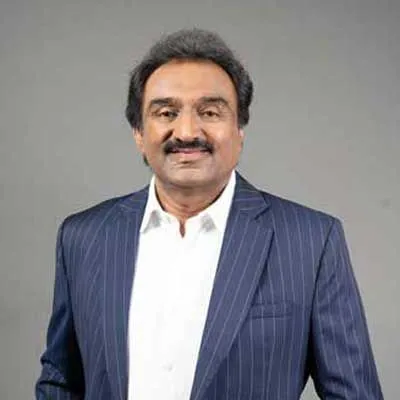
- Navneet Saraf, Director, Technocraft Industries (India)
In the exports business for scaffolding and formwork for over 25 years, Technocraft Industries (India) has been exporting its systems worldwide and has catered only to specialised projects in India, including metros and high-rises. ´Now, with an emphasis on investment in infrastructure and construction, there is clearly an opportunity,´according to Navneet Saraf, Director, Technocraft Industries (India). ´Hence, we have come up with a product apt for the Indian market.´He shares more in conversation with SERAPHINA D´SOUZA.

What is the strategy behind launching your product in India?
Over the past few years, the Indian market has seen European companies offering their products in the branded space. Then, there is the unorganised sector that supplies low-cost products that are not safe. So, we are introducing a fully engineered scaffolding and formwork system sold worldwide here. This has led us to launch the ´MACH´ brand - made in India to suit the Indian market.

What are your investments in R&D?
We have our own engineering, R&D centres and factories in Murbad in Maharashtra, which has a 4,000 tonne per month manufacturing setup. With an investment of over Rs 50 crore in the setup; we have our own tubemill and hot-dip galvanising plant. We have now redesigned the system for India, which is being developed over the past three to four years, even for small and medium contractors.

Please introduce us to its technological features.
Speed, safety and quality are the three features that have been improved upon. The system is aimed at commercial, infrastructure and industrial construction. For buildings, for example, we have a product that enables fast construction of slabs, columns and walls, and reduces the amount of labour. Also, there is a value proposition, as investing in formwork reduces costs incurred on materials, manpower and time.

In scaffolding and formwork, using steel and aluminium is the best combination, which is also our focus. We use a combination of lightweight and high-strength steel, and have jointly developed special high-grade steel suitable for our products with JSW. We have close control over raw material quality; we use high-quality plywood, castings, etc.

The new system is a modular one based on the Rosette Ring Technology, which is safe and requires less labour. One of the USPs is that one component can be dismantled without affecting the other, and there is no risk of working at heights.

Tell us about any challenging projects you have supplied to.
One of the largest challenging projects we executed was the refurbishing of the Capitol Dome in Washington DC, in which almost a million pounds of our scaffolding system was used.

In India, too, we have supplied to contractors for some challenging projects, such as the Mumbai Metro, Delhi Metro, Kochi Metro, etc.

Tell us about your export business and plans for India.
The turnover of our scaffolding formwork division is about Rs 400 crore, of which around 95 per cent is exports. The US is our biggest market, followed by Canada, Western Europe and Australia. We also have presence in the Middle East and Africa. For India, we aim to manufacture at least 2,000 tonne per month, which is half of what we manufacture for the global market currently. Through the launch of this European quality product made in India for India, we are looking at a business of over Rs 200 crore in the country.

I foresee 75 per cent sales and 25 per cent rental in the first two years, after which it may reverse. We plan to have multiple distributors and create our own rental inventory along with one at the distributor´s end. Further, we are looking at enhancing capacity. In fact, we recently acquired 16 acre about 7 km from our existing manufacturing plant at Murbad to expand manufacturing capacity.

To share your views on this interview, write in at feedback@ConstructionWorld.in

- Navneet Saraf, Director, Technocraft Industries (India) In the exports business for scaffolding and formwork for over 25 years, Technocraft Industries (India) has been exporting its systems worldwide and has catered only to specialised projects in India, including metros and high-rises. ´Now, with an emphasis on investment in infrastructure and construction, there is clearly an opportunity,´according to Navneet Saraf, Director, Technocraft Industries (India). ´Hence, we have come up with a product apt for the Indian market.´He shares more in conversation with SERAPHINA D´SOUZA. What is the strategy behind launching your product in India? Over the past few years, the Indian market has seen European companies offering their products in the branded space. Then, there is the unorganised sector that supplies low-cost products that are not safe. So, we are introducing a fully engineered scaffolding and formwork system sold worldwide here. This has led us to launch the ´MACH´ brand - made in India to suit the Indian market. What are your investments in R&D? We have our own engineering, R&D centres and factories in Murbad in Maharashtra, which has a 4,000 tonne per month manufacturing setup. With an investment of over Rs 50 crore in the setup; we have our own tubemill and hot-dip galvanising plant. We have now redesigned the system for India, which is being developed over the past three to four years, even for small and medium contractors. Please introduce us to its technological features. Speed, safety and quality are the three features that have been improved upon. The system is aimed at commercial, infrastructure and industrial construction. For buildings, for example, we have a product that enables fast construction of slabs, columns and walls, and reduces the amount of labour. Also, there is a value proposition, as investing in formwork reduces costs incurred on materials, manpower and time. In scaffolding and formwork, using steel and aluminium is the best combination, which is also our focus. We use a combination of lightweight and high-strength steel, and have jointly developed special high-grade steel suitable for our products with JSW. We have close control over raw material quality; we use high-quality plywood, castings, etc. The new system is a modular one based on the Rosette Ring Technology, which is safe and requires less labour. One of the USPs is that one component can be dismantled without affecting the other, and there is no risk of working at heights. Tell us about any challenging projects you have supplied to. One of the largest challenging projects we executed was the refurbishing of the Capitol Dome in Washington DC, in which almost a million pounds of our scaffolding system was used. In India, too, we have supplied to contractors for some challenging projects, such as the Mumbai Metro, Delhi Metro, Kochi Metro, etc. Tell us about your export business and plans for India. The turnover of our scaffolding formwork division is about Rs 400 crore, of which around 95 per cent is exports. The US is our biggest market, followed by Canada, Western Europe and Australia. We also have presence in the Middle East and Africa. For India, we aim to manufacture at least 2,000 tonne per month, which is half of what we manufacture for the global market currently. Through the launch of this European quality product made in India for India, we are looking at a business of over Rs 200 crore in the country. I foresee 75 per cent sales and 25 per cent rental in the first two years, after which it may reverse. We plan to have multiple distributors and create our own rental inventory along with one at the distributor´s end. Further, we are looking at enhancing capacity. In fact, we recently acquired 16 acre about 7 km from our existing manufacturing plant at Murbad to expand manufacturing capacity. To share your views on this interview, write in at feedback@ConstructionWorld.in

Next Story
Infrastructure Urban

VECV Sales Rise 7.8 Per Cent In May 2026

VE Commercial Vehicles recorded sales of 7,978 units in May 2026, compared to 7,401 units in May 2025, registering growth of 7.8 per cent. This included 7,789 units from the Eicher brand and 189 units from the Volvo brand.Eicher branded trucks and buses reported sales of 7,789 units during the month, up 7.3 per cent from 7,258 units a year earlier. In the domestic commercial vehicle market, Eicher sales rose 9.1 per cent to 7,375 units from 6,758 units in May 2025.Exports declined 17.2 per cent to 414 units from 500 units in the corresponding month last year. Volvo Trucks and Volvo Buses recor..

Next Story
Infrastructure Urban

Table Space Strengthens DESYN Leadership Team

Table Space has announced strategic leadership appointments within DESYN, its integrated Design and Build business, as it looks to strengthen operations across key enterprise and GCC markets in India. DESYN was launched as a strategic extension of Table Space’s workspace solutions portfolio to meet rising demand for agile, high-quality and rapidly deployable enterprise workspaces.Shruti Ookabhoy has joined DESYN as Executive Director and will lead the Design vertical, focusing on design capability, operational excellence and team development across markets. She brings over 22 years of experi..

Next Story
Infrastructure Transport

Concord Associate Bags Rs 2.79 Bn Kavach Order

Concord Control Systems said its associate company, Progota India, has received a Rs 2.79 bn domestic order from Indian Railways for the supply, installation, testing and commissioning of on-board Kavach 4.0 loco equipment.The order is scheduled for execution within 12 months and strengthens Concord’s role in India’s railway safety and signalling ecosystem. Kavach is India’s indigenous automatic train protection system, designed to improve operational safety by helping prevent signal passing at danger and reducing collision risks.Gaurav Lath, Joint Managing Director, Concord Control Syst..

Advertisement

Subscribe to Our Newsletter

Get daily newsletters around different themes from Construction world.

STAY CONNECTED

Advertisement

Advertisement

Advertisement