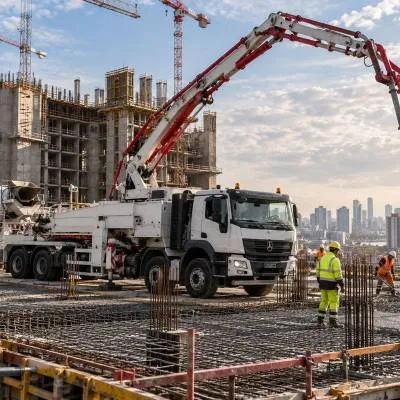
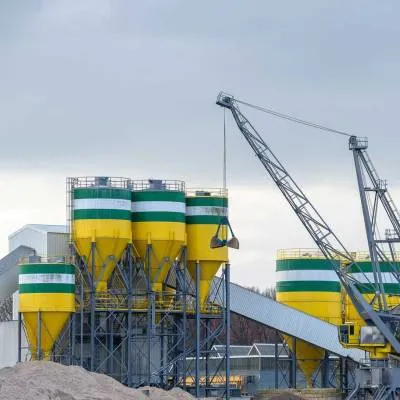
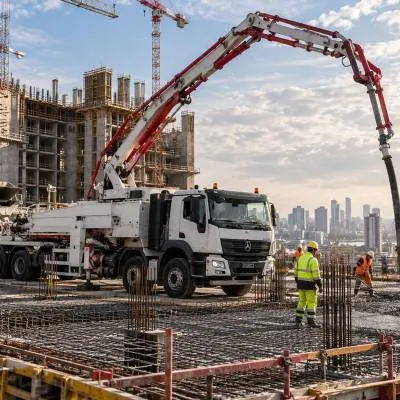
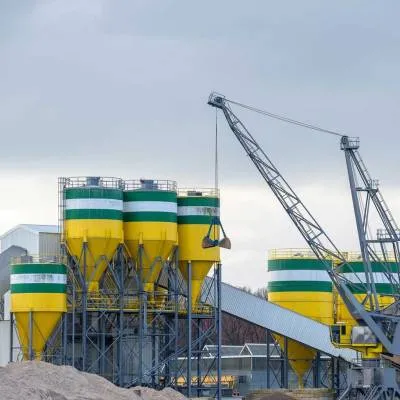
Concreting at height is among the most technically demanding operations of any high-rise project. It isn’t merely a matter of stronger pumps or better admixtures; it is about orchestrating synchronised design, material science, equipment and human skill. When those elements come together through planning and training, high-rise construction becomes not a challenge but a repeatable, reliable process that upholds both quality and efficiency.“Pumping efficiency, concrete quality control, temperature management and logistics coordination are the key challenges of concreting at height,” says Virendra Vora, Promoter, Excel Infrastructure, who recommends effectively addressing these challenges through meticulous mix design, real-time monitoring and advanced pumping technology. Preferred pumpsFor 20 to 30-storeyed buildings, a single equipment is rarely the most efficient solution for the entire project duration, according to Shraddha Kedia-Agarwal, Director, Transcon Developers. “Our preference is a two-phase strategy.”“We’d use a truck-mounted boom pump typically with a 36-m or 42-m boom for the ground to the 12th floor because this is fast to set up and requires no fixed vertical pipes,” she continues. “A stationary pump plus a separate placing boom would be deployed for the 13th floor to the roof.”Kedia-Agarwal often prefers a crane-lifted placing boom over a self-climbing model for 20-30 storeys because it is lighter and cheaper. “As 30 storeys is not ‘super tall’, the crane time (once per week/cycle) works out more manageable and cheaper than the expensive hydraulic climbing systems mandated for skyscrapers (50+ floors),” she says.Mohit Ramsinghani, Head - Sales, Marketing and Customer Relations, Bombay Realty (The Wadia Group), prefers high-pressure stationary concrete pumps (such as Putzmeister or Schwing Stetter models) capable of delivering concrete to heights exceeding 300 m. Dedicated vertical pipelines are installed and regularly maintained to ensure uniform flow and pressure.“Our choice of equipment depends largely on the structure’s elevation and site-specific conditions,” says Ajaz Ahmed, COO, Concorde. “For mid-rise buildings, boom placers are preferred for their flexibility and efficiency in placing concrete precisely. Up to 28 floors, we use direct concrete pipelines to pump concrete vertically, ensuring consistent flow and reduced manual handling. Between 28 and 30 floors, the Schwing Stetter Pump 1800D is our equipment of choice, offering the necessary pressure and reliability. When concreting above 30 floors, the same 1800D pump is adapted with hydraulic line modifications to meet the increased height demands.”Choosing a pumpSelecting the right concrete pump involves evaluating critical factors such as the vertical and horizontal reach required, the pumpability of the concrete mix (including slump, aggregate size and proportions), the output capacity needed to match the construction pace and the physical constraints of the site, says Ahmed. “Additionally, the height of the structure, availability of power sources, mobility of the equipment and long-term cost and maintenance considerations all play a vital role in ensuring efficient, safe, and cost-effective concrete placement.”When buying or renting a pump for 20-30 floors (up to ~100m vertical push), Kedia-Agarwal recommends considering the concrete pressure (minimum 90-110 bars), engine power (~100 kW+ diesel or 75 kW+ electric), valve type (S-Valve) and output volume (45-60 m³/hour). “Consider that you need enough pressure to overcome gravity (approximately 24 bar for the 100-m head) plus friction loss in the pipe (3-5 bar per 10 m),” she explains. “Electric pumps are preferred for sites with a stable transformer/grid connection because they are quieter and have constant torque. Avoid rock valves for vertical pumping if possible. The S-Valve offers a tighter seal against high back-pressure, preventing water from bleeding out of the mix (which creates dry plugs/blockages). Don’t over-spec this. Pumping vertically is slower than horizontally. A pump rated for 90 m³/hr will rarely be used at full capacity on a high-rise. A 45-60 m³/hr steady flow is better for crew rhythm and concrete finishing.”Managing pipelinesManaging logistics for concreting at height requires meticulous planning and the strategic deployment of equipment to ensure continuous and quality concrete flow, says Ahmed. “We install concrete pipelines at critical locations to reach the required elevation while enabling efficient and uninterrupted supply via transit mixers supported by standby pumps to mitigate any operational delays. Where pipeline access is constrained or impractical, such as in congested zones or complex structural layouts, we use bottom-dump buckets and drop chutes. These alternatives are carefully managed to maintain the permissible drop height, thereby preventing segregation and ensuring the integrity of the concrete mix during placement. This integrated approach balances accessibility, equipment reliability and mix quality across varying site conditions and helps us to effectively meet deadlines.”Kedia-Agarwal underscores the need for the pipeline to be anchored. “Without this, the pipe will slide down and crush the pump or buckle because gravity makes the vertical column of concrete incredibly heavy,” she explains. “Best is to install a heavy concrete anchor block (or dead weight) at the bottom 90° bend where the pipe turns from ground to vertical, to take the massive ‘kick’ force of the concrete column. Also, the vertical pipe must be clamped to the building slab at every floor, to transfers the weight of the pipe plus concrete to the building structure, not the pump below.”“Install a heavy-duty mechanical shut-off valve (gate valve) in the line near the pump outlet so that even if the pump breaks down for maintenance, the 90-m column of wet concrete in the vertical pipe will stay locked while you fix the pump,” continues Kedia-Agarwal. “Else it will try to rush back into the pump hopper, overflowing it and creating a disaster.”If a blockage happens, don’t increase pressure, she urges, as you may burst the pipe. “Immediately stop the pump. Switch to reverse pumping mode for two to three strokes to suck the concrete back from the blockage, loosening the jam. Then switch back to forward. If this fails, locate the blockage (usually at a bend/reducer) and manually clear it.”Installing a strobe light on the placing boom that the pump operator on the ground can see (green for active and red for stop immediately) is a failsafe precaution because radios often lose signal or get crowded on high-rise sites.Batching managementOn projects with substantial vertical heights, Rustomjee establishes batching facilities either onsite or in close proximity to reduce transit time and temperature variation. At The Bellissima project in Bandra West, Excel Infrastructure adopted a just-in-time batching and delivery approach from the logistics point of view, supported by constant coordination between the batching plant and site teams. Regular maintenance and pressure testing of the vertical pumping lines and aligning the scheduling of concrete pours with wind and weather conditions helped to avoid delays.Subir Malhotra, Whole Time Director, Capacit’e Infraprojects, emphasises the need for continuous coordination between batching plants and site teams, saying, that, and deploying the right capacity concrete pumps helps minimise the risk of cold joints and enhances the quality of the final structure.Maintaining workabilityConcrete must retain its designed workability during its vertical journey despite the challenges posed by every additional storey.“In tall structures, particularly above 100 m, maintaining concrete workability and temperature control is critical to structural integrity,” points out Malhotra. “The higher you go, maintaining the pressure of concrete, workability and setting time becomes increasingly difficult,” says Vora. “The possibility of segregation, loss of pressure and delay in vertical pumping also increases, making precision and planning very important.”At Capacit’e Infraprojects, Malhotra shares, “We rely on extensive inhouse expertise in temperature-controlled concrete production and placement, ensuring uniform strength and durability even in extreme site conditions.”India’s variable climate makes temperature management a challenge because heat accelerates setting while cooler conditions slow hydration.Excel Infrastructure uses high-performance concrete with retarders and admixtures to maintain flow and prevent setting during extended pumping durations. “Proper temperature control, especially in Mumbai’s humid climate, is ensured by using chilled water and ice flakes during batching,” says Vora.“We rely extensively on self-consolidating concrete combined with high-range water reducers and set-retarders, ensuring that the concrete remains cohesive and workable throughout pumping and placing,” adds Vinayak Bhosale, Chief Operating Officer, Rustomjee Group. “In warmer months, chilled water or ice is added during batching to control mix temperature while in cooler conditions, insulation and controlled curing preserve desired strength gain.”Coordinated poursContinuous pours for cores and shear walls demand meticulous planning. At Rustomjee, these are scheduled to avoid interruptions. “We maintain standby pumps and provide redundancy in case of equipment malfunction,” says Bhosale. “Our preferred setup combines a stationary high-pressure pump for continuous vertical delivery with a truck-mounted boom pump for flexibility and as backup. For upper floors and areas without truck access, deck-mounted placing booms enable precise distribution with minimal manual handling. Modular climbing or table-form systems further streamline the cycle, reducing crane dependency and enhancing safety.”The logistics and coordination of each pour are equally important. “Before each pour, we map out every pump line, rebar sequence and service penetration using BIM, ensuring that no late-stage clash disrupts progress,” he continues. “Each major pour is supervised by a dedicated pump engineer and quality team who monitor pressure, slump and temperature in real time. This systematic approach allows us to maintain consistency and productivity even as buildings rise above 40 or 50 storeys.”That’s precisely the aim.Proposed quotes: For 20 to 30 storeyed buildings, a single equipment is rarely the most efficient solution for the entire project duration. - Shraddha Kedia-Agarwal, Director, Transcon Developers We prefer high-pressure stationary concrete pumps capable of delivering concrete to heights exceeding 300 m. - Mohit Ramsinghani, Head - Sales, Marketing and Customer Relations, Bombay Realty (The Wadia Group) The higher you go, maintaining the pressure of concrete, workability and setting time becomes increasingly difficult. - Virendra Vora, Promoter, Excel Infrastructure In tall structures, particularly above 100 m, maintaining concrete workability and temperature control is critical to structural integrity. - Subir Malhotra, Whole Time Director, Capacit’e Infraprojects. Before each pour, we map out every pump line, rebar sequence and service penetration using BIM, ensuring that no late-stage clash disrupts progress. - Vinayak Bhosale, Chief Operating Officer, Rustomjee Group When concreting above 30 floors, the Schwing Stetter 1800D pump is adapted with hydraulic line modifications to meet the increased height demands. - Ajaz Ahmed, COO, ConcordeQuick BytesConcreting at height needs synchronisationEquipment choice varies by building heightPump selection depends on pressure requirementsPipeline anchoring is critical for safetyTemperature control maintains concrete workability