A New Rulebook for Tall Buildings
Real Estate

A New Rulebook for Tall Buildings

India’s skyline is rising fast as cities respond to land scarcity, urban congestion and increasing pressure on infrastructure. Yet building tall is no longer just a structural challenge—success depends on clarity, coordination and disciplined execution. This reality shaped Construction Worl...

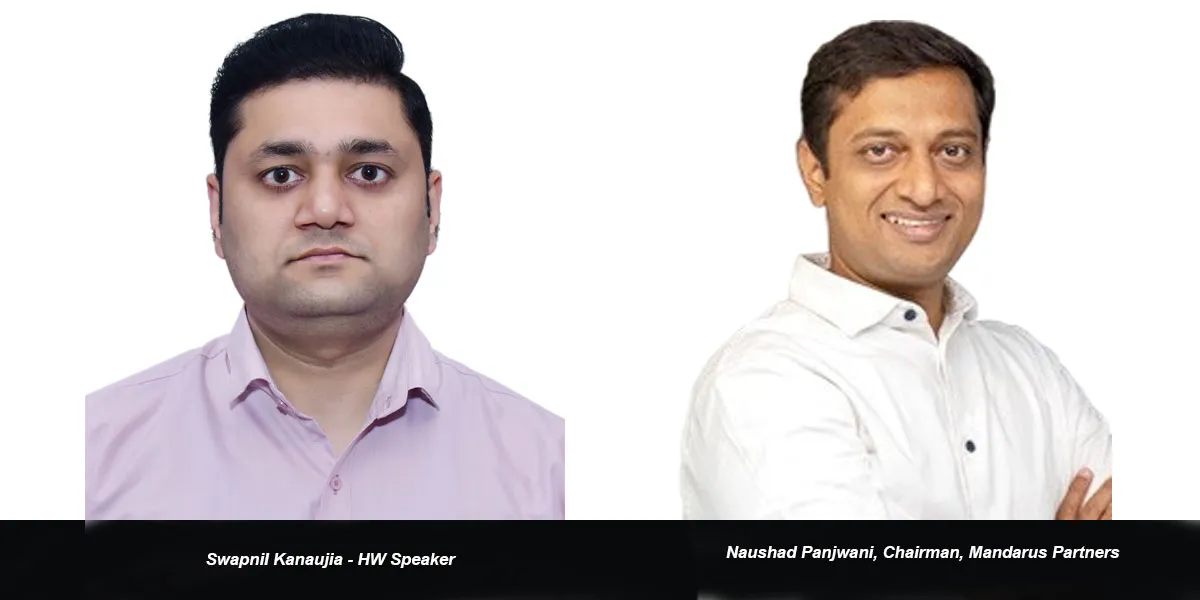
India’s skyline is rising fast as cities respond to land scarcity, urban congestion and increasing pressure on infrastructure. Yet building tall is no longer just a structural challenge—success depends on clarity, coordination and disciplined execution. This reality shaped Construction World’s webinar “Rethinking Tall Buildings,” held on 19 November 2025, bringing together industry leaders across design, planning, sustainability, engineering and project management. The session builds momentum toward the CTBUH 2025 Asia Conference, where Construction World is the Silver Partner, scheduled from 10–12 December 2025 at the Grand Hyatt, Mumbai under the theme Vertical Urbanism: Density, Carbon and People.Moderator Naushad Panjwani, Chairman, Mandarus Partners, framed the conversation candidly. “We are not just building taller—we are building more complex structures under immense pressure,” he said, underscoring the convergence of regulatory ambiguity, ESG imperatives, cost control and delivery risk. His provocation set the stage for a discussion focused not on aspiration, but preparedness.Regulation is the first building blockThe strongest consensus centered on the need for predictable, uniform regulation. Pushyamitra Londhe, Associate Architect, Architect Hafeez Contractor, highlighted that the challenge is not talent or technology—but inconsistency. “We need a separate national code for tall buildings; one that applies uniformly, not just to metros,” he asserted. As he pointed out, contradictory interpretations across authorities can derail timelines and design integrity, and a one-rule-fits-all framework does not apply to towers rising 80–100 storeys. Without predictability, he said, India cannot compete globally.Urban infrastructure and vertical ambition must reinforce each otherCity planning took the discussion beyond building performance to urban performance. Sarfaraz Momin, Founding Partner, StudioPOD, reframed tall buildings as metropolitan infrastructure rather than real-estate products. “Cities thrive when density is concentrated around planned infrastructure—not when demand dictates where infrastructure must follow,” he observed. High-rises built ahead of transit, utilities or public services burden systems rather than strengthen them. His perspective aligns closely with the CTBUH lens that density, mobility, carbon and people must advance together—not sequentially.Precision-led execution separates success from setbackOn the construction side, delivering tall buildings is less about solving problems and more about preventing them. Jairam Panch, COO, Turner International, distilled the sequencing challenge with clarity: “Get the core up fast, get the drawings right, and get the logistics aligned—everything else follows from that,” he said. He emphasised accelerated core progression, AI-enabled scheduling, off-site fabrication and communication discipline as the strongest levers to reduce uncertainty in tall-building delivery.Vertical mobility and usability must be non-negotiableUser experience surfaced as a defining factor in the tall-building lifecycle. Rajnish Ramu, Managing Director, Lerch Bates India, cautioned against reactive elevator planning. “The right number of lifts, right speed and right shaft space are non-negotiable—compromise here affects every user, every day,” he stated, advocating early data-driven traffic analysis rather than aesthetic-led decisions.MEP and safety require digital coordination, not reactive fixesTechnical coordination emerged as another critical pillar of performance. Rohit Uchil, Principal Consultant, Integrated Technical Services (ITS), emphasised that issues at height often originate during design. “Without BIM-based coordination of shafts, risers and pathways, retrofits at site become impossible,” he stressed, calling for moderated BIM collaboration—not isolated model submissions—to ensure constructability and long-term operability.Sustainability is measured long after certificationLifecycle performance concluded the discourse. Juzer S. Kothari, LEED Fellow & Managing Director, Conserve Consultants, highlighted that high-performance design means little without high-performance operation. “A green rating means nothing if a building is run inefficiently,” he noted, advocating continuous commissioning, smart monitoring and adaptive behaviour strategies. Sustainability, he argued, must unite carbon efficiency, resilience and comfort—not just compliance.The path forwardAcross the webinar, the message was unified: India’s vertical future is certain, but success hinges on cohesiveness—regulatory clarity, infrastructure-aligned planning, sequencing discipline, digital precision and operational accountability.Tall buildings now represent more than skyline expression; they are central to shaping liveable and resilient cities. And as moderator Panjwani reflected, “The conversation must move beyond why tall buildings and squarely focus on how we deliver them right.”

Next Story
Infrastructure Transport

Tripura Rail Survey Approved For Jirania–Bodhjung Link

The Ministry of Railways has approved a Final Location Survey (FLS) for a proposed new railway line between Jirania and Bodhjung Nagar in Tripura. The planned section will span 14 km and is estimated to cost around Rs 4.2 million, with the entire alignment located within West Tripura district. The approval marks a key step towards strengthening railway infrastructure and supporting industrial growth in the state. Bodhjung Nagar is Tripura’s principal industrial and commercial hub, developed mainly for resource-based industries such as rubber, bamboo and food processing. The proposed Jirania..

Next Story
Infrastructure Transport

MCF Raebareli Rolls Out Its 15,000th Passenger Coach

The Modern Coach Factory (MCF) in Raebareli, Uttar Pradesh, has reached a major production milestone with the manufacture of its 15,000th passenger coach on December 15, the Ministry of Railways said. During the current financial year 2025–26, the unit has produced a total of 1,310 coaches so far. Established in 2007 at Lalganj in Raebareli, MCF is among India’s most advanced passenger coach manufacturing facilities. Built at a cost of around Rs 31.92 billion, the factory has an installed annual capacity of 1,000 coaches and is located about 3 km from Lalganj on the Kanpur–Raebareli Roa..

Next Story
Infrastructure Transport

RVNL Wins Gandak River Rail Bridge Contract

Rail Vikas Nigam Limited (RVNL) has received a Letter of Award from North Eastern Railway for a major railway infrastructure project valued at Rs 1.65 billion. The contract relates to the construction of the substructure for a key railway bridge over the Gandak River. The bridge will be constructed between Paniyahwa and Valmikinagar stations as part of the doubling of the Gorakhpur Cantt–Valmikinagar railway section. Designed to enhance capacity and operational efficiency, the structure will comprise 14 spans of 61 metres each and will be supported by double D-type well foundations. The des..

Advertisement

Subscribe to Our Newsletter

Get daily newsletters around different themes from Construction world.

STAY CONNECTED

Advertisement

Advertisement

Advertisement

Advertisement

Open In App