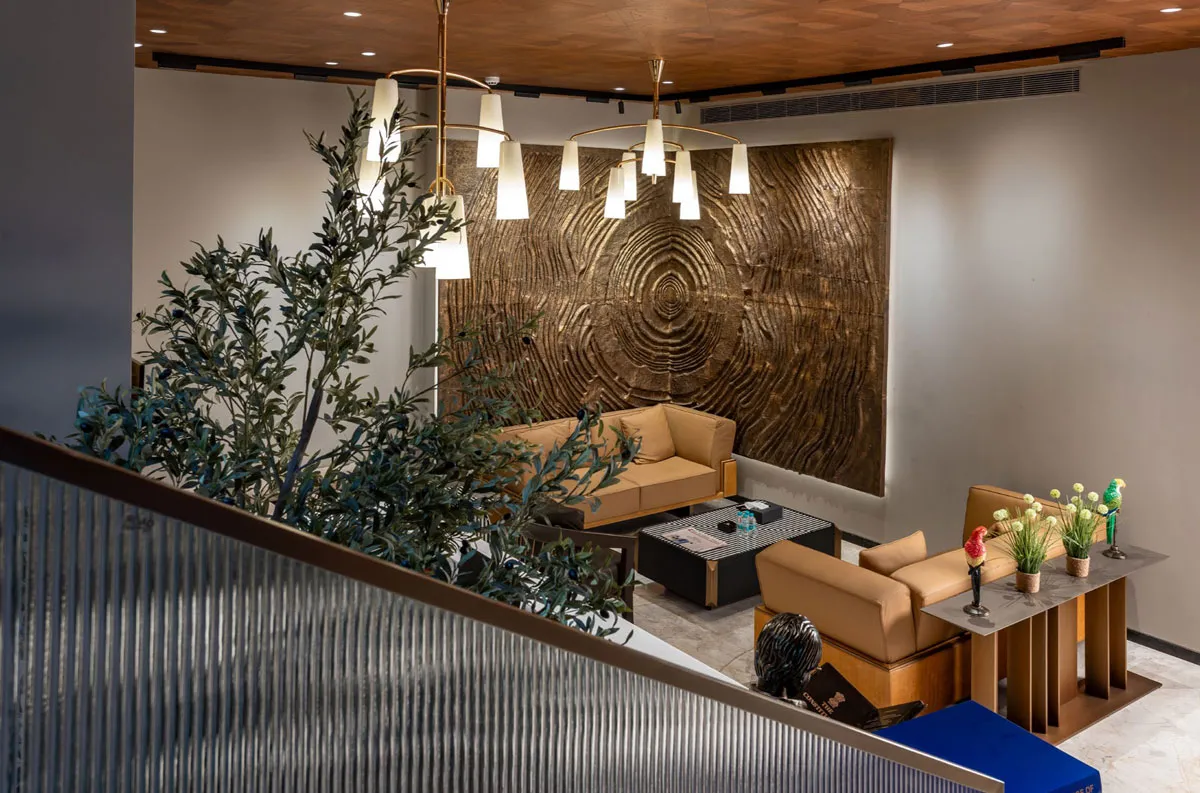
India’s smart home industry is seeing a clear shift from gadget-centric automation to integrated living ecosystems. Whereas smart homes used to largely be about controlling lights through an app, today, the expectation is more holistic: Technology should seamlessly integrate with architecture and everyday living and tailored to home occupants needs to maximise their convenience and safety.Especially as home owners develop a taste for minimalism, integrated automation assumes centre-stage. “By reducing the dependence on multiple switches, panels and visible hardware, integrated automation can preserve a refined, clean, clutter-free interior aesthetic while embedding advanced functionality within the space,” says Nupur Jain, Principal Architect, Nandika Interiors.Consequently, designers now approach smart homes as integrated living ecosystems in which design and technology converge to enhance comfort, health, safety and efficiency, according to Heena Bhargava, Architect, Architecture Discipline.Meeting the expectation for convenience necessitates “a centralised interface, which additionally also optimises energy consumption through controlled lighting schedules and efficient temperature management,” says RK Malik, Founder and Principal Architect, R.K. Malik & Associates, citing his Lumora Residency project in Rampur as one where smart home automation systems allow residents to manage lighting, climate control and security through a centralised interface.In another R.K. Malik & Associates project, the Katyal Residence in Moradabad, design strategies such as layered lighting, controlled openings and carefully planned circulation spaces contribute to a secure and comfortable environment while maintaining openness and spatial clarity.Each element of a smart home can facilitate another. For instance, in the entry and circulation areas of Workshop for Metropolitan Architecture’s (WMA) Aviara Residence project in Sunder Nagar, New Delhi, adequately illuminated key pathways and transition zones improve visibility and contribute to a sense of safety within the home.Early integrationSuccessful automation necessitates early-stage planning and thoughtful integration. “It’s important to focus on integration from the outset,” says Bhargava. “Rather than layering technology onto a completed design, we embed systems into the architectural framework itself.”Ensuring early coordination between architectural planning, engineering systems and technology providers is vital for these solutions to remain intuitive, discrete and fully embedded within the design, explains Malik.Practically, that means that spatial planning, orientation, material selection and building services are all aligned with centralised platforms that manage lighting, climate, security and energy. Doing so, Bhargava says, “ensures that the home performs intuitively rather than reactively.” According to Sapna Aggarwal, Founder, ANSA Architecture & Interiors, “Smart automation must be coordinated during the electrical design phase with close collaboration between the architect, electrical consultant and system integrator.” Programming automationProgramming is a key component of automation and it must follow the routines of occupants.Speaking of an independent luxury residence in Rudrapur, Aggarwal explains that lighting, motorised curtains, HVAC control and security were integrated into a single ecosystem. Thereafter, scenario-based settings for different daily routines were created, such as Good Morning, Entertain and Good Night. So, with those commands, the lighting levels adjust, curtains respond and climate settings change.In the main living spaces of the Aviara Residence, the centralised lighting control framework integrating downlights, ambient lighting and accent lighting systems, the components of the residences’ layered illumination, is programmed for balanced illumination during the morning and for warmer and softer lighting environments during the evening.Passive smartnessSmart homes are conventionally equated with gadgetry but as Bhargava points out, “using passive and mechanical design strategies adds smartness, too, while reducing dependence on automated systems.” In individual residences like Timber Residence in Vagator, Goa, and Lighthouse in New Delhi, solar energy systems and water management strategies, such as rainwater harvesting and recycling, are primary foundations. “Overlaying this precisely with technology, zoned climate control and comprehensive, discrete security systems enhanced the performance of an already well-tuned space,” explains Bhargava. “All the systems work together to reduce operational costs while improving long-term sustainability, and are unified through a single, user-friendly interface, ensuring ease of use and adaptability over time.”Daylight management in the Aviara Residence by WMA exemplifies how passive design seamlessly merges with gadgetry-derived smartness.“Large openings bring natural light into the interiors, while the lighting controls work in coordination with automated window treatments to regulate glare and maintain consistent illumination throughout the day,” explains Gagandeep Kapila, Principal Architect, WMA. “When daylight levels are sufficient, artificial lighting is reduced. As daylight decreases, the lighting systems gradually adjust interior illumination levels to maintain comfort while optimising energy use.”According to Malik, “Selecting a durable material is as valuable a passive design strategy as daylight planning and natural ventilation.”Choose wellThe choice of lighting systems in the Aviara Residence was driven by their precision, reliability and ability to integrate multiple lighting layers through a single control framework, all vital features to “allow residents to customise lighting environments easily while ensuring long-term efficiency and operational simplicity,” says Bhuvan Kapila, Principal Architect, WMA.“We choose systems for their long-term usability and reliability,” says Malik.Aggarwal recently implemented Legrand’s MyHOME automation ecosystem in an independent luxury residence in Rudrapur for a client who wanted a technologically advanced home that was also intuitive for every family member to use comfortably.One of the biggest advantages of using the Legrand automation ecosystem is its reliability and integration capability, says Aggarwal. “Instead of multiple fragmented devices, the entire system works on a unified platform, which simplifies control and improves the overall user experience. The switch designs are also refined and blend well with interior aesthetics, which is important for designers.”To unify the smart lighting, automated climate control and advanced security features such as cameras and sensors of a home in Delhi, Jain opted for a Schneider Electric automation system because of its high quality and design for long-term use with minimal maintenance – the system is integrated with an app and offers voice control. “Schneider systems are known for their advanced technology and seamless integration, allowing control from a single platform,” says Jain. “They also help to reduce the power consumption, which is both cost-effective and sustainable.”Implementation challengesUnifying automation still has certain drawbacks such as the high initial investment, reliance on stable Internet connectivity and occasional technical issues, adds Jain. “Integrating devices from different brands requires careful attention to compatibility. Managing concealed wiring and installations while preserving a clean, aesthetically pleasing design is another critical consideration. Educating users to effectively operate the system can also be challenging but is essential.”Kapila cautions against key implementation challenges, with reference to his Aviara Residence project in Sunder Nagar, New Delhi, saying, “Coordinating the downlights and lighting systems with the ceiling layouts and architectural detailing required careful planning and close collaboration between our team, consultants and contractors to ensure that the lighting infrastructure remained visually subtle while delivering high performance.”Integrating automation in apartmentsIn multi-storied residential apartments, it’s vital to design ecosystems that operate across both the private and shared realms, cautions Heena Bhargava, Architect, Architecture Discipline. Citing the example of Trident Residences in New Delhi, Bhargava says, “Within the individual apartments, we integrated tailored, responsive lighting and climate-control systems that adapt to occupancy levels, reducing unnecessary energy use while enhancing comfort.” Further, “automated shading is coordinated with the façade design to minimise heat gain and optimise natural daylight. Residents can also monitor their energy consumption in real time, making efficiency a visible and active part of daily life.” Increasing pollution has made environmental quality inside homes a key focus. “In cities where air quality and climate conditions are increasingly challenging, HVAC and air purification become core design drivers rather than add-ons,” says Bhargava. The Trident Residences project in New Delhi incorporates treated fresh air systems to ensure a continuous supply of treated outdoor air, reducing dependency on recirculated air. “Automated climate control responds to occupancy and external weather conditions, maintaining optimal temperature and humidity while minimising energy consumption,” she says. At the community level, shared amenities such as workspaces and wellness areas are connected to a unified system so that residents can interact with their environment effortlessly, while fostering a sense of community within a secure framework, adds Bhargava.