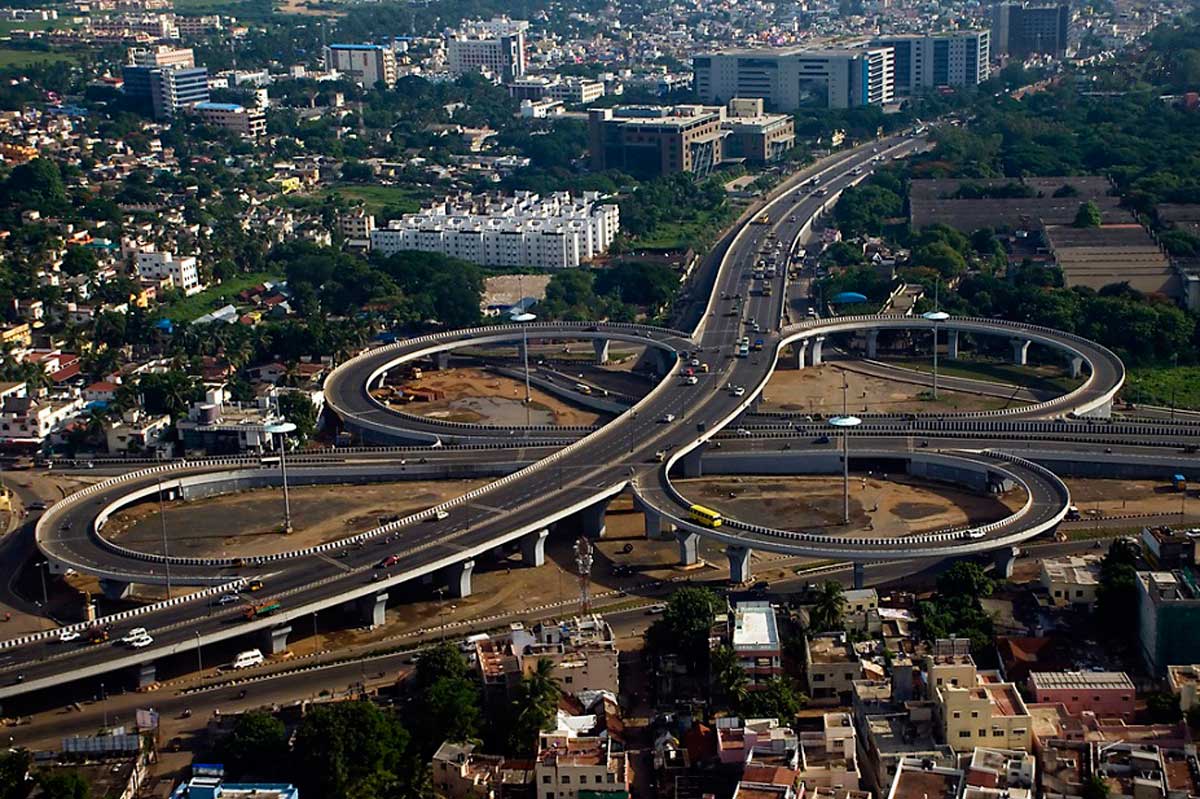
Often referred to as the Gateway to South India, the popularity of Chennai has been facilitated by the city’s vibrant culture, availability of jobs and a range of infrastructure initiatives being taken by the government, including a greater ease of commuting for its citizens.
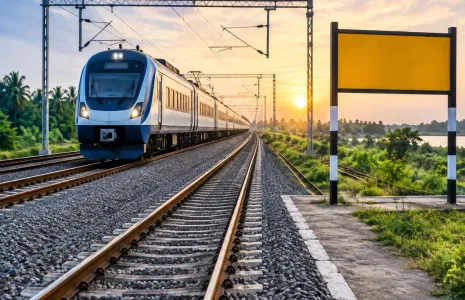
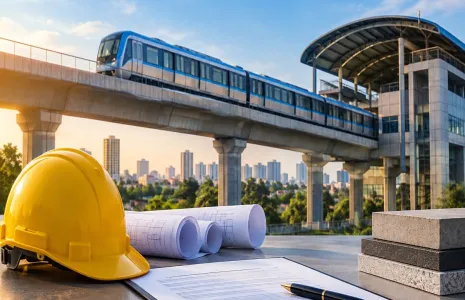
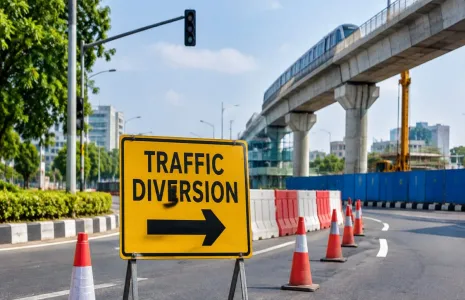
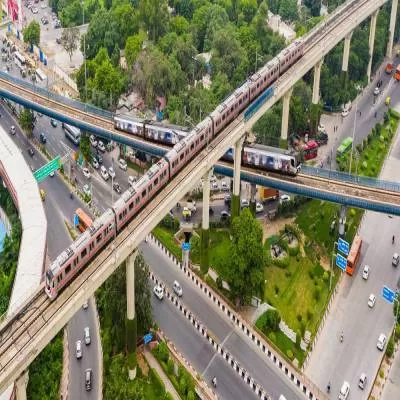
“The existing metro railway (Blue Line or Line 1), which stretches from Chennai International Airport to Wimco Nagar Depot, has emerged as a popular choice for people to commute,” says MSPrasanth, Deputy Commissioner (Works), Greater Chennai Corporation.“As a result, Chennai Metro Rail Ltd (CMRL) is proposing to procure additional rolling stock. Additionally,two new metro lines that are currently under construction will improve the ease of transit.Once these projects are completed, we will indeed start to see the network’s effects kicking in, increasing the mode share of public transport.”
In addition to decongesting the city’s roads, this initiative will also impact the growth of real estate, more so owing to the FSI benefit. The Tamil Nadu Housing and Urban Development Department has passed an amendment to provide additional FSI along the metro corridor. Builders have to pay only 25 per cent of the guideline value to availpremium FSI for non-high-rise buildings and 20 per cent of the guideline value for high-rise buildings. The rule is applicable to properties located within a distance of 500 m,measured from the centre line of the corridor.
The transformation of Chennai has also brought into focus some of its pertinent problems like flooding, which causes loss of life and property. Addressing this issue, Shashirekha Ramanathan, Chief Architect, Space Studio Chennai, says, “I feel we must reclaim our natural water resources and immediately end encroaching upon them. This calls for both a larger policy level intervention and awareness at the level of individual consciousness. The consumer should be asking the right questions prior to investing in or buying homes. In places that are being developed, we could build on stilts and take measures to raise the ground levels adequately.”
Chennai Smart City Ltd (CSCL) has initiated and implemented many strategic projects in the city targeted at averting floods. “The restoration of waterbodies prevents flooding and improves groundwater levels, hence CSCL and Greater Chennai Corporation have restored 210 waterbodies in Chennai,” shares Raj Cherubal, CEO, Chennai Smart City. “We have also initiated projects to ensure road safety, resilience in urban mobility, data and digital infrastructure of the city. An intelligent traffic management system is one such project that will bring efficiency to traffic flow in the Chennai metropolitan area.”
“The intelligent traffic management system will further reduce congestion-related delays and the city bus system will make timings more reliable,” adds Prasanth. “The government's establishment of the Chennai Unified Metropolitan Transport Authority seeks to synergise the various mobility services with each other and mobility infrastructure providers such as NHAI, the state highways and Greater Chennai Corporation. It also seeks to integrate informal public transport such as auto rickshaws, e-rickshaws, maxi cabs and minibuses into complimentary roles to the metro and bus systems to achieve optimum multimodal integration.”
While the authorities take steps to make the city more habitable, the real-estate market in Chennai has been a silent performer. “Despite the challenges, real-estate demand in Chennai is not all gloom and doom,” avers S Sivagurunathan, President, CREDAI Chennai.“Properties are primarily segregated into three price points: Rs 5-7 million; Rs 7-10 million; and Rs 10-30 million. Sale of properties in the Rs 5-10 million bracket has been robust. However, demand for properties over Rs 15 million has witnessed a slowdown. Areas like OMR and ECR have been popular with home buyers, and now areas like North Poonamallee road to Porurhave come into focus. A few years ago, even properties in Ramapuram, situated on the Mount-Poonamallee Road, commanded a price tag of Rs 4,000 to 5,000 per sq ft.”
With regard tothe real-estate development catalysed by IT and other industries, Kishore Panikkar, Partner, Architecture Red, says, “The IT boom of the late 1990s and early 2000s has pretty much created its own satellite city along Old Mahabalipuram with a dense mix of commercial and residential developments. Chennai also has a strong industrial environment with major industrial parks dotting the outskirts of the city, around the Sriperumbudur and Oragadam belt and along the Chengelpet area. Residential development here, however, has not seen the same success as OMR owing to the lack of social infrastructure like schools and healthcare and basic amenities like piped water supply. These areas have a lot of potential to become future hotspots provided the city invests in good infrastructure.”
“RA Puram and Alwarpet remain a popular destination with homebuyers,” adds TSS Krishnan, Chief Executive Officer, Appaswamy Real Estates. “Going forward,Vellachery, Vadapalani and Anna Nagar will emerge as real-estate hotspots. In areas like OMR, residents have to use RO as the water has a high saline content, besides which the use of STP has been mandated by the municipal corporation. These initiatives add to the cost of maintenance and this has to be borne by the customer after occupancy, prior to which the builder pays for the same. So, it would be great if supply of potable water and a proper drainage facility are provided. Ultimately, this will bring down the cost of maintenance and will benefit everybody.”
In agreement, Sivagurunathan points out, “Infrastructure charges are levied for every building constructed in OMR and these have to be borne by the builder. We are very happy with the stormwater drains the government has put up to mitigate flooding. Likewise, installation of systems to supply potable water and construction of a proper drainage system need to be done on a war footing in OMR.”
All considered, the real-estate market in Chennai is on a growth curve and the periphery of the city is in expansion. Hence, planned development is the only way forward to ensure proper growth of the city. As Ramanathan says, “Chennai is not a planned city like Indore, Navi Mumbai, Noida or Gurgaon. The city, which was originally a port, has evolved and expanded on its own. Some of the prime neighbourhoods of today were agricultural swamplands until as recently as three decades earlier. Developing sustainable, planned satellite towns as an extension of the city would be a key urban planning strategy that could decentralise some of the population towards these self-sustained localities.”