Smog over New Year Expectations
ECONOMY & POLICY

Smog over New Year Expectations

As this year draws to a close, the pandemic seems like a distant nightmare. Although there is always a possibility of some mutation reviving, there is greater preparedness all around to handle a crisis of this nature. Meanwhile, there have been newer disruptions: inflation, supply-chain pang...

As this year draws to a close, the pandemic seems like a distant nightmare. Although there is always a possibility of some mutation reviving, there is greater preparedness all around to handle a crisis of this nature. Meanwhile, there have been newer disruptions: inflation, supply-chain pangs, currency depreciation, war, sanctions, border disputes and pressure on the fiscal deficit, among others. Yet India’s economic growth is likely to outdo China’s despite recent revisions, and India has overtaken the UK to become the fifth largest economy.However, despite the good fortune India has enjoyed despite the past two challenging years, our economic agenda is not getting the desired impetus. With government expenditure surging beyond budgeted levels on account of a rise in subsidies, the new recruitment drive for 1 million personnel and the stepping up in allocations for security and administrative preparations for the G20 summit to be held in India over the course of the next year, the fiscal deficit target of 6.4 per cent of the GDP for FY23 is seeming elusive. The Government’s allocation of Rs.1.2 trillion owing to the extension of the Pradhan Mantri Garib Kalyan Anna Yojana (PMGKAY) of providing 5 kg of free foodgrain to 800 million households will need to be phased out if the deficit needs to be contained.Infrastructure spending is required to drive up GDP growth. In the current financial year, so far in the first five months, the ministries for Railways and Road Transport & Highways have spent nearly Rs.3.24 trillion, which is nearly half of the budgeted `7.50 trillion, mostly as capex. Other sectors that, along with these, contributed cumulatively to 72 per cent spending are Telecommunications, Housing, and Urban Affairs. Affordable housing is another priority sector. Private-sector credit demand is now at an eight-year high. Sectors seeing strong loan demand range from infrastructure to real estate, iron and steel and new economy segments such as data centres and electric-vehicle makers. In the last two weeks of October, it was up nearly 17 per cent to a year earlier. Lending to corporations, including small, medium and large businesses, was up 12.6 per cent in September, the highest rate of annual growth since 2014. Further, about a quarter of current capital expenditure is linked to the Production-Linked Investment (PLI) scheme.Does the Government have the appetite for another fight by launching labour reforms? Its agriculture reforms earned it a bloodied nose. Given that elections are due in mid-2024, will the Government risk letting the opposition score on an issue like job security for labour? This is the rub. Without labour reform, the PLI scheme will remain a non-starter. All promises of creating employment will remain embedded in the effective rollout of the PLI scheme on the back of labour reforms.The disinvestment target of `650 billion will not be met this year too. Here’s why: The proposed sale of BPCL did not materialise, the realisation from LIC was much lower than expected and proceeds of the IDBI Bank sale are expected only by June 2023.So, there is fiscal deficit to contain that requires withdrawal of the foodgrain subsidy scheme, windfall taxes are not likely to generate as per targets, the disinvestment programme is at 38 per cent achievement, and the Government is currently distracted by state elections. Amid all this, the Government is not likely to venture on launching labour reforms. All this will slow the pace of development that is truly desirable and possible.The Government must use the G20 year to attract FDI from countries that are finding it hard to invest in growth in their own. Signing FTAs and growing our export basket could be one beneficial outcome of the G20 opportunity. The Centre and states must orchestrate to pitch projects and ensure that FDI crosses $100 billion against the backdrop of the G20 activity during 2023.

Next Story
Infrastructure Urban

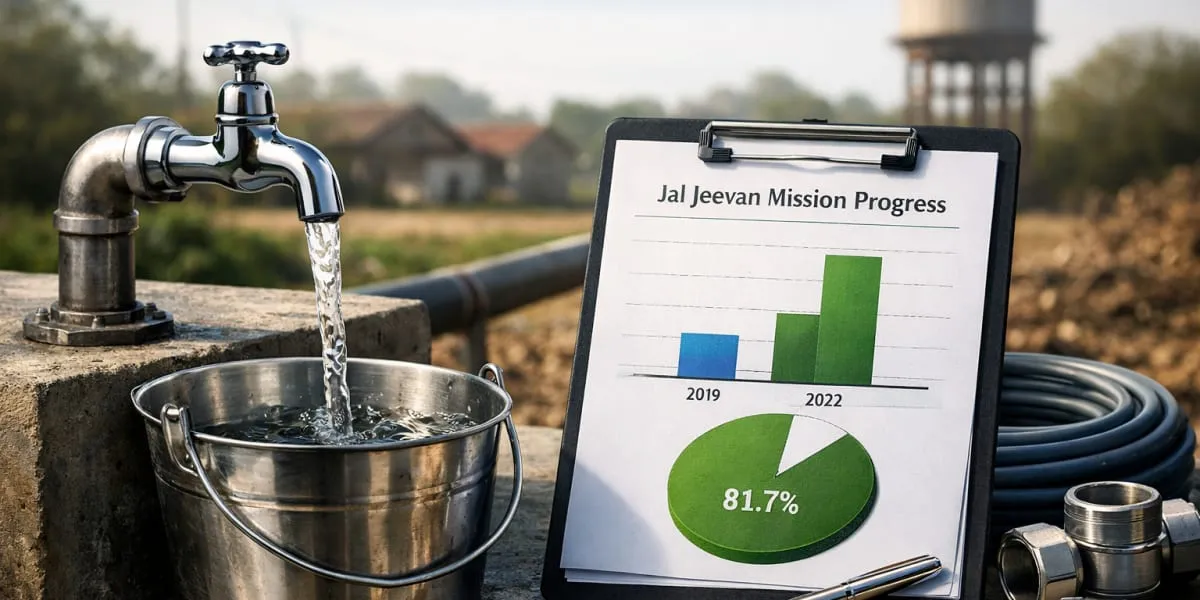
Implementation Status of Jal Jeevan Mission

Since August 2019 the Government has implemented Jal Jeevan Mission to provide assured potable water through household tap connections in rural India. At the start of the mission only 32.3 million (mn) rural households, representing 16.7 per cent, were reported to have tap water connections. States and union territories have reported that 125.8 mn additional rural households have since been provided with tap connections. As a result, of about 193.6 mn rural households roughly 158.2 mn, or 81.71 per cent, are reported to have tap water supply at home.\n\nThe State, district and village level st..
Next Story
Infrastructure Urban

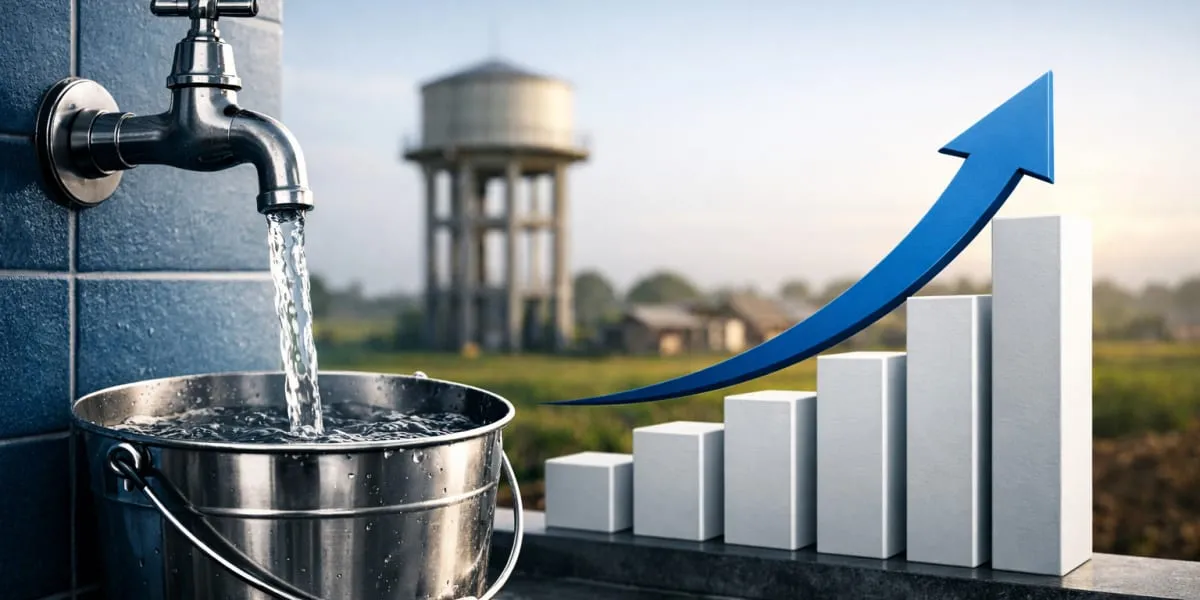
Jal Jeevan Mission Reaches Eighty One Per Cent Rural Coverage

The Government reported substantial progress under the Jal Jeevan Mission, launched in August 2019 to provide tap water to every rural household. At launch only 32.3 million (mn) rural households had tap connections and states and Union territories reported provision of 125.8 mn additional households by March 2026. Consequently, out of about 193.6 mn rural households around 158.2 mn, or 81.71 per cent, are reported to have tap water at home. The Finance Minister announced extension of the mission until 2028 in the 2025-26 budget speech. The Swachh Bharat Mission Grameen, launched in October 20..
Next Story
Infrastructure Urban

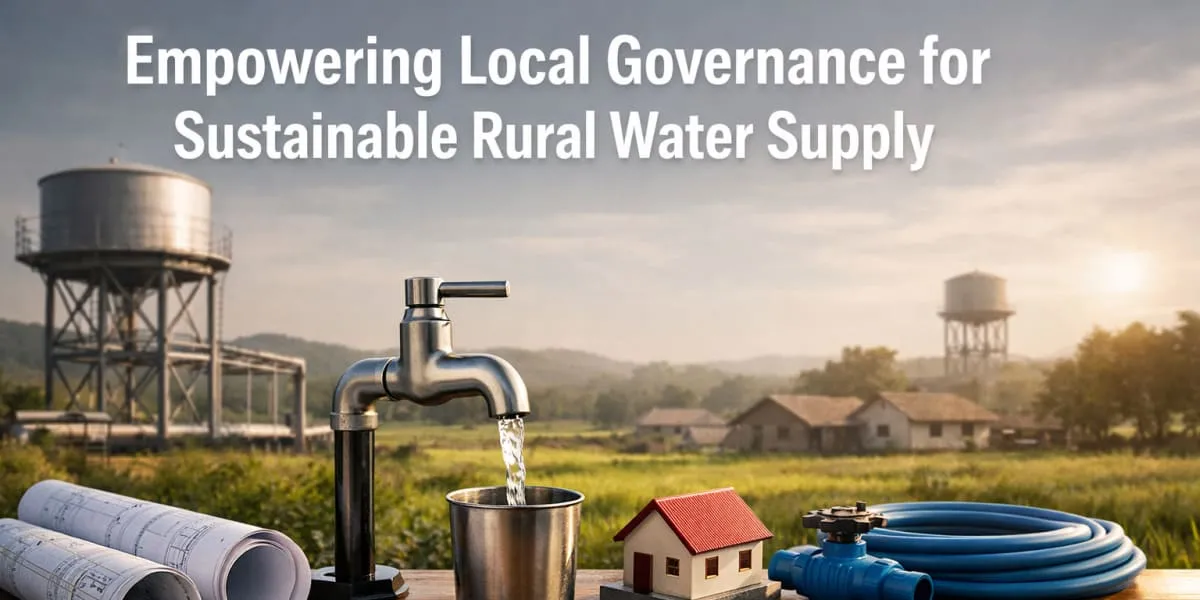
Empowering Local Governance for Sustainable Rural Water Supply

The Ministry of Jal Shakti has aligned the Jal Jeevan Mission (JJM) with the 73rd Amendment to strengthen village level planning and community ownership of water supply. Gram Panchayats, village water and sanitation committees and Pani Samitis are to plan, implement, manage and maintain piped water systems, with gram sabha processes formalising handover and oversight. Implementation support agencies including non government organisations, community based organisations and self help groups have been empanelled to train local committees and promote women participation. Under JJM, the department ..

Advertisement

Subscribe to Our Newsletter

Get daily newsletters around different themes from Construction world.

STAY CONNECTED

Advertisement

Advertisement

Advertisement